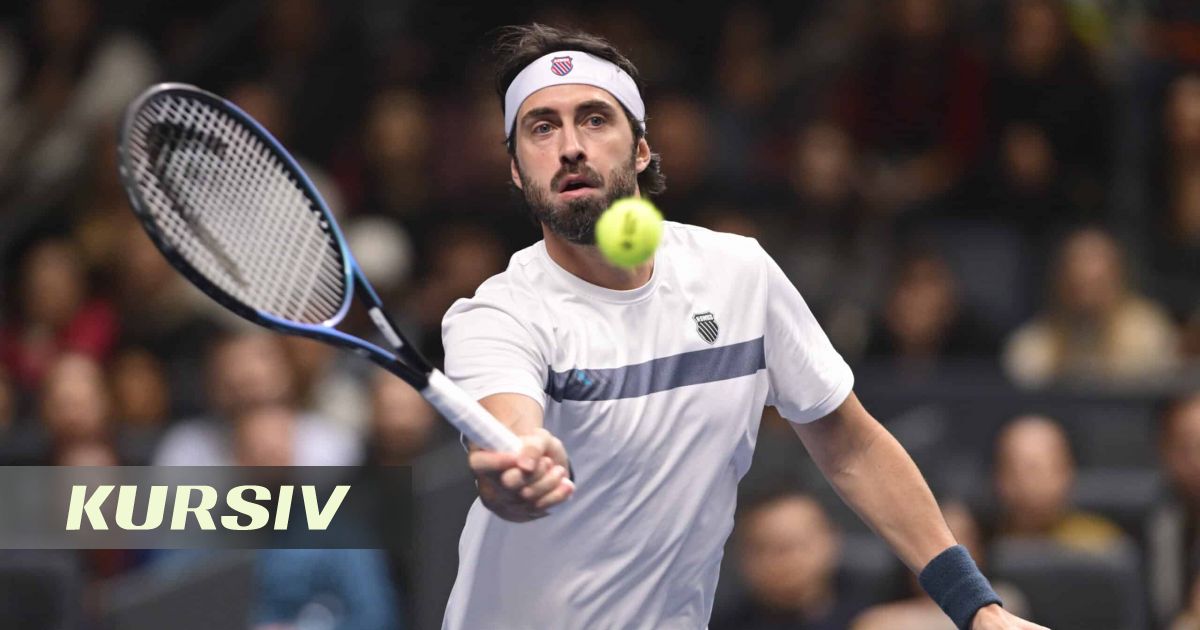
Nikoloz Basilashvili, after losing to Daniil Medvedev in the Almaty Open-2026 final, named fatigue after seven matches in a week and his opponent's serving as the key factors. According to the Georgian, he found it harder to move around the court late in the match, which affected his backhand and serve. This was reported by Qazaqyia.kz citing Kursiv Media.
Medvedev defeated Basilashvili 6:7 (6:8), 6:1, 6:3 to become champion of the tournament for the second year in a row. The Georgian started Almaty Open from qualifying and won six matches in a row to reach the final. It was his first ATP final since Doha 2022.
Basilashvili noted that he never managed to find a comfortable position on return against Medvedev, and that the effectiveness of his own serve began to decline as the match wore on.
"He served incredibly well. The first-serve percentage was very high. I tried to change my position on return, but I just couldn't find a comfortable spot.
On top of that, at the end I started serving poorly myself. My legs dropped because it was already my seventh match of the week, I was really tired. I couldn't push off properly on the serve, and that became the key factor: I couldn't serve well, and he served just great," Nikoloz said.
Answering a question from Kursiv, the Georgian also explained the large number of backhand errors. According to him, for that shot it is especially important for him to work his legs well and maintain a low position, which he could no longer do because of fatigue.
"To hit a quality backhand, I need to bend very low on my legs, and today my legs worked poorly. I often met the ball on straight legs and couldn't hold a low stance for long.
I could last two or three rallies, and then fatigue set in. Because of that, I couldn't change direction well or sharply redirect the ball with my backhand."
Additional pressure, according to Basilashvili, was created by his own unstable serve.
"Daniil played great, and nerves added to it. I couldn't fully relax because my serve wasn't working, and when it doesn't work, it strongly affects my whole game.
I need to maintain an aggressive position on the court, and when that doesn't happen, I play worse. Right now I need to rest for a day or two, and I think everything will be fine."
Basilashvili disagreed that Medvedev's defense alone was the main obstacle. According to him, the understanding that there would be few opportunities on return weighed on him much more.
"He defends superbly, but that wasn't the problem. What weighed on me was how well he served. I understood that I had to take almost every rally on my serve, because there were very few chances on his serve.
From the back of the court I'm not afraid to play anyone. If I return and serve well, I can beat anyone. But today he served incredibly, I couldn't read the direction of the serve. The main problem was exactly that."
Despite the defeat, the Georgian assessed his performance in Almaty positively. Before the autumn Asian swing, he made technical changes that, according to him, allowed him to play significantly more aggressively again.
"Before the tournaments in China, I adjusted some technical aspects of my game, and now I can show very aggressive tennis.
Now it all comes down to how well my body handles the workload. Physically I feel fine, but seven matches is still a lot.
If I can serve well, I'm capable of playing top-level tennis. But I'll move step by step. I just want to win as many matches as possible."
Reaching the Almaty Open final was Basilashvili's best result at ATP level in four years. The Georgian previously ranked 16th in the world, and in recent seasons he tried to return to the top hundred after several injuries. On the eve of the final, he also said he wanted to establish himself in the top 100 and continue his gradual return to the top.
Almaty Open was held from October 17 to 25 at the Almaty Arena. The ATP 250 tournament with a prize fund of $1.07 million was held in Kazakhstan's southern capital for the third time.