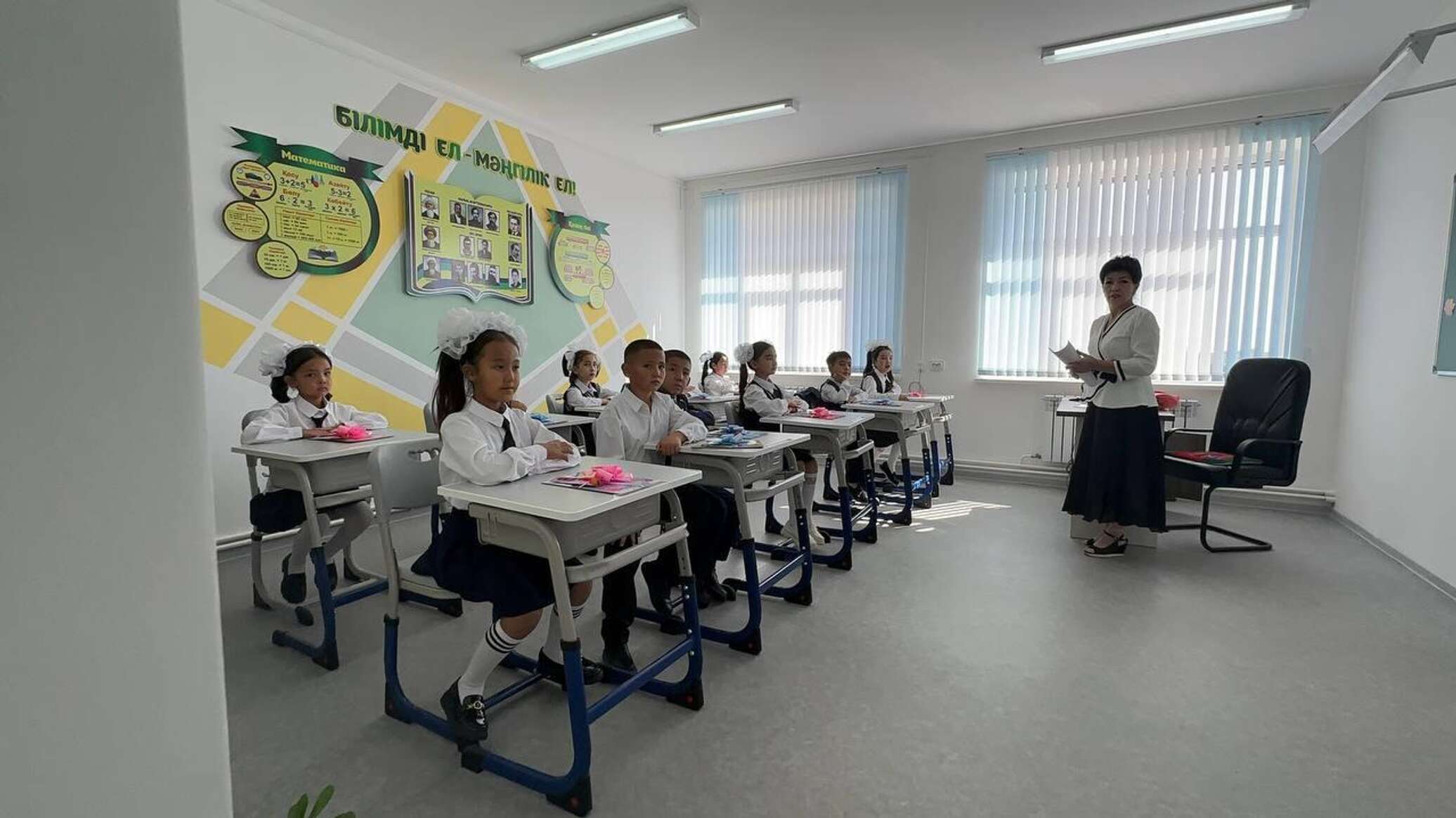
This year, more than 380,000 children in Kazakhstan will go to first grade. During this important and responsible period, many parents think that their task is completed if they have bought the necessary school supplies. However, before sending a child to first grade, psychological preparation is also very important. Because the child's quick and successful adaptation to a new environment directly depends on this. This was reported by Qazaqyia.kz citing Sputnik Kazakhstan.
Forming a Positive Image of School
According to psychologist Aigerim Dauletkyzy, first of all, it is necessary to form a positive and interesting image of school in the child's mind. "Describe school to him as a wonderful place where you can learn many new things, find good friends, and learn interesting things. Avoid intimidating the child and comparing him with other children. A confident child without fear adapts to a new environment much more easily," says Dauletkyzy.
To increase the child's self-confidence, it is useful to say: "You will definitely succeed!", "We believe in you!", "If something goes wrong, we will definitely solve it together." "Teach the child to be independent, to act on his own. This quality will help him feel free and confident at school," the psychologist noted.
What Should a Child Know Before 1st Grade?
A child going to school should be able to independently perform several important actions. Namely:
- 01dress and put on shoes independently;
- 02keep his belongings tidy;
- 03pack a school bag with the help of adults;
- 04follow personal hygiene rules;
- 05clean his workplace and maintain cleanliness.
It is also worth teaching the child to build proper communication and make friends. He should know how to meet classmates, politely address the teacher, ask for help when needed, negotiate, and calmly resolve minor disagreements.
Don't Say "It's Nothing"
It is also important to help the child understand his feelings. If he can openly talk about emotions such as joy, anxiety, anger, he will cope with inner anxiety more easily. "If a child is worried before school, there is no need to tell him: 'Don't be afraid', 'It's nothing', 'Everyone went to first grade once'. Instead, it is better to ask: 'Are you worried about something?', 'What is bothering you?', 'How can I help you?' A calm, balanced conversation helps relieve anxiety well," says psychologist Aigerim Dauletkyzy.
In addition, the child must be able to defend his personal boundaries. Basic rules:
- 01do not allow anyone to touch or offend him;
- 02do not tolerate teasing or intimidation;
- 03know that at any time you can ask for help from a teacher or parents;
- 04understand that in unpleasant situations, boldly saying "No!" is normal.
The child must be firmly confident that adults are always ready to come to his aid and protect him.
How to Get Used to the School Routine?
2-3 weeks before September 1, it is advisable to gradually accustom the child to the school routine:
- 01put the child to bed earlier;
- 02wake up in the morning in accordance with the time when you need to go to school;
- 03observe the diet;
- 04alternate study and rest.
All this will help the child's body adapt easily and quickly to the school schedule. It is also worth supporting the child's interest in knowledge. "Read books with your child, watch films for children and the whole family, discuss what you have read and seen, play board games, walk together, learning about the world around you," the psychologist noted.
The main goal is not to force the child to do something, but to preserve his natural craving for learning new things.
Mistakes Are Allowed
It is also very important to form the child's correct attitude towards mistakes. The child should be explained that making mistakes is a legitimate and natural part of the learning process and life in general. Then he will not be afraid to answer in class or try something new.
Before the start of the school year, it is advisable to limit the time the child spends in front of the screen. You can gradually reduce the time allocated to the phone, tablet, and TV. Instead of gadgets, you can offer useful activities:
- 01walks;
- 02board games;
- 03creativity;
- 04reading books;
- 05spending time with family.
All this will help improve the child's attention, memory, and sleep quality.
Ways to Develop Attention
Before school, it is necessary to develop the child's attention and perseverance. To do this, it is worth teaching him to engage in a specific activity for 15-20 minutes daily:
- 01drawing;
- 02modeling from plasticine;
- 03construction;
- 04assembling puzzles;
- 05reading books aloud.
These skills will significantly facilitate the child's studies in the 1st grade.
Do not forget about digital security. The child should know the basic rules: do not give personal information to strangers, do not follow unknown links. And if something on the Internet embarrasses, worries, or frightens him, he should immediately tell adults about it.
Key Points
According to Aigerim Dauletkyzy, in the first academic year, it is much more important to pay attention to the child's mental comfort and emotional well-being than to his impeccable preparation for reading and counting. "A child fully ready to adapt to the school environment is not the one who reads fastest or easily solves complex problems. This is a child who is self-confident, quickly finds a common language with others, understands the value of his feelings, is not afraid to make mistakes, and always feels the warm support of adults," says the psychologist.
In this regard, it is worth paying attention to several important points:
- 01teach the child to be independent and responsible;
- 02create conditions for open and free communication with both peers and adults;
- 03observe the daily routine and ensure full rest;
- 04monitor excessive use of gadgets;
- 05develop memory and self-control.
And constant communication between parents and teachers will help the child adapt to the new environment faster.