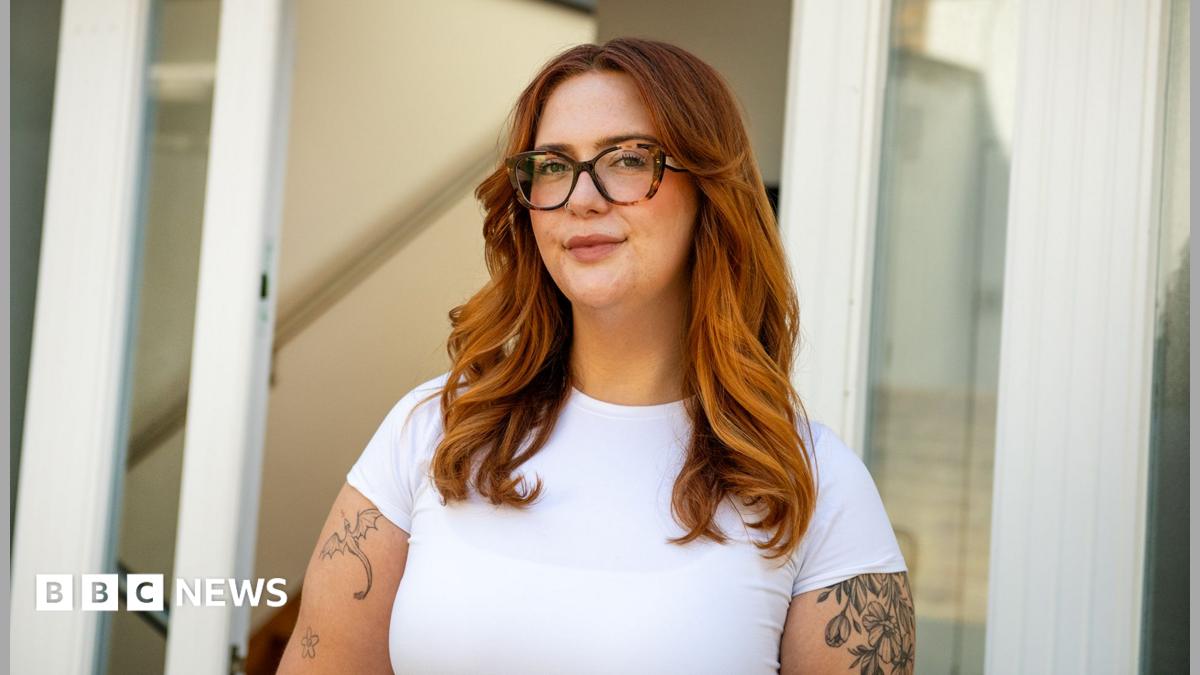
Jess King always assumed she would have children. To her, it felt like a natural path all women eventually followed. But as she got older, she couldn't shake a persistent feeling that she wasn't ready. With time, her doubts deepened. "It turned into 'Am I not ready for this, or do I not want this?'" she recalls. Everyone she spoke to with children said they'd been really sure about it and they had a maternal urge. "I didn't have that and that made me start questioning it." This was reported by Qazaqyia.kz citing BBC News.
Like Jess, more and more women in the UK are choosing not to have children. Research by the Centre for Social Justice (CSJ) suggests around three million women aged 16 to 45 are likely to stay childfree. If women in this age bracket were still having children at the same rate as their grandparents, 600,000 more of them would be having children. According to data from the Office for National Statistics (ONS), births in England and Wales fell for the fourth year in a row in 2025, to their lowest level in nearly half a century.
The CSJ's report cites "a range of social and economic pressures" as the reasons behind their figures. It found that rising housing costs, delayed financial independence, later marriage and growing uncertainty about careers all played a role. Financial pressures are also a consideration for Jess, who lives in west London with her partner, Ollie. Jess, a content creator, is self-employed, meaning her income is "up and down", which would be a worry for her if she chose to have children. "There are so many people struggling to get by. Some months, we are really scraping the pennies and it can be difficult."
Several women I spoke to identified financial constraints as a limiting factor. But they also pointed to a broader set of considerations: anxieties about climate change, a strong commitment to their careers, an eagerness to travel, and a sense that today's world offers them greater freedom of choice. Both Jess and Chy, 33, say they found support in online communities of people who had built happy lives without children. The hashtag #childfree features over 127,900 videos on TikTok, while #childfreebychoice has more than 68,100. Scrolling through them, I can see there are thousands of women discussing their reasons for not wanting to become mothers. Jess says social media didn't influence her decision not to have children, but it "validated it" and made her feel more comfortable to share her thoughts on the subject.
Chy, a 33-year-old account manager from the Midlands, has also found a community of like-minded women online. In real life, while her parents and close friends have been supportive of her being childfree, her wider family could not understand her decision. "I come from an African background," she says, explaining that many of her relatives are from a culture where "women are supposed to have kids". "Being someone with resistance to that idea was met with a lot of shock and disbelief." Chy wouldn't feel comfortable being "responsible for someone else". She says a child would "need the love I don't think I could provide in abundance". Her priorities include pursuing her career and travelling, things she believes "would be a lot harder" with children.
Wanting to focus on a career is one of the key reasons women choose not to have children, the CSJ report states. It cites a survey of more than 1,500 18-35-year-old women living in the UK, commissioned by the New Social Covenant Unit in 2023, which found that of those women who don't want to become mothers, 38% said this was because they wanted to advance their career. Almost half of respondents cited the steep cost of childcare and 41% said they would want to move into a bigger house if they were to have children. Chy thinks that mothers don't get enough support and that the cost of childcare and the current parental leave system make it "harder for women to live life outside of just being a mum". She mentions one of her friends, who has had to cut her working hours to be able to do the school drop-offs and picks-ups. "If those systems were to change, maybe my decision could have been swayed earlier on," she tells me.
The CSJ report argues that, in the UK, we need to place "greater value on the role of being a mother", both socially and in public policy, and that motherhood was "held in higher esteem" in the 20th century.
This was reported by Qazaqyia.kz citing BBC News.