Anar Gul, a construction worker living in the remote Dur Baba district of eastern Afghanistan, said: "It rained for 10 days and 10 nights, non-stop – I'd never seen anything like it." The houses in his village are built from stone and mud, making them extremely vulnerable to heavy rains. After days of rain, Gul's kitchen collapsed and his neighbor, Sayed Afsar Sadat, saw a large part of his house completely destroyed. "Rains like this are coming heavier and earlier each year," said Sadat. "They are destroying the roads and washing away our crops. It's impacting us directly." This was reported by Qazaqyia.kz citing The Guardian.
Last week, torrential rains and flash floods wiped out villages and towns in Afghanistan, leaving at least 31 people dead and hundreds missing. Neighboring countries have seen a similar picture, with monsoon rains sparking chaos across the region. India, Bangladesh and Pakistan have all experienced erratic, sudden heavy downpours.
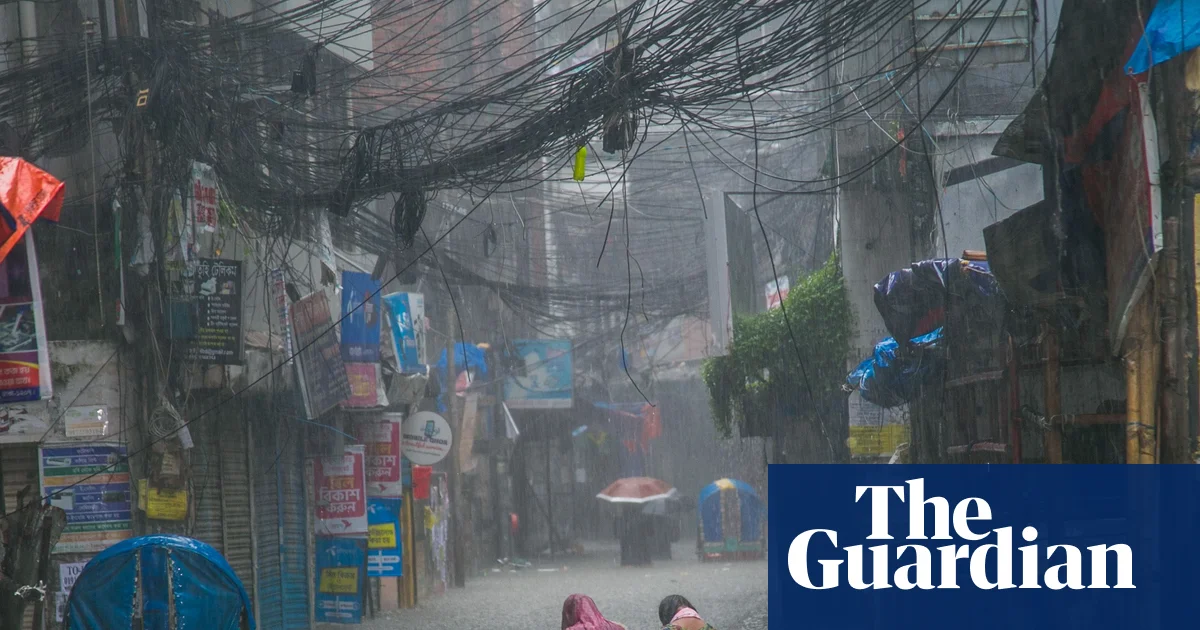
Jesmin Akter lived in the city of Chattogram on the south-eastern coast of Bangladesh, which received a record 412.3mm of rainfall in 24 hours in early July, leading to a flash flood that swept through the Banshkhali district where she lives. She says her children "understand that we are in a very bad situation." Overnight the rains took the little they had; their poultry died, their paddy field flooded, their house collapsed and all their belongings – children's books, school bags, toys, clothes, kitchen items – were ruined. Akter carried her six children through chest-deep water to her mother's house. They stayed there in crowded conditions for over a week until the water receded. "We have lost everything," Akter said. Their house beside the canal was not in good condition, but a few months ago the family had repaired it. "Now the flood has destroyed it again. We have no money. We are surviving on the food assistance we receive from different organizations." They have returned to the ruins of their home, but her children sleep on plastic sheets laid on the wet floor and she worries for their safety, especially that unsanitary conditions will lead to disease. Her daughter has developed a fever.
As wildfires rage across Europe and North America, unprecedented rains continue elsewhere. South Korea swings between heatwave and downpour, while in Japan and Vietnam torrential rain has led to landslides. China has seen bouts of extreme rainfall since the flood season began in April, according to the water resources ministry in mid-July. More than 600 rivers have risen above warning levels – a 35% jump from the average for the same period over the past five years. In the south-western city of Chongqing, a huge landslide after torrential rain killed at least 11 people and left 50 missing. Separately, a flash flood at a scenic camping spot in the north-central province of Gansu left 10 people dead and injured 23 others.
The flood season across the region has been exacerbated by successive storms. Typhoon Noul, the strongest to make landfall in China so far this year, prompted the evacuation of more than 890,000 people in Guangdong as of Sunday evening. In early July, Typhoon Maysak inundated parts of Guangxi and swept through commercial snake farms, allowing hundreds of snakes to escape.
Forecasters have warned that more wet weather is on the way. Much of northern China, including Beijing, is expected to receive 20% to 50% more rain than usual, while four to six typhoons are forecast to make landfall in or affect the country this summer, above the average of 4.2, according to the China Meteorological Administration.
Taiwan has also seen a rise in extreme rainfall. In June, repeated downpours caused more than NT$330m (about US$10.2m) in agricultural losses across Taiwan, according to the agriculture ministry, while the capital Taipei recorded its highest monthly rainfall in more than a century.
The extreme weather across the region can clearly be linked to climate change. Climate scientists have long predicted that large areas of Asia will disproportionately suffer from more intense heat, humidity and drought as a result of climate disruption caused by the burning of gas, oil and coal. The most recent report by the United Nations' Intergovernmental Panel on Climate Change said rising temperatures raise the threat of "floods in monsoon regions in south, south-east and east Asia, and glacier melting in the Hindu Kush Himalaya region." World Weather Attribution scientists have warned that extreme rainfall from cyclones is being "supercharged" in south-east Asia.