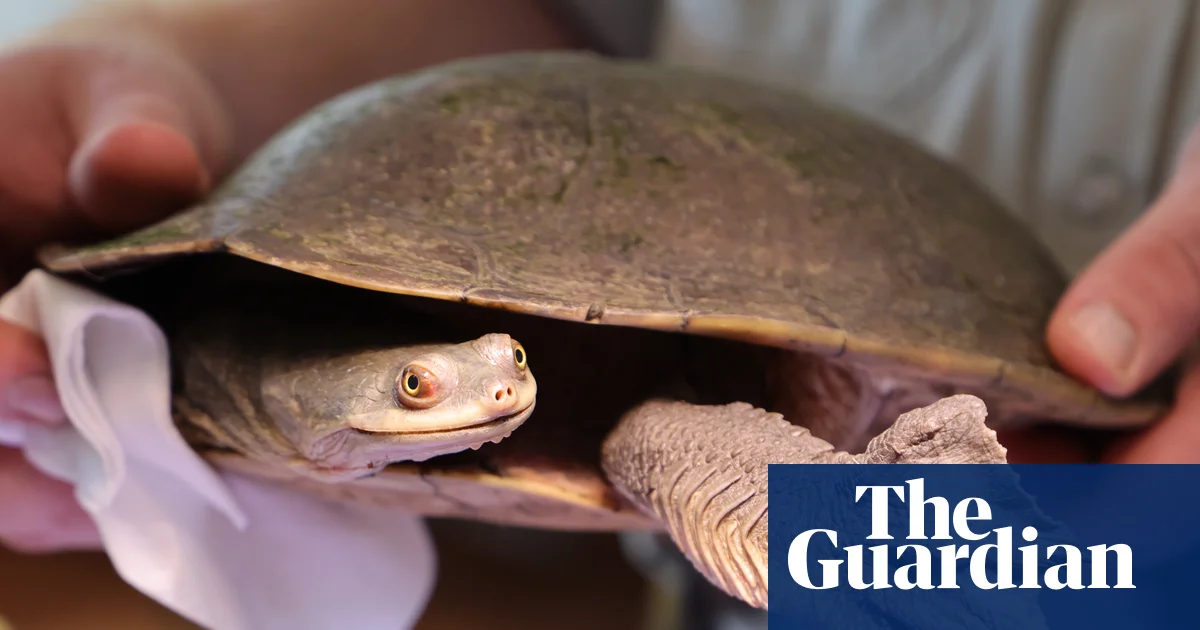
Freshwater turtles rescued from a dried-up water hole in western New South Wales after the state government cut environmental water to the area are being returned home. This was reported by Qazaqyia.kz citing The Guardian.
Late last month, 10 broad-shelled turtles and three Murray River turtles were released back into the Gingham water hole in the state's Gwydir region.
In what the environment minister, Penny Sharpe, described as a "remarkable conservation outcome", 281 eggs from rescued turtles are also incubating at Taronga zoo in Dubbo.
The start of an environmental catastrophe
The rapidly drying water hole was the site of a rescue mission in April 2026 after University of New England scientists raised the alarm that an "incomprehensible" environmental catastrophe was unfolding.
WaterNSW had stopped environmental flows to the area after a complaint from a private landholder, leading to the deaths of turtles, birds, frogs and sheep.
Environmental flows refer to water released by the government from dams and tributaries into rivers and ecosystems to maintain or restore their health.
The situation sparked outcry after scientist Deb Bower spoke publicly to Guardian Australia, with footage taken by NSW Greens water spokesperson Cate Faehrmann showing the researchers digging through mud to find surviving turtles.
Thirty-nine turtles were taken into care at Taronga zoo in Dubbo. In May, the government expedited legislation to clearly protect WaterNSW from liability claims when delivering environmental flows, and the water was turned back on.
Six months on
Six months on, the Gingham water hole is full once more and the first group of 13 surviving turtles have been returned to their habitat.
"That's what we work for as conservation scientists – to be able to get animals back into the wild," said Dr Phoebe Meagher, a wildlife conservation officer at Taronga Conservation Society.
Meagher said of the 39 turtles, two had to be humanely euthanised. She said the remaining 37 turtles were healthy enough to be rehabilitated.
She said the 24 turtles that were still in care were expected to return by the end of the year, pending health checks.
Many of the turtles rescued in April had been carrying eggs. Meagher said zoo staff made a decision to induce the animals for welfare reasons and 281 eggs were being housed in incubators, with the hatchlings expected early next year.
Meagher said not all of the eggs would hatch successfully but the zoo hoped to release any hatchlings back at the Gingham water hole when they were ready.
Photos and video of the adult turtles being released late last month showed a much healthier site than the parched environment that confronted researchers in May.
"When those animals got brought to us, it was a pretty dire situation," Meagher said.
"To be able to see those photos of how good it looks and see the turtles being released back to their home, that's what we work for as conservation scientists.
"To be able to even further boost that population with hatchlings, it's why we do what we do."
Minister and environmentalists react
Sharpe said conservation "isn't always about following a set playbook".
"Sometimes a crisis creates an opportunity to do something truly groundbreaking," she said.
"By rescuing these turtles and safeguarding more than 250 eggs, we've turned a potential loss into a remarkable opportunity for species recovery."
Faehrmann said she was "incredibly relieved to see that some of the turtles have started to be released back into the Gwydir wetlands".
"This is a good news story but not because of the efforts of the government, despite what their media release says," she said.
"It wasn't until the Guardian published its story with the footage I provided of the turtles being dug up out of the mud that the government swung into action.
"It shouldn't have taken the courage of the UNE researchers and a viral video to get the government to act, but that's what was needed."
She said she had been "kept up at night" wondering how many other wetlands and wildlife were suffering because there was not enough water for the environment.