Rio Tinto has announced that Australia's largest aluminium smelter will run entirely on renewable energy by 2033. This was reported by Qazaqyia.kz citing The Guardian.
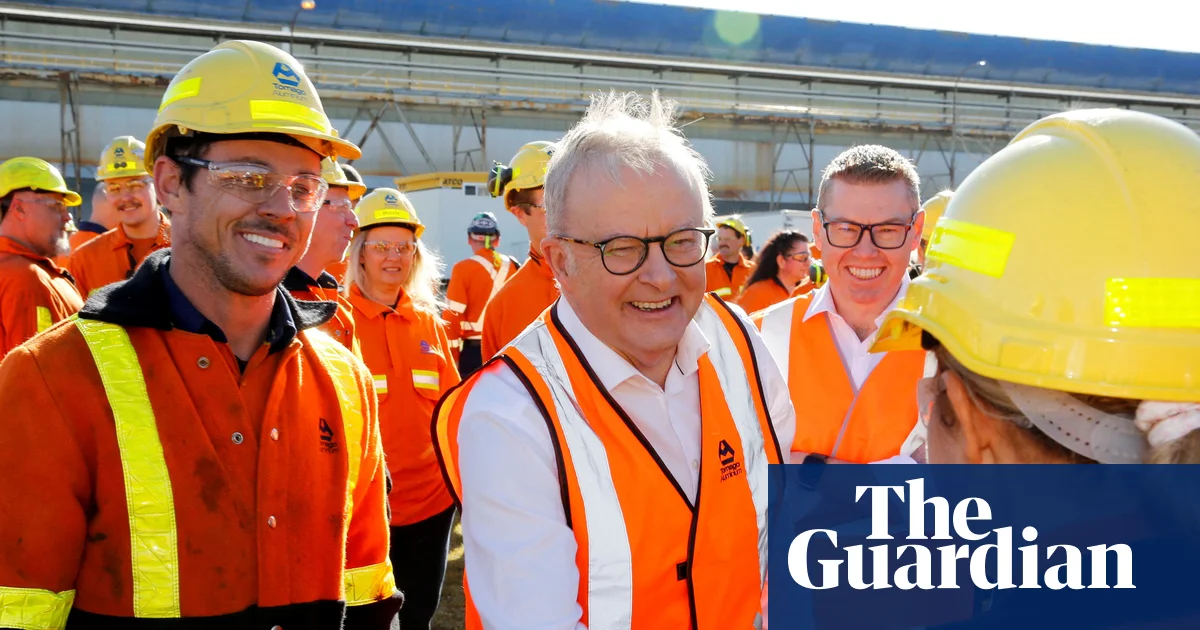
The federal government and the New South Wales government have signed a $2.5bn subsidy deal with Rio Tinto to prevent the potential closure of the smelter. The deal was announced by Anthony Albanese and NSW Premier Chris Minns at the Tomago smelter near Newcastle.
The agreement includes a 10-year below-market power supply guarantee that will begin after the facility's existing coal-focused electricity contract with AGL ends in December 2028.
The governments said the deal would underpin nearly 3,000 megawatts of new renewable and firming capacity in the state, more than a giant coal station.
Rio Tinto, a joint owner of the smelter, said that by 2033 the smelter would run on clean energy only and cut its annual greenhouse gas emissions by 7.1 million tonnes, equivalent to 1.5% of Australia's annual climate pollution.
In a statement, Rio Tinto Aluminium and Lithium's chief executive, Jérôme Pécresse, said the smelter had a pathway to long-term, cost-competitive, low-carbon power.
The deal is part of a series of Albanese government bailout packages to keep major industries operating. Other commitments include $2bn for Rio Tinto's Boyne aluminium smelter in Queensland and $2.4bn for steelworks in Whyalla, South Australia.
Aluminium production is particularly vulnerable to rising power prices due to its huge electricity use. Tomago is the country's largest single electricity user, taking more than 10% of total generation in NSW. It directly employs about 1,000 people and is claimed to indirectly support about 5,000 more.
As part of the deal, the smelter's owners committed to invest $1.1bn in Tomago over the next 12 years, including $100m for decarbonisation activities.
Federal climate change and energy minister Chris Bowen said Tomago Aluminium had told the governments that the smelter could no longer rely on coal-fired power and did not have confidence that enough renewable energy was being built. They worked on an innovative arrangement with New South Wales, involving Clean Energy Finance Corporation and Snowy Hydro.
Bowen said the renewable energy developments would not all be in the Hunter Valley but spread predominantly throughout New South Wales. Some will be windfarms, others solar backed by batteries.
Minns said the deal was vital to the local and broader economy. He said they couldn't have a situation where that level of economic stimulus is withdrawn from an economy like that. He cited the Liberals in South Australia and Democrats in Michigan, who presided over deindustrialisation, and said they would never do that for the Hunter.
Opposition leader Angus Taylor said he did not oppose the deal, but its cost was a $2.5bn admission of failure on energy policy caused by Labor's net zero wrecking ball.
Analysts say the increases in power bills in recent years have largely been due to external events, including Russia's invasion of Ukraine, not the 2050 net zero target. They say firmed renewable energy is the cheapest generation available to replace ageing coal-fired power, but have concerns about delays in building windfarms and transmission lines.
Independent MP Nicolette Boele blamed the cost on the failure of successive governments to act over the past decade. She cited Canada, Norway and Iceland as countries that run smelters on hydro and geothermal energy and are winning market share. She said Australia has better sun and wind than any of them, yet is buying its way out of a shortage instead of selling into a strength.
Greens senator Penny Allman-Payne said the government should have taken a stake in Tomago as part of the deal to ensure Australians share in the wealth from their own resources and give workers the security they deserve.