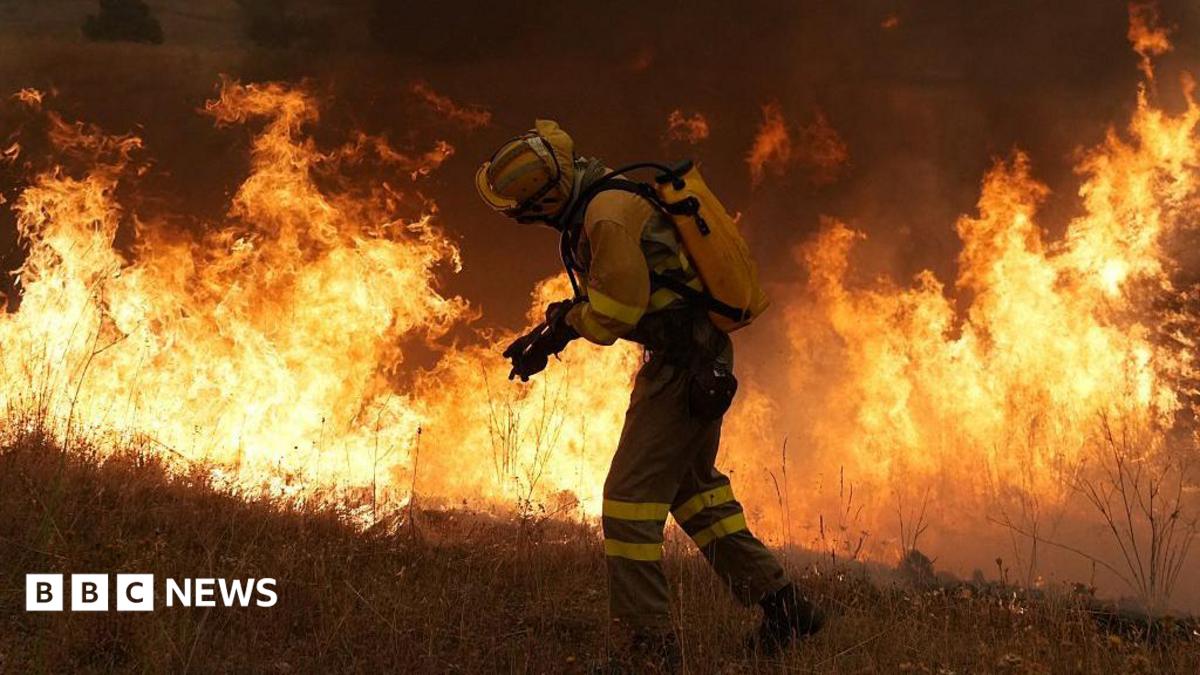
The wildfires currently ravaging Europe feel close to home for Professor Marta Yebra, despite being on the other side of the world. Originally from Spain, the Canberra-based bushfire expert has spent years developing ways for Australia - home to some of the most fire-prone landscapes in the world - to battle its own blazes. This was reported by Qazaqyia.kz citing BBC News.
She heads up the Bushfire Research Centre of Excellence, which was set up in the aftermath of Australia's worst fire season on record: the Black Summer fires of 2019-20, which razed a combined area about the size of the UK. Her team looks at how technology such as satellites, drones and AI can be used to better detect fires, alongside the knowledge of experienced firefighters.
Equally important, though, is the knowledge and experience that has accrued in Australia over thousands of years, and has been passed down through generations. The use of fire has been part of the country's Indigenous culture since long before Europeans arrived in the 18th century - but the value of this ingrained knowledge has only been truly realised in recent years.
Yebra has spearheaded an innovative project, bringing together millennia-old knowledge in Australia's Indigenous communities with cutting-edge satellite imagery to help detect where fires are most likely to break out. The satellite images pick up the "fuel moisture content" in the landscape, which signals where there might be a large amount of fuel, such as dry leaves, grass, shrubs and bark. But such data provides just one part of a bigger picture.
That's where the likes of Adrian Webster come in. Growing up on the south coast of New South Wales (NSW), Webster learnt how to read the environment or "country" - the term Indigenous Australians use for their ancestral homeland – from his elders.
Using Indigenous ecological knowledge – a plant's colour and scent, for example, or the shade cover of trees - he can verify information in the satellite images from Yebra's team.
"She had all this amazing data, but there was no translation to what it meant on the ground, so it was kind of useless," he explains. "But through an Indigenous perspective, it was not useless. It was a map that could guide you through the country and, if you understood it, take you directly into a place that is ready to burn."
For Webster, assessing the land involves him "literally digging and going underground," he says. "We're looking at the subsurface level and then everything from that up beyond the canopy."
Yebra said there was a "remarkable agreement" between Webster's local knowledge and the satellite data, demonstrating the combined value of Indigenous expertise and Western science. Her team now hopes to get more funding for the project, and work with Indigenous communities to co-design plans to protect the land and manage fires.
For Webster, it's about "allowing our mother – the planet Earth – a voice again".
Another example of ancient wisdom influencing modern techniques can be found in the way Australia fights fire with fire. Cultural burning refers to a longstanding practice by Indigenous Australians to manage the environment while also maintaining a deep, spiritual connection to the land. Part of it is lighting "cool fires": small, controlled blazes that create a patchy landscape, so fuel does not build up in one area.
"In Europe, there is no such cultural aspect to this kind of landscape planning," Yebra says. Wildfire scientists in Spain have blamed a massive build-up of fuel for the blazes currently devastating the country.
"It is difficult to watch what is happening in Spain, but it is not surprising," Yebra says. "Particularly as climate change is increasing the frequency of extreme fire weather across southern Europe."
She believes Europe, facing its worst wildfires in decades, could benefit from Australia's firefighting experience. "We have decades of experience living with large and high-intensity bushfires," she says. "One of the biggest changes we are seeing in bushfire management is a shift from simply reacting to fires towards anticipating risk and acting earlier."