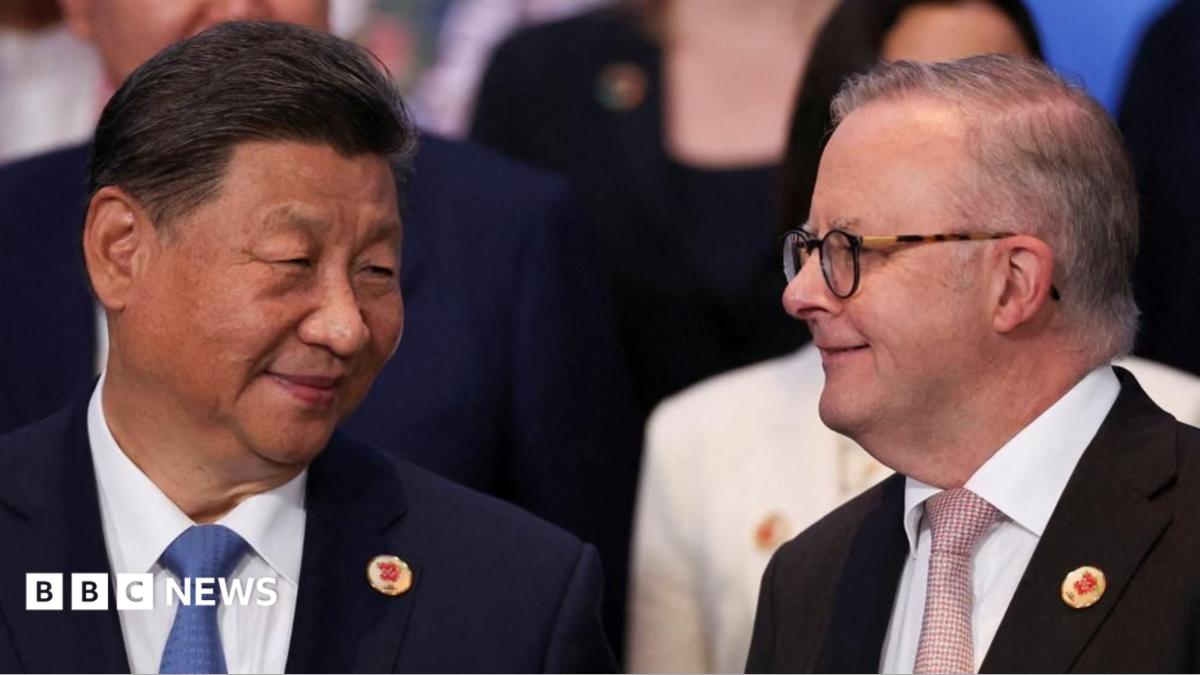
Australia is seeking its place in the geopolitical rivalry between the US and China. This was reported by Qazaqyia.kz citing BBC News.
During exercises in the Australian city of Townsville, snipers broke the silence, missiles were fired, and drones and helicopters appeared in the sky. This is not the first military clash in Townsville since World War Two, but a display of military might. Australian Army Brigadier Ben McLennan says: "We live in a volatile world. Training an army to be prepared to fight a war that is potentially more likely than it has been previously is very important."
For Australians, war is no longer an abstract concept. Due to conflicts in Iran and Ukraine, fuel prices and inflation are rising, and problems from around the world are reaching Australia. China's growing military capabilities and influence in the Pacific are causing concern. Australia is deepening its relationship with the US, its security ally and China's rival. But this puts Australia in a tricky position, as China is its biggest trading partner.
Brigadier McLennan says: "We're rehearsing for a war — the worst type of war, a World War Two-like war, a World War One-type war, a total war," but refuses to name the enemy.
The major joint exercise "Southern Jackaroo" involves the armed forces of Australia, the US and Japan. US Marine Kevin Hicks says: "We like to call ourselves America's 911 response force." In 2012, 200 US Marines were deployed to Australia; today that figure has risen to around 2,500.
Australia's 2026 National Defence Strategy states: "Intense competition between major powers — principally the United States and China — will be an enduring feature of our strategic environment. China continues to undertake the largest military build-up in the world today, without the transparency or strategic reassurance the region expects."
Military ties are seen not only in troop numbers but in bases. RAAF Tindal air base in the Northern Territory has been upgraded to support long-range American B52 bombers. The Aukus partnership between the US, the UK and Australia, arming Australia with nuclear submarines, is arguably the biggest example of deepening ties.
However, Australians themselves increasingly doubt their relationship with the US. According to Charles Lyons-Jones, a research fellow at the Lowy Institute, citing their annual poll, only 31% of Australians trust the United States to act responsibly in the world, and a mere 28% trust China to do the same.
Relations with China are also changing. Australia and China have had diplomatic relations since 1972. In the early 2010s, China became Australia's biggest trading partner. A free trade agreement was signed in 2015. But in 2020, when Australia suggested an investigation into the origins of Covid, China retaliated with tariffs. In 2021, Australia became the first nation to perform a U-turn on China's Belt and Road Initiative — cancelling the state of Victoria's agreement three years after signing up.