Almost six years ago, the country's biggest superannuation fund announced a major policy update: AustralianSuper's investment portfolio would be subject to a net zero carbon emissions target in line with the Paris agreement. This was reported by Qazaqyia.kz citing The Guardian.
To make the point, the fund dumped its holdings in the large thermal and metallurgical coalminer Whitehaven Coal.
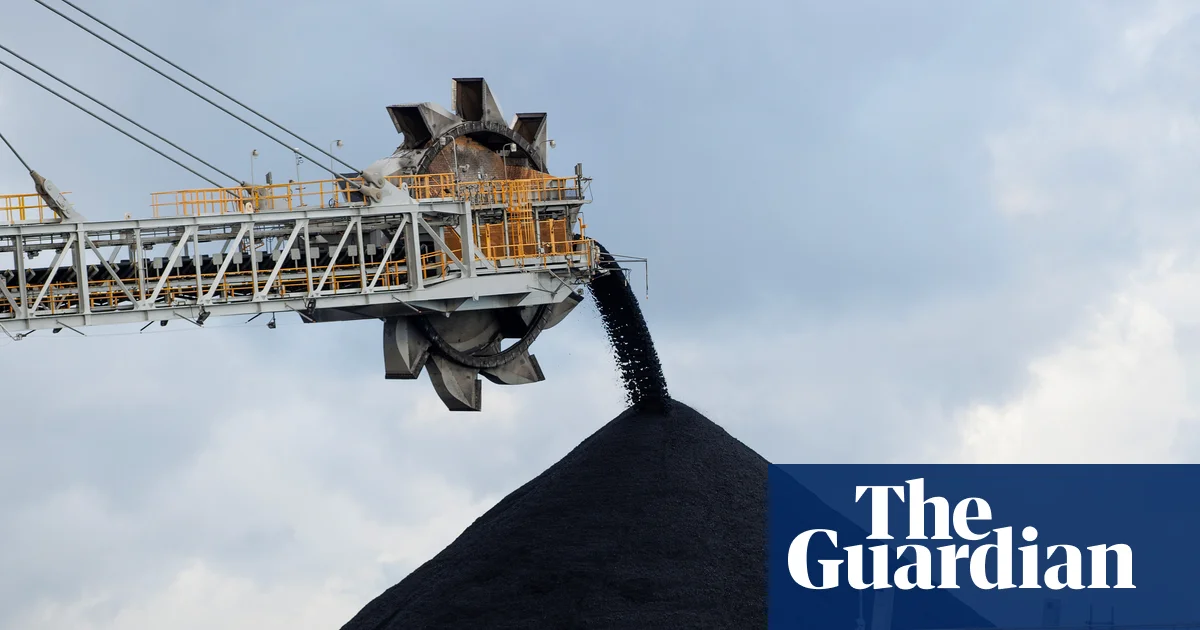
Fast forward to 2026, and the $388bn fund manager with 3.7 million members is now the single biggest investor in Whitehaven, which operates six coalmines in New South Wales and Queensland and is developing more.
The investment is one of several that have perplexed many in the superannuation sector, raising questions over whether the industry leader is aligning its investment portfolio with the climate goals it committed to in 2020.
While most super providers invest in fossil fuels, many heavily restrict their exposure to thermal coal, given it is such an environmentally damaging source of energy.
There are also concerns that having the country's most dominant pension fund invest so heavily in Whitehaven – its stake is worth more than $600m – makes it easier for other funds to make similar investments.
Geoff Warren, an associate professor at the Australian National University, said the Whitehaven investment was "not good optics" for Australia's largest super fund.
"I looked at that investment and thought, why did they do that?" said Warren, who is research director at the retirement savings thinktank Conexus Institute.
"They must have thought the investment was sufficiently attractive that they were going to invest, and that is a signal to me that the fund is focused primarily on the investment case and overlooking broader climate-related risks."
An AustralianSuper spokesperson said the manager regularly reassesses investments in the energy and resources sectors, and that "the energy transition will not be linear".
"We invested in Whitehaven because it provided an investment opportunity given its market valuation combined with an expanded and geographically diversified asset exposure to metallurgical coal, which is currently a key component of steel production for the global economy," the spokesperson said.
Naomi Hogan, the head of engagement and sector strategy at the Australasian Centre for Corporate Responsibility, said super funds needed to better assess the emissions plans of the companies in which they invest.
"Some of Australia's major super funds have been quite passive in their approach to company stewardship, and there is a risk that this makes it harder for other funds to act strongly and publicly on climate," Hogan said.
She said some companies' emissions targets were vague or relied on offsets or unproven technology like carbon capture to get to net zero by 2050.
AustralianSuper is also a major shareholder of another fossil fuel company with expansion plans, the oil and gas company Woodside Energy.
According to an Intergovernmental Panel on Climate Change report following the landmark 2015 Paris agreement, greenhouse gas emissions from existing fossil fuel infrastructure are more than enough to push the world beyond its climate goals, let alone develop new sources.
A Whitehaven spokesperson declined to comment. The company's sustainability report said that Whitehaven supports the Paris agreement, "acknowledging the paradox that coal and fossil fuels also play a critical role in the transition to a lower-carbon future".
Super funds typically align their investments to the interests of their member base and the direction provided by those in charge of the fund, which helps explain the very different approaches in the industry.
AustralianSuper's member base is so large it arguably represents the general population.
In a report by Lonergan Research, commissioned by fund manager Australian Ethical, four in five Australians surveyed wanted their super to avoid social harms, including environmental damage.
Australian Ethical's chief impact and ethics officer, Alison George, said the question of whether super funds should invest in thermal coal and fossil fuel expansion wasn't complicated.
"Companies like Whitehaven Coal and Woodside are excluded from our portfolios because their main business is fossil fuels and the extraction of coal, oil or gas," George said.
Brett Morgan, a senior analyst and campaigner at climate activist group Market Forces, said AustralianSuper's investment in Whitehaven could only be justified if it was using its position to demand an end to the company's expansion plans.
"AustralianSuper supported Whitehaven Coal's plan for executive pay in 2025, which incentivises its chief executive to pursue coal growth at the expense of a stable retirement for super fund members," Morgan said.
"AustralianSuper has an abysmal voting record as an investor that demonstrates a failure to hold some of Australia's biggest polluters to account over the past five years."