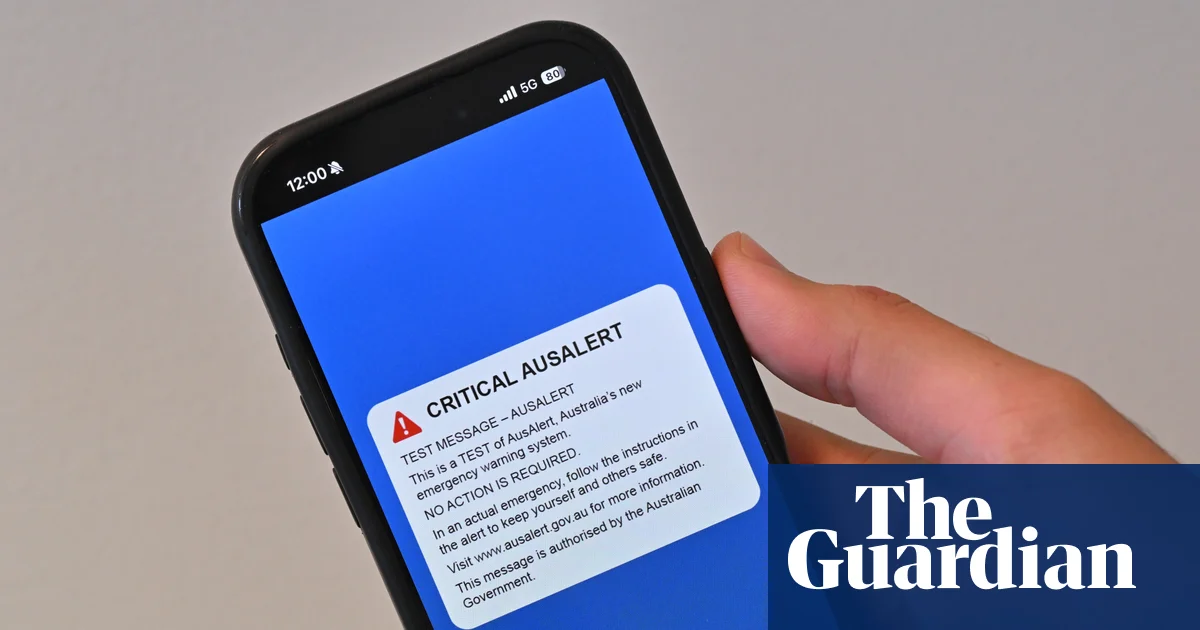
On Monday 27 July at 2pm AEST, virtually every phone in Australia will blare an emergency siren as part of the first nationwide test of the new AusAlert warning system. This was reported by Qazaqyia.kz citing The Guardian.
Most phones, and some smartwatches and tablets, will receive a pop-up notification and an alert sound that cannot be silenced – even if the device is on "do not disturb" or silent mode.
What is AusAlert?
AusAlert is Australia's new national warning system, which will send emergency messages to mobile devices during local and widespread disasters. Authorities currently use SMS texts to alert people about safety information. The new system will instead send a mass broadcast via mobile phone towers, with an alert popping up on devices, similar to a phone notification.
It will launch nationally in October, months after the national test.
How will the test work?
According to the National Emergency Management Agency (Nema), users will hear a siren lasting about 10 seconds and see a pop-up notification that will look different depending on the device, but with text including "TEST MESSAGE" and "NO ACTION IS REQUIRED".
"What people should expect to hear is a siren that will last for about 10 seconds," said Pat Hetherington, the interim coordinator general at Nema. He said it would be "loud enough to get people's attention", but quieter than a fire alarm.
Test timing
The test will occur at 2pm AEST on Monday 27 July, which is 2pm for New South Wales, Victoria, the ACT, Queensland and Tasmania, and 1.30pm in the Northern Territory and South Australia.
Why is this system needed?
Hetherington said AusAlert came from a recommendation of the royal commission into the 2019-20 black summer bushfires, which called for a nationally consistent warning system.
"The existing system is based on standard SMS capability, and throughout a series of emergencies and disasters, that system has had real latency in terms of people receiving the messages," he said. "You [could] get network congestion, text messages may not come through in a timely way … or come through at all, dependent upon who your provider is."
Kristy McBain, the federal emergency management minister whose electorate of Eden-Monaro was hit by the black summer bushfires, said some people in her area didn't receive emergency text alerts during that disaster because their phone provider was unavailable.
Advantages of the new system
McBain said AusAlert was a "far superior" system and would reach "more people in a more timely manner" than current warning systems used by state governments. Existing systems will still be used in future, with McBain describing AusAlert as "another tool in the toolkit".
Which devices are compatible?
Phones made after 2019 should receive the alert, but some older phones may not. The alert will come through on all compatible devices even if you are on a call, or if the phone is on silent. Nema has advice that about 80% of Apple iPhones will ring, and some 16m Android devices.
"The only way to not receive a critical alert is to turn your mobile device off or switch it to 'airplane mode'," Nema advised.
Compatible devices: - iPhone models 11 and up running iOS 26.4 or later. - Apple Watch models SE2, SE3, Series 6 and up running watchOS 26.4 or later. - Android devices running Android 12 or later.
Older Androids, or those not using iOS or Android, "might still receive AusAlerts", Nema said, but Apple iPads will not.
Safety concerns
The system has raised questions about the risk it poses to women and children experiencing domestic and family violence, as hidden phones may sound the alarm. Nema provides advice on this issue.
Hetherington and Nema's deputy coordinator general, Katarina Carroll, said the agency had engaged with "thousands" of groups including schools, businesses and even funeral associations to warn of the alert test.