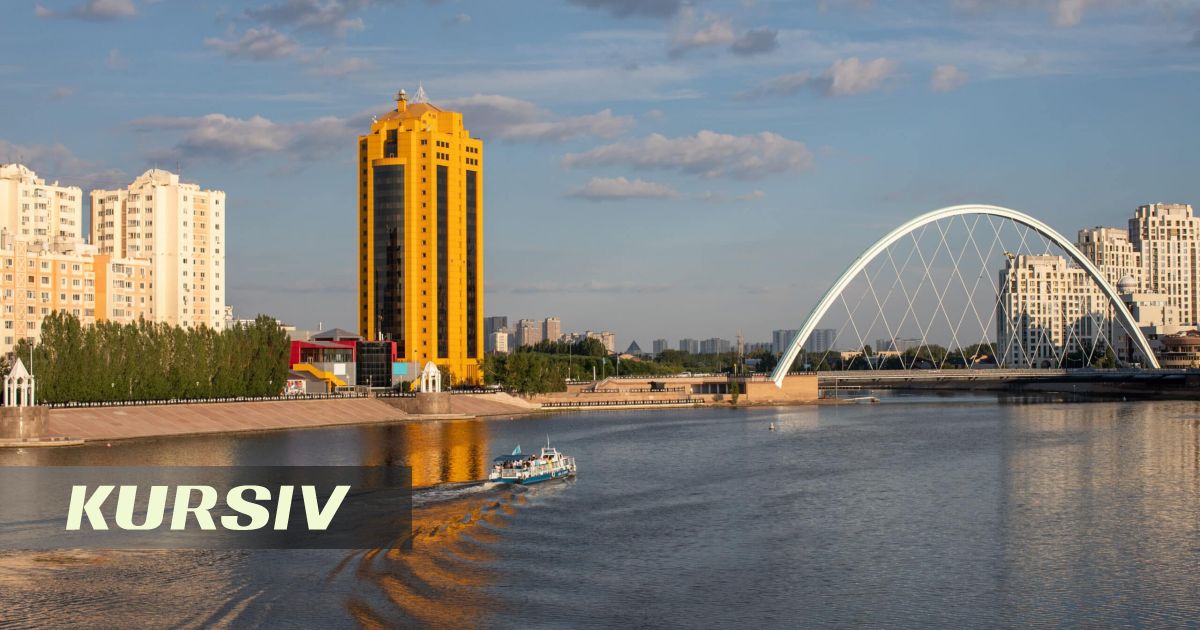
The Akimat of Astana announced that city services have intensified work on cleaning and ecological restoration of the Yesil River. This was reported by Qazaqyia.kz citing Kursiv Media.
According to specialists, this year the intensity of water bloom in certain sections of the Yesil River exceeded long-term averages. Among the main reasons are abnormally high air temperatures and lower water levels.
The river's condition is also affected by external factors. Water quality depends in part on its condition in upstream regions. Additional pressure comes from biogenic substances – nitrogen and phosphorus compounds, as well as organic pollution. Experts note that the possibility of unauthorized discharges into the river and its tributaries – the Sarybulak and Akbulak streams – cannot be completely ruled out. All these factors contribute to the active growth of blue-green algae.
Ecologists plan to use a suspension of the green microalgae chlorella in stagnant areas with weak flow.
"This method is considered an environmentally safe alternative to the use of chemical agents. Chlorella actively absorbs nitrogen and phosphorus compounds – nutrients that also promote the proliferation of blue-green algae. Through this, the microalgae helps curb their development and contributes to the restoration of the natural biological balance of the water body. During photosynthesis, chlorella enriches the water with oxygen, creating favorable conditions for fish and other aquatic organisms, and also promotes natural self-purification processes of the water," the Akimat noted.
Ecologists point out that the effect of using chlorella will be gradual. Restoring biological equilibrium takes time, and the first results are expected several weeks after the suspension is introduced.
Earlier, Kursiv reported that Astana had begun checking the condition of the water in the Yesil River after residents complained about a bright green coating near the Tulpar bridge. Photos and videos of the unusual water color appeared on social media.
The authors of the posts suggested that the water body might be polluted and requested an environmental check.
The city's Department of Environmental Protection and Natural Resources said that specialists had already inspected the area together with the Department of Ecology and had taken water samples for laboratory tests.
"In certain sections of the water body, a seasonal phenomenon is observed – water bloom caused by intensive development of phytoplankton (cyanobacteria) under conditions of high air temperature, low flow velocity, and favorable hydrometeorological conditions. Together with the Department of Ecology for Astana, an inspection of the area has been organized with water sampling for laboratory research," the department commented.