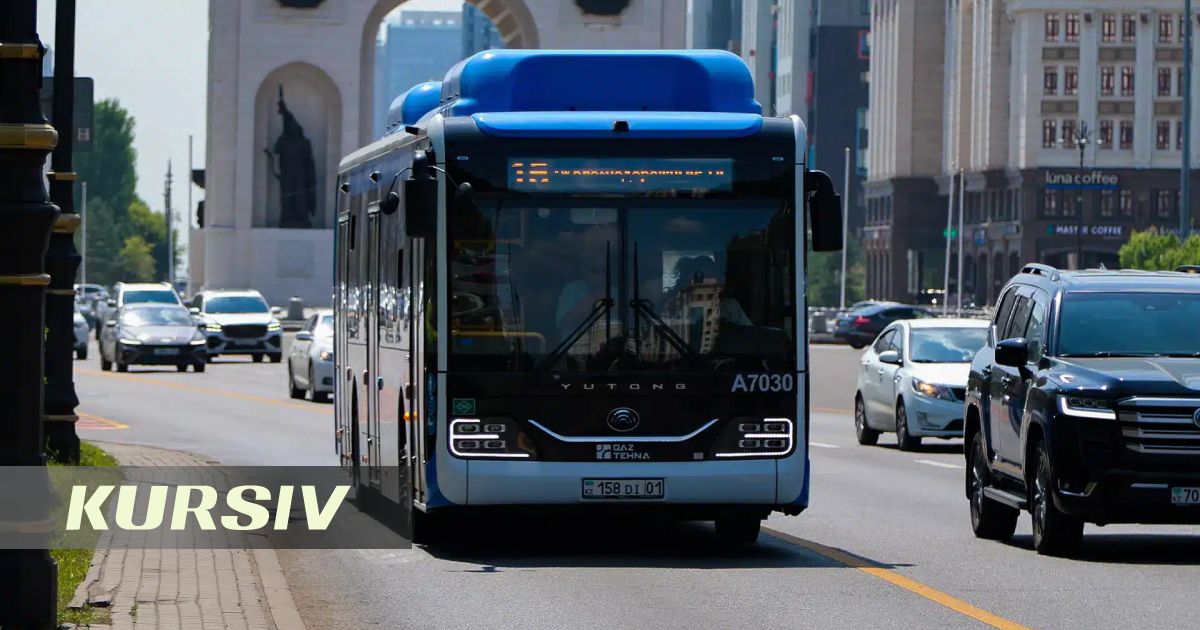
Astana is proposing to increase public transport fares for cashless payments from 110 to 150 tenge. The new tariff is planned to be introduced from mid-December. This was reported by Qazaqyia.kz citing Kursiv Media.
The increase will be 40 tenge, or about 36%. The akimat explained the proposal by the growth of carriers' expenses and the need to renew the bus fleet, develop the route network and ensure stable operation of transport.
In 2014, the fare in the capital's buses was 90 tenge. Over the next 12 years, the tariff was revised once — to the current 110 tenge.
During this period, according to the akimat, diesel fuel has risen in price more than threefold: from approximately 107 to 329 tenge per liter. The average salary of drivers in 2014 was about 100-150 thousand tenge, now it is from 700 thousand tenge depending on the bus class and work schedule.
Costs for spare parts, tires, batteries, maintenance, repairs and the purchase of new buses have also increased.
According to calculations based on the methodology for determining tariffs for road transport of passengers and baggage, the average estimated cost of one trip in 2026 significantly exceeds the current tariff.
Over the past three years, carriers have purchased 1,127 new buses. According to the akimat, they meet modern safety, comfort and environmental standards.
Existing benefits are preserved. According to the decision of the city maslikhat dated March 29, 2018, the right to free travel is granted to:
In addition, since March 2020, children under 18 studying in Astana can travel free of charge on public transport.
Earlier, Kursiv reported that in October the Astana akimat had already prepared a draft of new public transport tariffs. In addition to raising the cost of a regular trip to 150 tenge for cashless payment, the document provided for a tariff of 300 tenge for express routes and 13 tenge per kilometer for suburban buses.