‘Disclosure Day,’ a new sci-fi film by Steven Spielberg with a convoluted plot, is now playing in theaters. This was reported by Qazaqyia.kz citing Kursiv Media.
The living classic of cinema has repeatedly turned to the theme of aliens, starting with ‘Close Encounters of the Third Kind’ in the late 1970s. His new work was inspired by reports and articles about the US government’s ties to the search for extraterrestrial life. The film team consists of proven professionals—Spielberg’s longtime collaborators screenwriter David Koepp, composer John Williams, and cinematographer Janusz Kamiński.
The world is on the brink of World War III. But that does not concern the sinister director Scanlon (Colin Firth), who heads the mysterious NGO Wardex. A conspiracy has long been brewing under his nose, resulting in the escape of a renegade employee, cybersecurity specialist Daniel Kellner (Josh O’Connor), with valuable records of their top-secret work.
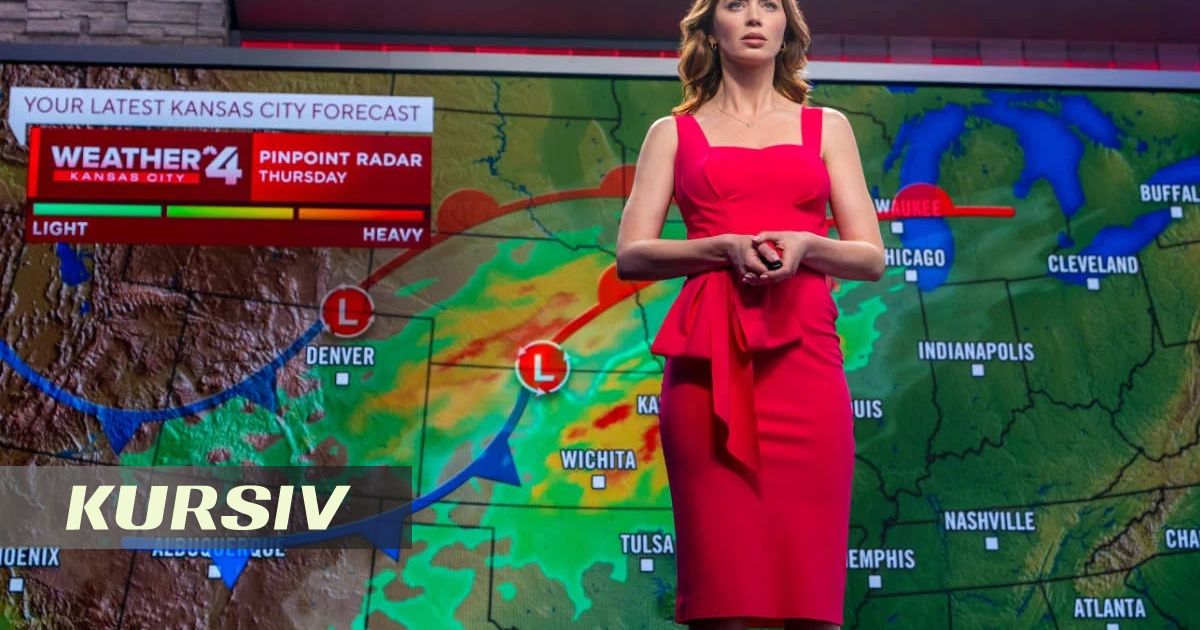
Kellner’s noble mission is to publicize this information, which he believes belongs to all humanity (whether it is ready or not). Parallel to this, the storyline of weather presenter Margaret Fairchild (Emily Blunt) unfolds. She suddenly acquires supernatural powers, reading the fates of everyone she meets and speaking various languages—from Korean to an exotic alien mix of clicking sounds.
Spielberg enthusiastically embraces the idea of aliens, not as another punishment, but as a chance for humanity, which has reached another dead end, to be saved. In his plot, real conflicts in Ukraine and the Middle East are delicately replaced by an abstract military rebellion in Pyongyang and nuclear escalation between the US and Russia, comparable to the Cuban Missile Crisis.
‘Disclosure Day’ is not his ‘War of the Worlds,’ where three-legged tripods systematically destroyed Earth’s population. It is closer to his classic films ‘Close Encounters of the Third Kind’ and ‘E.T.’ about ufology as a form of God-seeking and sincere belief in miracles.
The idea of marrying religion and science fiction is not new (best done by ‘The X-Files’). Here, Spielberg and screenwriter David Koepp, author of ‘Jurassic Park,’ handle it with the same grace as the wrestler in the opening scene who kicks the camera—everything is presented head-on.
For this purpose, Kellner’s girlfriend Jane is introduced, who was raised in a convent. She seeks advice from the mother superior, who assures her that extraterrestrial life and God are not conflicting.
This Christian-humanistic pathos sometimes looks unconvincing, especially towards the end. For Spielberg, television remains the main medium (the third act revolves around a TV studio), and ‘Disclosure Day,’ filmed amid the invasion of neural networks, awkwardly avoids the issue of fakes, offering viewers a pure view of events.
Characters use smartphones mainly to create beautiful lighting (cinematographer Janusz Kamiński is brilliant again) or to crush one under a car wheel—a comedic scene with Emily Blunt’s character. Spielberg’s last film ‘The Post,’ which echoes ‘Disclosure Day,’ was set in cozy retro about journalists’ feat.
Does the film disappoint? Hardly. It is an old-fashioned but gripping blockbuster directed with a steady hand. The plot gears turn almost perfectly, events are tightly welded over two and a half hours. Aliens are the main but not only theme; there is room for resistance on fire trucks, mysterious artifacts, and a story of two people with extrasensory abilities from childhood.
Even with all reservations, it is hard to blame Spielberg for naivety. The demand for an encounter with the beautiful, far from earthly, is in the air; earlier, the sci-fi ‘Project End of the World’ performed well in theaters. In the end, one can only envy the director who has retained his optimism.