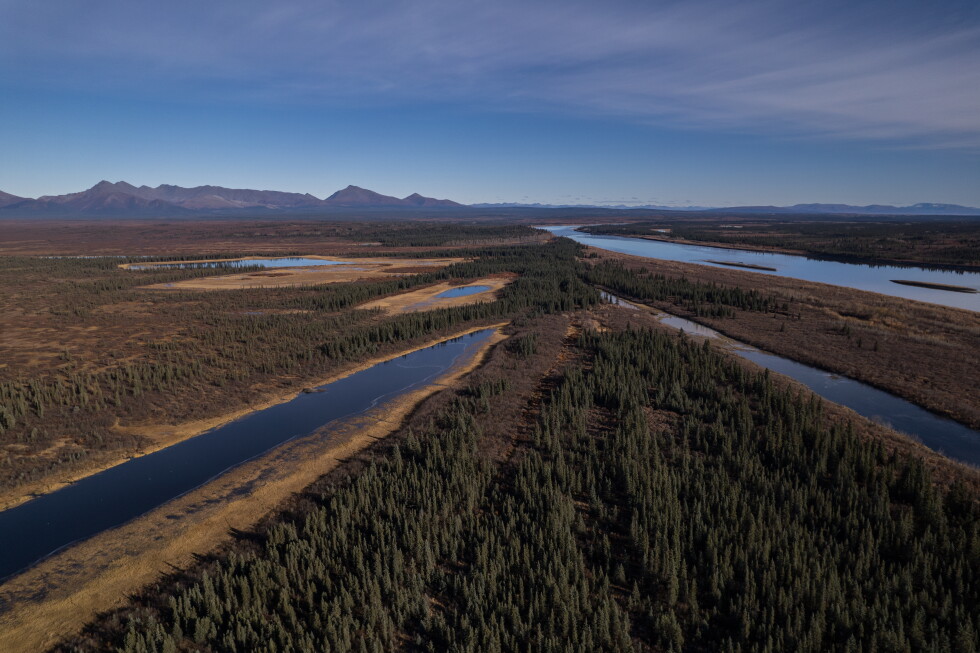
In northern Alaska, the tundra is becoming taller and greener due to climate change. This was reported by Qazaqyia.kz citing Associated Press.
The tundra on Alaska's North Slope can look desolate, especially to outsiders from the Lower 48 who are used to lush greenery. But up close, "the tundra's kind of like the jungle," said Adam Bloom, a Florida Atlantic University plant biology student. Except this lush Arctic jungle tops out at about 25 centimeters. Together with Jake Francis, a professor at the university, Bloom walked through the spongy soil that was frozen solid a few weeks earlier. They towered over the knee-high dwarf birch trees, and showy rhododendrons didn't reach the backs of their shoes.
For centuries, Arctic cold has kept plant life small, a sort of dollhouse of Earth's miniatures. The extreme environment has long given researchers a unique perspective on what makes plants grow. Now it offers them one of the world's most useful windows on how climate change affects plant life, with the Arctic warming four times faster than the rest of Earth, especially in the winter. For example, researchers at the Toolik Field Station, 320 kilometers north of the Arctic Circle, are studying whether plants facing these harsh conditions evolve to compete or cooperate with one another.
Studies show that the colder and further north in the Arctic, the smaller the plant life. There are several reasons, but the main one is that life is rough in the winter. Anything that protrudes above the shallow, insulating snow cover is more prone to being damaged by the cold and wind or eaten by wildlife, said plant ecologist Anne Bjorkman of the University of Gothenburg in Sweden. Plus the frozen permafrost doesn't allow roots to grow too deep.
But the cold is weakening and the miniatures are stretching. This part of Alaska is about 2.7 degrees Celsius warmer than it was 40 years ago mostly because of the burning of coal, oil and gas. "Plants that are already there are growing taller," Bjorkman said, adding that they're likely to grow even taller in the future.
And they are getting greener. Some of the long-term studies here are "trying to understand what controls how much plants grow, what controls how green it is," and how all that is changing, said Columbia University ecologist Duncan Menge. Meanwhile, taller plants that previously couldn't survive the cold are moving in.
This process, called shrubification, can accelerate warming because of how the plants trap heat, said University of Colorado plant ecologist Sarah Elmendorf. Canopies of the taller, darker shrubs stick out of the snow and absorb more energy from the sun than the blanket of white snow, which reflects heat back. "It's certainly a major fingerprint of change that we can see," she said.
Darker tundra absorbing more radiation is "one of the main reasons for what we call arctic amplification, which causes climate change."