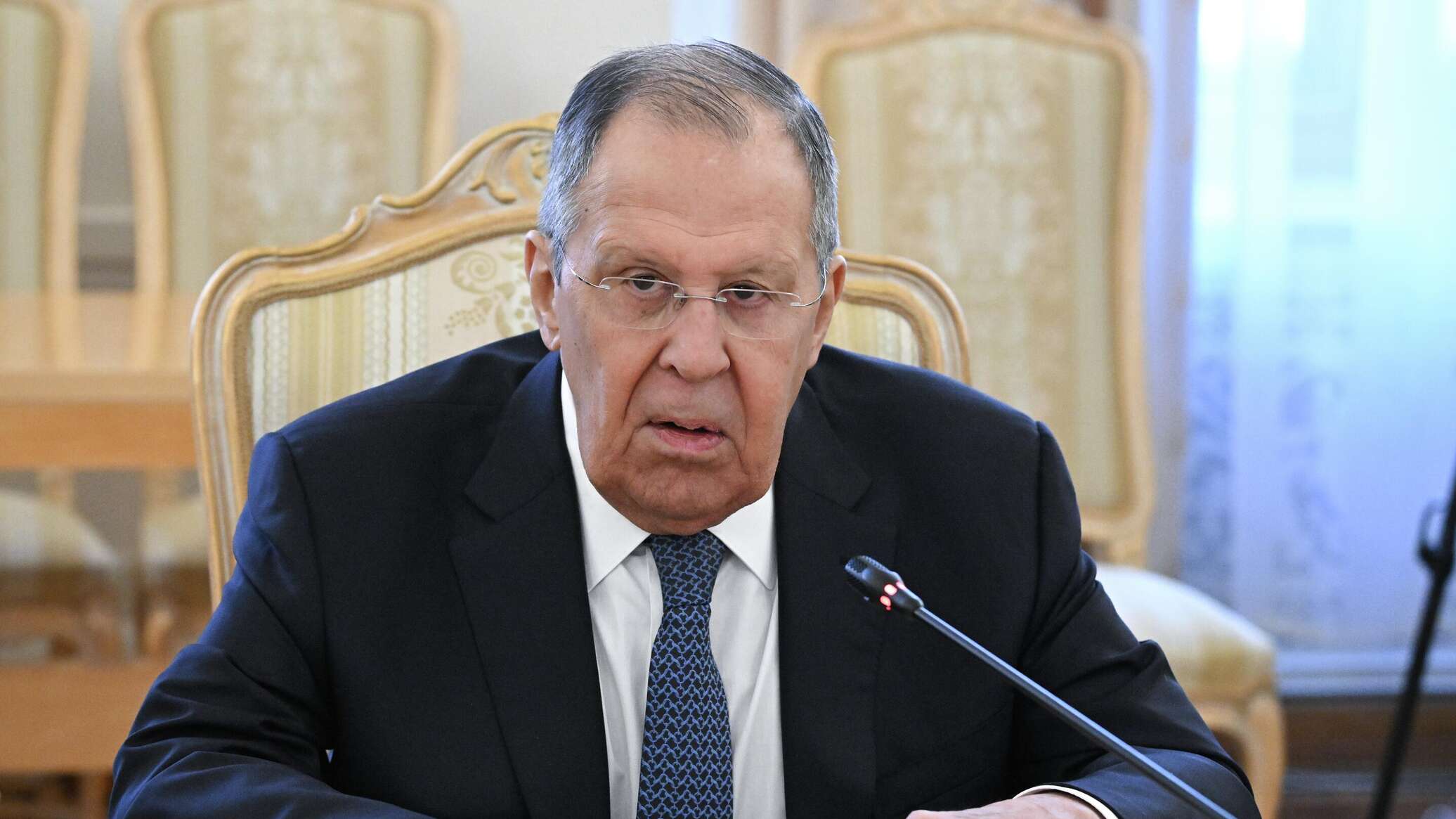
Russian Foreign Minister Sergei Lavrov said the Arctic could become one of the main areas of Russia-India partnership in the next 20 years. This was reported by Qazaqyia.kz citing Sputnik Kazakhstan.
On August 19, an important event took place for Arctic shipping. A container ship bound from China reached the port of Murmansk for the first time via the Northern Sea Route, which is a key component of the Transarctic Transport Corridor. With the participation of foreign partners, a new stage began in the development of the Polar region, which produces at least 10% of Russia's GDP and is home to over 2.5 million people.
Russia and international partners in the Arctic
The Fundamentals of Russia's State Policy in the Arctic until 2035, approved by Russian President Vladimir Putin, direct the work of all state bodies towards improving the quality of life of the population of the Russian Arctic zone, economic growth of its territories, environmental protection, and mutually beneficial international cooperation. The direction of international cooperation is particularly important for the Ministry of Foreign Affairs, which is responsible for coordinating relations with foreign countries and intergovernmental organizations.
I would also like to note that all issues related to the development of the Arctic region, maritime logistics, and the Northern Sea Route occupy an important place in the work of the Russian Federation's Maritime Board. The priorities of foreign policy activities in high latitudes are enshrined in the current Foreign Policy Concept of March 31, 2023. In the Arctic, Russia strives to maintain peace and stability, reduce threats to national security, and create favorable external conditions for the country's socio-economic development.
To implement these guidelines, we are open to cooperation with all constructively minded foreign states that show mutual interest. The vast resource and transport-logistics potential of the Far North, its unique natural and climatic features, long-standing traditions of regional cooperation, and the rich cultural heritage of indigenous peoples offer broad opportunities for mutually beneficial partnership.
Among the countries that have established close cooperation in the Arctic, China and India stand out. With Beijing, Arctic issues are importantly discussed at regular meetings of heads of government. A specialized bilateral subcommittee on the Northern Sea Route, as well as mechanisms for inter-ministerial consultations and scientific exchanges, are in operation. As results, one can mention the launch of regular container shipping through Russia's northern seas, plans to expand their volumes, and other achievements in polar research.
We are conducting an active dialogue with New Delhi on high-latitude issues. At the end of August, this issue was discussed at a meeting of the Intergovernmental Russian-Indian Commission on Trade, Economic, Scientific, Technical and Cultural Cooperation. Indian corporations are participating in the development of the resource potential of the Polar region. According to some experts, the Arctic could become one of the main areas of Russia-India partnership in the next 20 years.
In the Far North, there are prospects for cooperation with Brazil, Indonesia, Iran, and other BRICS countries. We are ready to develop cooperation with Belarus and other allies and partners in the CIS. Despite the participation of the "collective West" in the unfriendly sanctions campaign against our country, one can also note South Korea and Singapore, which have shown interest in working with Russia on concrete Arctic projects.
The interest of non-Arctic states in cooperation with Russia in high latitudes is manifested in the active participation of foreign guests in symposia and conferences devoted to Arctic issues. Many foreign delegations will take part in discussions at special sessions of the XI Eastern Economic Forum, which opens on September 1 in Vladivostok. In March next year, we will be happy to welcome distinguished guests from abroad at the major international forum "Arctic: Territory of Dialogue" in Murmansk.
Challenges to international cooperation in the Arctic
Preserving the Arctic as a zone of peace and cooperation is in the interests of the entire international community, and Russia is certainly interested in this. However, there are those who disagree. Otherwise, how can one understand that NATO countries are militarizing the region and creating hotbeds of international tension there?
In February 2026, NATO launched Operation "Arctic Guard," aimed at expanding military presence in high latitudes. Enhanced military preparations are being conducted near our northern borders. Large-scale, aggressive exercises are being held with the participation of non-regional countries, and new elements of NATO's command structure are emerging. Such military activity in the Far North poses a direct threat to Russia's security.
The risk of incidents that could lead to an armed conflict with catastrophic consequences is growing. The deliberate and targeted creation of an atmosphere of mistrust in the military sphere is accompanied by Western attempts to violate Russia's legitimate rights to international cooperation through illegal financial and economic sanctions against legal entities and individuals of leading global countries participating in joint projects in the Arctic. NATO and other Westerners do not hide their true intentions, declaring the goal of turning the Arctic into a new front of confrontation to hinder the development of our country and its like-minded allies. One manifestation of the West's anti-Russian policy has been the blocking of once-effective mechanisms of multilateral cooperation in the Far North.