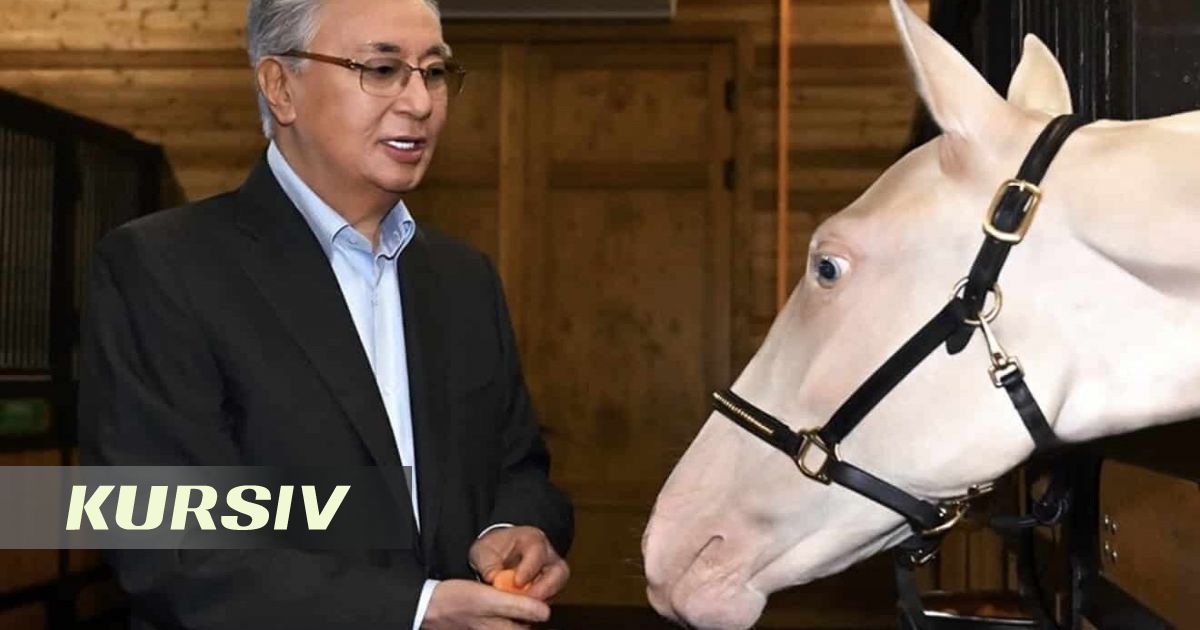
An unusual Akhal-Teke filly named Akzhan is growing up in Astana. Her coat shimmers in the light, creating an almost metallic sheen, and the rare isabella color, according to the provided description, occurs in only about three percent of representatives of this breed. This was reported by Qazaqyia.kz citing Kursiv Media.
Akzhan was born on March 30, 2025, in the capital of Kazakhstan. Her parents are purebred Akhal-Teke horses Gauntly and Tabys. The name of the young filly translates as “Pure Soul.”
Akzhan’s main feature is her unusual appearance. Her light coat reflects the sun’s rays, taking on a golden, metallic, or satin hue. It is precisely this characteristic shine that is considered one of the distinguishing traits of the Akhal-Teke breed.
Akhal-Teke horses are known for their graceful build. They have a long neck, a refined head, thin skin, a lean body, and strong legs.
However, behind the outward fragility lies endurance. The breed was formed in the harsh conditions of Central Asia, where horses had to cover long distances, endure heat, and cope with a lack of resources.
Akhal-Tekes are also distinguished by their sensitivity and ability to bond with humans. They respond better to calm, attentive, and consistent handling than to brute force.
Thanks to their physical qualities, representatives of the breed participate in various equestrian sports – from dressage and show jumping to eventing and endurance racing.
Akzhan’s story takes on special meaning against the backdrop of Kazakhstan’s modern capital.
Over several decades, Astana has transformed from a small regional center into a major city with modern architecture, wide avenues, and new residential districts.
At the same time, the horse still holds a special place in Kazakh culture. For centuries, it was indispensable in the daily life of the steppe people, helping them cover long distances, manage their households, trade, and defend their lands.
Therefore, the story of the young Akhal-Teke filly is not just a tale about a rare breed. Akzhan has become a vivid image of the connection between the history of the Great Steppe and modern Astana, where centuries-old traditions coexist with new urban symbols.