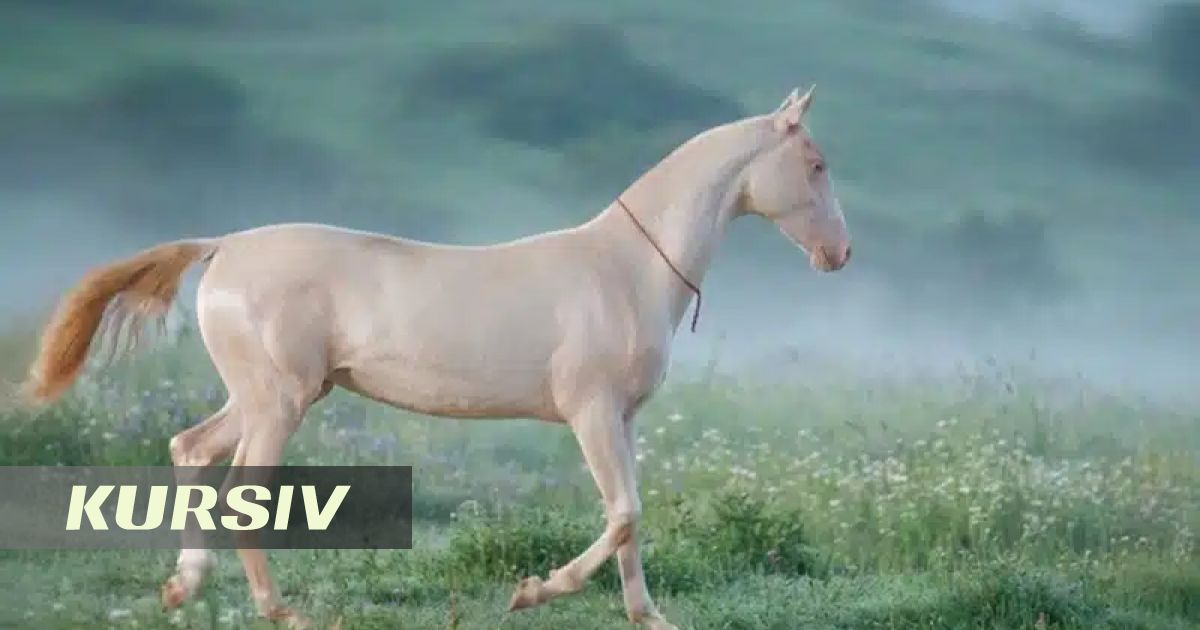
In Astana lives an unusual representative of the legendary Akhal-Teke breed — a mare named Akzhan, which translates to 'Pure Soul'. The daughter of purebred Akhal-Tekes Ganatly and Tabys is already being called not only a rare beauty but also a new cultural symbol of the capital, writes Kazinform. This was reported by Qazaqyia.kz citing Kursiv Media.
Akzhan belongs to the unique Isabella color, considered one of the rarest among Akhal-Teke horses. Due to the special structure of her coat, her color has an unusual optical effect: the hairs reflect light, creating a characteristic satin sheen. In steppe tradition, such horses have long been considered harbingers of luck, well-being, and prosperity.
According to cultural scientist Asel Nikambekova, for the Kazakh people, the horse has always been much more than just an animal.
"The cult of the horse has become the main symbol of Kazakh culture. In mythology and historical memory, the horse is associated with statehood, defense of the Motherland, and unity of the people," the expert notes.
Researcher Serikbol Kondybai used the concept of "mythical argymak" in his works, emphasizing the special role of the horse in the development of nomadic civilization. Horses were used not only in farming and military affairs but also became part of the time measurement system, astronomical concepts, and healing rituals.
It is the territory of modern Kazakhstan that is considered the place of the first domestication of the horse. Archaeological finds of the Botai culture, dating back to the 4th millennium BC, indicate that the inhabitants of the Great Steppe were the first to use horses for riding and economic needs.
This event became one of the most important stages in human history. The horse gave people the ability to quickly cover long distances, develop trade, expand territories, and unite vast spaces.
The special place of the horse in the life of steppe peoples is also reminded by numerous petroglyphs of Kazakhstan, which depict scenes of hunting, rituals, and battles. In almost all of these drawings, the horse occupies a central place.
Akzhan, who is called the heiress of "heavenly horses," has become a living continuation of this centuries-old tradition. Her image combines ancient symbols of nomadic culture and modern urban identity.
The project authors believe that the name "Pure Soul" reflects not only a poetic image but also important social values — respect for others, justice, legality, and responsibility to society.
On social networks, residents of the capital actively discuss the young mare, sharing photos and comments. According to observers, Akzhan is gradually becoming a recognizable symbol of Astana, uniting the history of the Great Steppe and the image of modern Kazakhstan.
Earlier, the uniqueness of the horse named Akzhan was written about by in-flight magazines of China and Russia. In the publication of the Rossiya airline, the article was titled "Heavenly Horse of the Great Steppe." The Chinese magazine "Wings of China" also dedicated a separate article to her, calling the horse "wings of the steppe."