When the Iraqi national football team qualified for the World Cup at the end of March, Abdullah Adnan bought tickets for his country's matches against Norway and France, which will be held in the US cities of Boston and Philadelphia. This was reported by Qazaqyia.kz citing BBC News.
"Going to the stadium, seeing my team, shouting – that's my whole world. This feeling is incomparable," he says. This is only the second time Iraq has qualified for the World Cup – the first was in 1986.
But getting a visa turned out to be difficult. And Adnan is not alone. An analysis of travel data conducted by BBC World Service shows that fans from more than a quarter of World Cup participating countries face travel bans, stricter restrictions, or high visa refusal rates.
However, Iraq is not on Trump's travel ban list, so in Adnan's case, the obstacle was unexpected. After the war between the US, Israel, and Iran began, the US suspended regular consular services in Iraq due to security concerns in the region. This means there is no place in the country where Adnan and other Iraqi fans could get a visa, as they need to attend an in-person interview.
Therefore, Adnan traveled to neighboring Jordan to try to get a visa at the US embassy. But when he arrived for the appointment, staff told him that since he is not a Jordanian citizen, that embassy could not issue him a visa. The match tickets and the trip to Jordan cost him about $1,800 (£1,300).
Adnan considered applying for a visa in Turkey, but the process could take up to two weeks, and he decided he could not be away from home that long. He gave up trying to get a visa.
Fans from several countries told BBC World Service that other obstacles are also causing widespread discontent. One barrier is President Trump's list of bans and stricter visa restrictions for certain countries, including four World Cup participating countries – Haiti, Iran, Senegal, and Côte d'Ivoire. This means their citizens are prohibited from obtaining the type of visitor visa that US authorities recommend for fans.
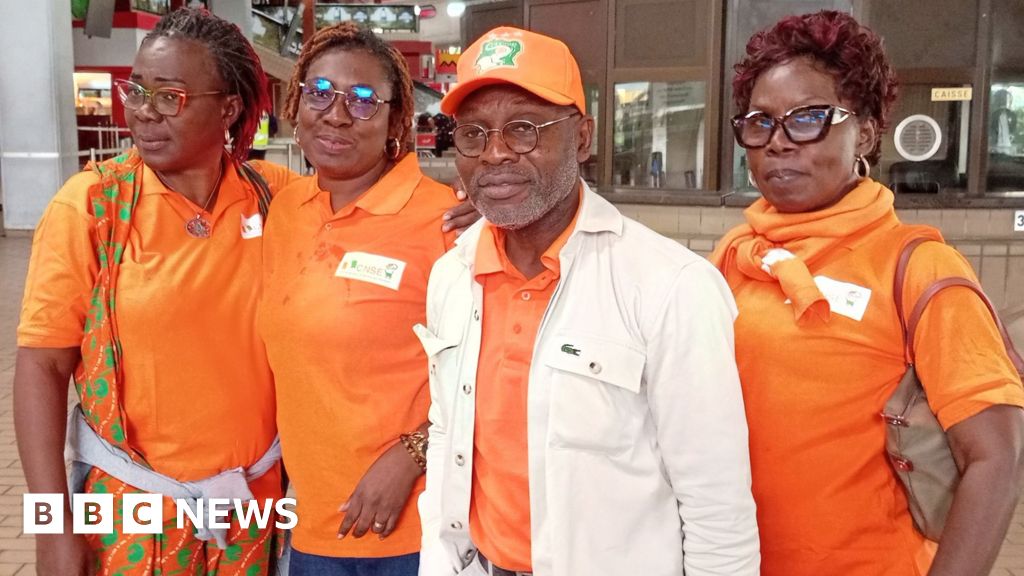
Julien Kouadio Adonis from the Côte d'Ivoire fan association says: "This is a form of segregation that does not dare to call itself, but the evidence is clear. No European country has faced such restrictions. Why Africa?" His association usually sends a group of fans to the World Cup but decided not to try to go to the US because of the rules.
42 wealthier countries benefit from a visa waiver program, where applications are submitted online through the ESTA system. It costs about $40 (£30). There are no African countries on this list.
The visa that the US recommends for World Cup fans costs $185 (£137), and applicants must attend an in-person interview. The State Department says they must demonstrate "an intention to leave the US after the trip and/or the ability to pay all travel expenses."
However, in May, the US announced that it was canceling the requirement for a bond of up to $15,000 (£11,000) for people from World Cup participating countries – Algeria, Cape Verde, Côte d'Ivoire, Senegal, and Tunisia – if they have valid World Cup tickets. Fans from Senegal and Côte d'Ivoire had to obtain visas before December, after which the restrictions came into effect.
Senegalese fan Aliou Ngom attended the last two World Cups in Qatar and Russia. For him, one of the main highlights of the tournament is "bringing together cultures from around the world." Last year, a training camp for the Senegalese women's basketball team in the US was canceled after several players were denied visas.
An analysis by BBC of US State Department data showed that the visa refusal rate for citizens of 11 of the 48 countries that qualified for the World Cup exceeds 40%. This includes applicants of all categories, not just potential fans. The data covers the period from October 2024 to the end of September 2025. These 11 countries are: Ecuador, Egypt, Haiti, Algeria, Uzbekistan, Cape Verde, Jordan, Iran, the Democratic Republic of the Congo, Ghana, and Senegal.
With high refusal rates, fans from these countries find it difficult to decide whether to risk spending large sums on match tickets before applying for a visa they may not receive. If they buy tickets directly from FIFA, they can resell them on the FIFA website for a fee and use the Fifa Pass system to expedite the visa application process.
"Fifa Pass is a positive step because it tries to provide ticket holders with priority visa interviews," says Celine Attallah, managing director of an immigration law firm near Boston, Massachusetts. But she adds that while it speeds up the process, it does not increase the likelihood of visa approval.