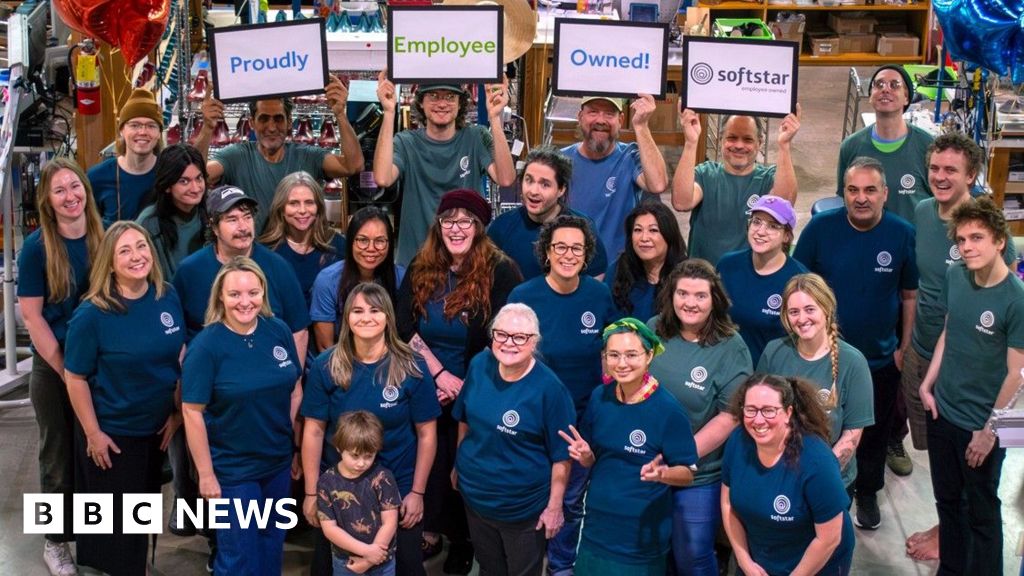
Staff at Softstar Shoes in Oregon now own the business they work in, after the shoemaker became employee-owned in January. This was reported by Qazaqyia.kz citing BBC News.
Former sole owner and CEO Tricia Salcido, 56, decided to sell the business to its 30 employees as she plans for retirement. She will stay on as CFO for a few more years and says colleagues are now offering many suggestions for running the business.
"I'm getting personal emails from employees saying, 'well, have you thought about this idea?'" she says. "These are business insights that weren't forthcoming before!"
A 2025 study said up to 600 US firms are now sold to their workers per year. Investment funds for such deals rose 78% to $865 million last year from $500 million in 2024.
Research shows employee-owned companies can be more productive, less likely to make redundancies, and pay higher wages.
For Salcido, it was a way to preserve local jobs and prevent artisan shoemaking from leaving the US. "It's something you put your life's work into… most small business owners really care," she says.
About six million US small and medium-sized companies owned by baby boomers will retire by 2035, says a McKinsey report. Some call it a "silver tsunami".
Harvard Business School's Ethan Rouen says: "I don't think a week goes by where I don't talk to an owner who is looking to sell their business." Grown-up children often aren't interested in taking over.
Rouen believes employee ownership can help firms survive, appealing to owners who care about employees and worry about a sale to a larger company or private equity.
William Stockwell of Stockwell Elastomerics, founded in 1919, sold to employees after seeing what happened to other firms bought out.
In the US, several schemes allow workers to buy their company. Softstar Shoes used an Employee Ownership Trust (EOT), where a trust takes ownership on behalf of staff, paying the former owner from future profits.
Stockwell used an Employee Stock Ownership Plan (ESOP), where employees get shares they cash in when leaving. ESOPs are the most common method, with 6,609 companies in 2023, employing 10.9 million people and holding over $2 trillion in assets.
A third method is a worker co-operative, where workers buy a share of the business.
Rouen says employee ownership appeals not only to older founders but also to younger workers "disillusioned" by traditional corporate structures. "The only way to truly create wealth in this country is through ownership of capital. And this is a way to democratise that," he says.
However, EOT and ESOP schemes are more complex to set up than a traditional sale, and owners face a longer wait for their money and increased risk.