Despite a previously declared truce, the United States and Iran have again exchanged strikes. Washington attacked Iranian military sites, saying the operation was a response to an attack on commercial vessels in the Strait of Hormuz. In retaliation, Tehran struck US military infrastructure in the Persian Gulf states and Jordan. The new escalation threatens the fragile ceasefire and heightens fears for the security of global oil supplies. This was reported by Qazaqyia.kz citing Kursiv Media.
US Central Command said it struck about 90 military targets inside Iran. The targets included air defense systems, coastal surveillance assets, and missile and drone storage facilities.
US President Donald Trump said the operation was a response to Iran's attack on three cargo ships in the Strait of Hormuz.
"This is payback for Iran's bombing of ships yesterday. If it happens again, it will get much worse!" Trump wrote on Truth Social.
According to the American leader, the temporary ceasefire agreement has effectively ceased to exist.
Hours after the US operation, Iranian forces announced attacks on US assets in the region.
According to Tehran, the strikes targeted:
Kuwait reported that its air defenses intercepted one cruise missile, three ballistic missiles, and ten drones. One person was wounded by shrapnel.
Air raid sirens also sounded in Jordan. Authorities said eight missiles were intercepted.
After the exchange, Iranian media reported a series of explosions in the south of the country.
Reports came from Bushehr, home to a Russian-built nuclear power plant, as well as Konarak, Chogadak, and Bandar Abbas.
According to Iranian state media, 14 people were killed and 78 wounded in the US strikes on July 8 and 9.
The Fars news agency also reported that one strike hit a railway bridge used for trade with Russia and China.
The main driver of the new escalation remains control over the Strait of Hormuz, one of the world's most important oil trade routes.
Before the war, about 20% of global oil supplies passed through the strait.
The Islamic Revolutionary Guard Corps said ship traffic is gradually recovering and has reached about half of pre-war levels. However, only vessels using routes agreed with Tehran are allowed passage.
The IRGC warned that any further US intervention would provoke a "crushing response."
Iranian parliament speaker Mohammad Bagher Ghalibaf said the Strait of Hormuz will only be opened on Tehran's terms.
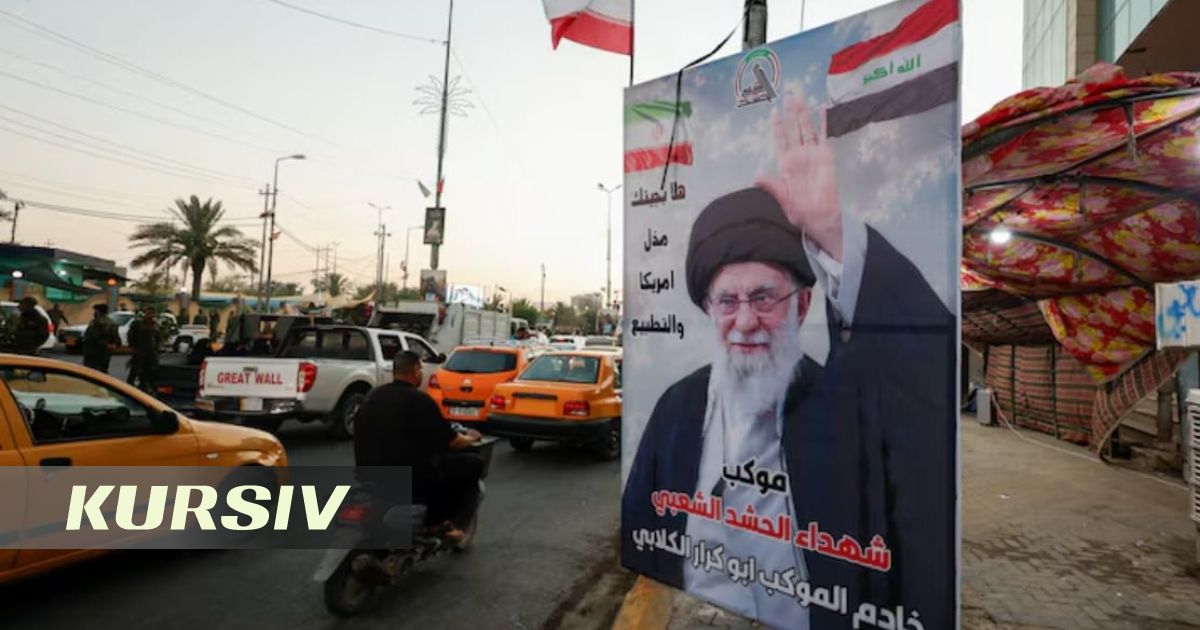
The escalation occurred on the day of the funeral of Iran's supreme leader Ayatollah Ali Khamenei, who was killed on the first day of the war.
The ceremony ended at the shrine in Mashhad, where tens of thousands gathered. Mourners carried anti-American slogans.
Qatar condemned the attacks on commercial ships but also called on both sides to return to diplomatic talks.
The foreign ministers of Turkey and Oman also urged de-escalation in phone calls with Iran's foreign minister.
Analysts say the new strikes put Donald Trump in a very difficult position. Any further escalation could lead to a full-scale war, but backing down could strengthen Tehran's hand.
The Strait of Hormuz is of particular importance, as Iran effectively sees it as a key tool for pressuring the US and global energy markets.
Against this backdrop, oil markets remain highly sensitive to developments. After a sharp rise, prices began to fall as investors hope the current violence will not escalate into a full-blown conflict.