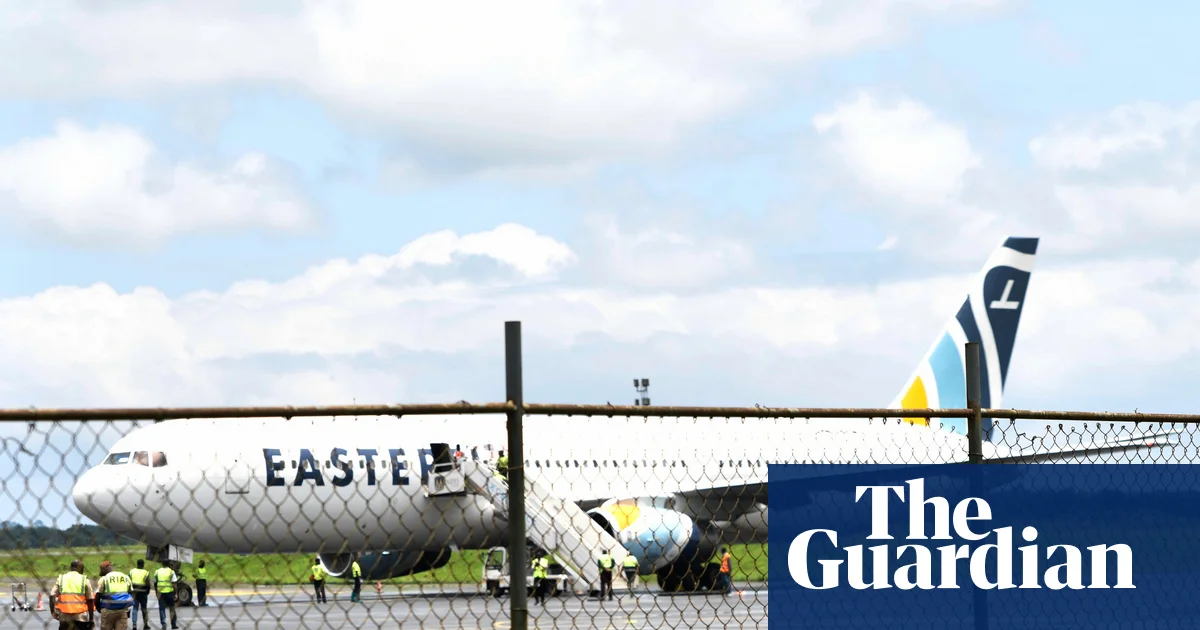
The United States sent 20 deportees to Liberia, who arrived on Thursday as part of 1,200 migrants that the African country will receive under a new deal. This was reported by Qazaqyia.kz citing The Guardian.
The deportees arrived at the Roberts international airport outside Monrovia. The Liberia-US agreement is among the largest third-country deportations driven by the Trump administration’s crackdown on immigration.
The 1,200 deportees will include African nationals and also nationals from North America, South America and the Caribbean, according to the Liberian information minister, Jerolinmek Piah.
During a briefing on Tuesday, Liberia’s justice minister, Natu Oswald Tweh, said that the majority of the deportees had committed migration-related violations and offenses, and that they could seek asylum in the west African country if they wished.
Under a series of often-secret agreements, the Trump administration has deported thousands of people to nearly two dozen countries that are not their own, advocates say, with about 10 of them in Africa.
Immigration lawyers have said the Trump administration uses deportations to third countries as a legal loophole to indirectly force asylum seekers back to their home countries.
In many cases, migrants are deported to countries they have never been to or where they face safety risks and are left with little choice other than to return to the home countries they were fleeing from.
This agreement marks a significant step in US immigration policy and has sparked various international debates. Liberian authorities have expressed readiness to receive the deportees, emphasizing that their arrival should be seen as humanitarian aid.
The US government maintains that these measures are legal and stem from the need to strictly enforce immigration laws. However, critics view this approach as a violation of human rights, as migrants are sent to countries where their safety may be at risk.
The arrival of the first flight to Liberia signals the beginning of this process, with more flights planned in the coming months. This situation could affect US-Liberia relations and is drawing international attention.
Among the deportees are women and children, many of whom fled conflict and violence in their home countries. The Liberian government has promised to provide them with temporary shelter and necessary assistance.
This event reflects a new phase in US immigration policy, where deportation to third countries is widely used. Debates over the legality and humanity of this approach continue.