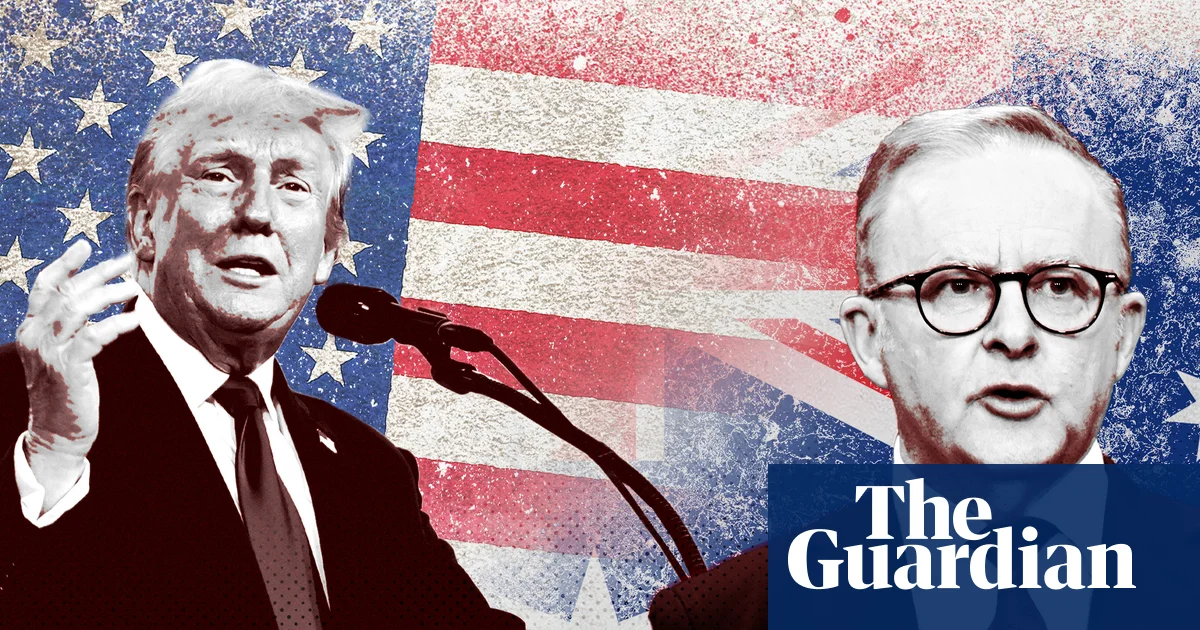
The Democrats' stunning midterm victory should broaden Australia's alliance with the US, observers say, even as a new power base emerges in Washington, affecting Aukus, datacentre development and relations with China. This was reported by Qazaqyia.kz citing The Guardian.
Cabinet ministers, diplomats and Australia's defence industrial sector closely watched the results this week, with control of the US Congress flipping to the Democrats and the outlook for Donald Trump's final two years in office badly dinted.
Public fury over rising living costs, particularly fuel prices, and the impact of datacentres, were also two factors in the midterms results that carry warnings for the Australian government, analysts said.
Bruce Wolpe, a senior fellow at the United States Studies Centre, said Trump's ability to rile up voters had been undermined by cost of living. Wolpe said the Albanese government was taking a hit because of the economic fallout from the Iran war.
"I think a lot of people are wondering what does this [Australian] government do?" he said. "Have they lost control of the economy? In January, before the Iran war, the outlook looked pretty good. But now, after going through a budget process and the war … people are just very uncertain as to where this is going to end up. It is not an immediately solvable problem, and people really dislike it."
Westpac's head of international economics, Elliot Clarke, said the landslide midterms results had "dramatically changed" the outlook for the Iran war, which could affect the economy in Australia.
"It has changed the 'atmospherics' around the Middle East conflict," he said. "It's positive news."
There was a steep drop in the global oil price as the election results filtered out. The Brent crude benchmark, which had threatened to pass its April peak, has instead plunged by 20%. More confidence in a potential resolution in the Middle East would also help curb inflation and help central banks hold back on rate hikes, according to Clarke.
"It definitely changes the calculus," he said.
Coalition frontbencher Andrew Hastie said the results showed economic messaging was critical. "People feel worse off after tariffs and after the war in Iran, and Donald Trump has said a few times now that he doesn't really care," he told 2GB. "Our job is always to deliver better outcomes for the Australian people."
Arthur Sinodinos, a former ambassador to Washington, said the change on Capitol Hill was a chance for Australian officials to progress policy goals with both US parties, and to consider the relationship beyond the 2028 presidential election.
"The main question mark is: 'What is the impact on geopolitics across the world?'" he said. "Does this inject more uncertainty into American foreign policy? We've already had a lot of volatility in that regard. The Congress may put more pressure on the administration to support Ukraine and pass measures that involve funding munitions to Ukraine. I think the Chinese will feel more emboldened, but I don't think that translates into some sudden action on Taiwan. Trump has made it clear in the past that they won't do anything on his watch, and I think he would feel bound to act if they did."
Sinodinos praised prime minister Anthony Albanese's professional approach to dealing with the often unconventional US president. "I think the Australian government's reaction after this vote is keep working with the administration, keep their heads down," he said.
Trump claimed that Republicans had fared poorly because he was not on the ballot, despite repeatedly urging voters to pretend he was on the ballot. The vice-president, JD Vance, called Trump's war in Iran "the obvious culprit".
Ed Husic, former industry minister, wants a radical shake up in the alliance. "The moment to reset the relationship with the Trump administration is right now," he said. "A completely different Congress will require that administration to do things differently, including not hurting allies – friends, such as Australia – with tariffs."
Abe Denmark, a partner at The Asia Group and an architect of the Aukus agreement in the Biden administration, warned against over-interpreting the results for Australia. "What will change is how power is distributed in Washington," he said.