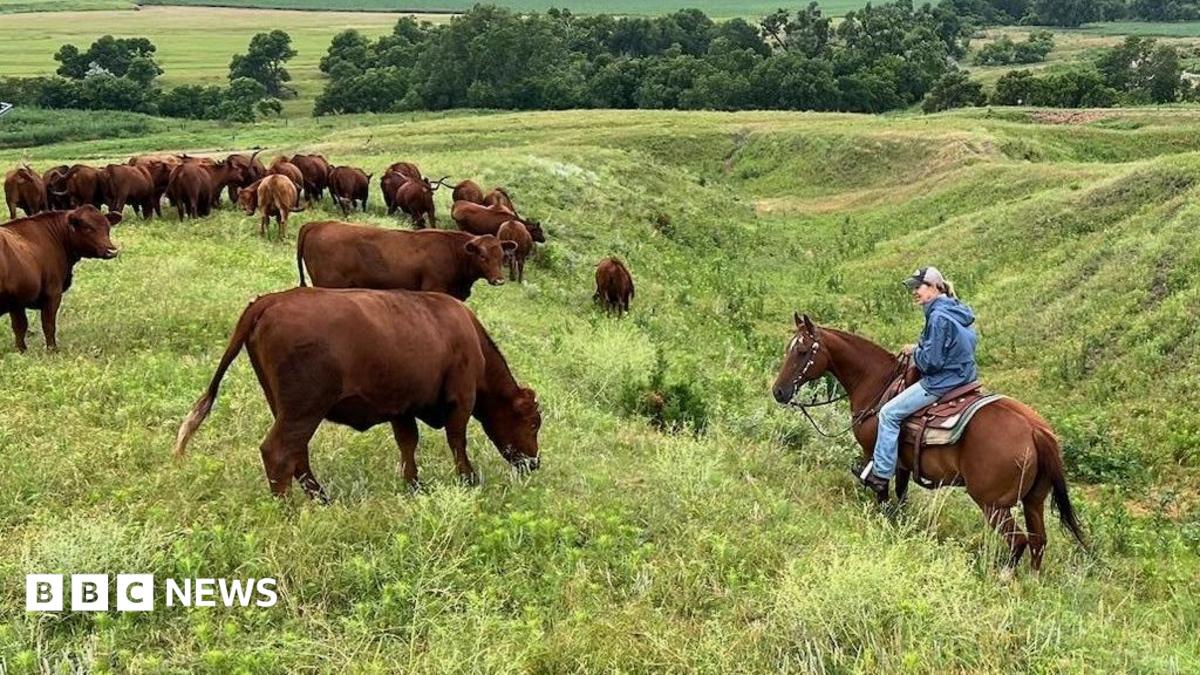
Nebraska rancher Yvette Mannon was already having a rough year. In April, a wildfire destroyed 1,600 grazing acres and 13 miles (21 km) of fence along the ranch she bought in 2002. Her 300 cattle survived the blaze, but the fencing needed to be replaced. With steel prices at their highest levels in years, heavily affected by tariffs imposed by US President Donald Trump, that meant spending $4.89 a foot — for a total exceeding $300,000. This was reported by Qazaqyia.kz citing BBC News.
On top of that, because so much good grazing land had been destroyed, Mannon also needed a tractor out every day delivering hay to her cattle — at a time when diesel prices, spiking due to the Iran War, were up more than 40% from the previous year. Then in August, the Trump administration announced it would import 300,000 metric tons of duty-free foreign beef in a bid to lower consumer prices. The news hit right before the September-November window when most US calves are weaned and sold.
"So we're 'Buy American', 'Let's Make America Great'," said Mannon, 63, who voted for Trump. "But for you guys over here, sorry." "It just felt like a betrayal," she said.
Many farmers and ranchers across the US say they are being hit from all sides. Recent years have been difficult, with drought affecting crops and already historically low cattle herds. But they say government policies have added to the strain. That has left some in Nebraska, which overwhelmingly backed President Trump during the last election, reassessing their political allegiances.
Dan Osborn, an independent candidate running against Trump-backed Republican Pete Ricketts, is performing surprisingly well in the polls ahead of November's Senate race. Republicans seem keenly aware of the discord and frustration among farmers. Both Trump and Nebraska Governor Jim Pillen have in recent weeks announced relief policies aimed at lowering fuel costs for farmers and ranchers, who say they have been struggling for months.
The Iran War has sent diesel and fertiliser prices skyrocketing — both daily necessities for agricultural operations. Tariffs have affected machinery costs and repairs, as well as steel and lumber prices. And decisions by the Trump administration — whether it be importing foreign beef or opening up the southern border to Mexican cattle — have sent already-volatile markets into overdrive. Many producers are losing hundreds of dollars per head of cattle.
"All of this hit cattle markets, as a whole, negatively," said James Mitchell, an assistant professor and agricultural economist at the University of Arkansas. Cattle markets run in 10-12 year cycles, he said, with some good years and some bad. The industry recently enjoyed a particularly lucrative period, where low supply and high demand drove up prices. But now, the market is clearly on a downswing.
Jake Wolfinger, 45, has been weathering the downturn at his feedlot near Lexington, Nebraska. He and his wife are both Ohio natives hailing from multi-generational farming families. They moved to Nebraska — which enjoys lush land and the most groundwater in the nation — to strike out on their own. The Wolfingers bought a dilapidated feedlot in 2010, which they have turned into a sophisticated operation with 5,500 cattle. Neighbours point to them as an example of what hard work can still do in a tough industry.
But Wolfinger did not factor the Iran War, tariffs or foreign beef imports into his planning. "Things were just chumming along pretty good," he said, selling cattle for $240 per hundredweight — but that's dropped to $225. That may not seem like much, but it means a loss of potentially hundreds of dollars a head. Wolfinger is also contending with sky-high diesel costs, with some equipment going through 400-gallon tanks a day.
A Trump supporter, Wolfinger said he voted for the president because "we needed his spirit in this country". He also expressed frustration with what he called "woke DEI" policies on the left. But he is unhappy with the way the president has intervened in the beef market. "People need to stay the hell out of farmers' business, because it's harvest time," Wolfinger said.
Forty miles northwest, near Callaway, Nebraska, 54-year-old Duane Kimball stands in his shed surrounded by machinery — and a huge Trump banner along one wall. "The daily upcharge… is kind of painful," he said.