As Brazil's 2026 presidential election approaches, accusations of US interference in the electoral process are intensifying, drawing comparisons to CIA meddling 64 years ago. This was reported by Qazaqyia.kz citing The Guardian.
In 1962, the Kennedy administration was desperate to swing Brazil's congressional elections against its leftwing president, João Goulart, to counter the supposed communist threat. Historians say that in the lead-up to the vote, the CIA and the Department of State secretly channelled millions of dollars to opposition candidates and groups tasked with spreading rightwing propaganda and stirring up unrest.
Chico Rubens Paiva, a 38-year-old political activist whose grandfather Rubens Paiva investigated US meddling during a 1963 parliamentary inquiry, said: "There was a very heavy-handed intervention here by the US government." His grandfather was murdered by the US-backed dictatorship that seized power in 1964.
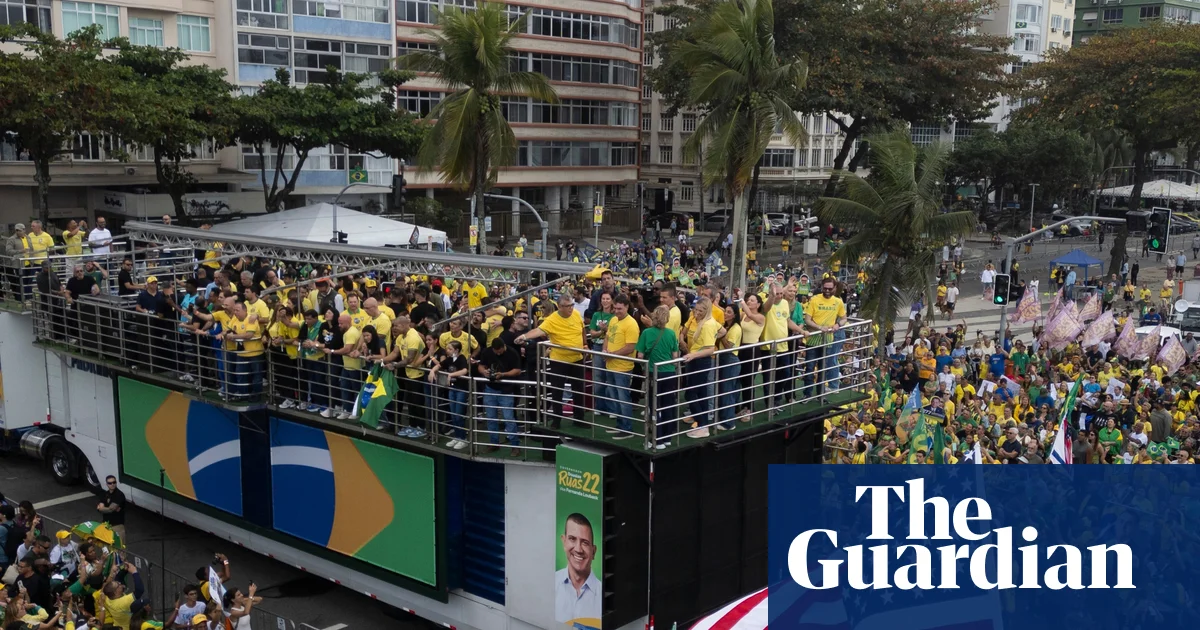
October's vote will pit leftwing incumbent Luiz Inácio Lula da Silva against far-right senator Flávio Bolsonaro, son of former president Jair Bolsonaro, a Donald Trump ally serving a 27-year sentence for plotting a military coup. Polls suggest a tight race.
Trump and his secretary of state, Marco Rubio, are accused of trying to tip the scales in Bolsonaro's favor by launching an overt campaign of economic and diplomatic pressure against Lula. US measures include imposing 25% tariffs on most Brazilian imports and designating Brazil's biggest crime groups – Rio's Red Command and São Paulo's First Command of the Capital – as foreign terrorist organizations. Brazilian officials suspect this is partly designed to boost Bolsonaro by making Lula look soft on crime.
In July, Lula said two Trump officials had been denied entry visas because they planned "to meddle in Brazil's elections." Brazilian officials believe the pair, who reportedly planned to meet Flávio Bolsonaro, intended to sow doubt about the reliability of Brazil's voting system. Soon after, the visa of Brazil's ambassador to Washington was revoked.
Political scientist Celso Rocha de Barros voiced bewilderment that US interference, which he considered the election's most urgent theme, was not getting more coverage in mainstream media. He said: "The greatest superpower in human history is explicitly backing a candidate in our election and is strangling the Brazilian economy in order to help him [win]. We cannot pretend that this isn't happening and treat this like a normal election... the Brazilian economy is under attack."
Trump's tactics echo Washington's cold war-era attempt to manipulate Brazilian politics in the lead-up to the 1964 coup. Back then, the CIA helped finance the Brazilian Institute for Democratic Action, which, according to historians Lilia Schwarcz and Heloisa Starling, illegally poured money into the campaigns of hundreds of lawmakers and eight gubernatorial candidates. "The objective was strategic: to create a strong opposition in congress, block government initiatives and prepare the way for a coup d'état," they wrote.
Another US-funded group, the Research and Social Studies Institute, was used to disrupt Goulart's government by bankrolling anti-communist propaganda and anti-government protests. Historian James N Green said: "The intention [was] getting rid of Goulart [and] opening the door to the military coming to power."
Green sees parallels between Trump's use of tariffs to sabotage Lula's campaign and how in the early 60s Washington sought to enfeeble Goulart's government by funding his opponents and cutting off loans. Then, as now, the US government was "bent on doing everything possible to weaken the government" in Brazil.
But Barros sees one key difference between the two US gambits. "[The 1962 campaign] was done covertly, precisely because the CIA knew there would be real public anger in Brazil if people knew the US was bankrolling candidates. So they did it secretly," he said. "Today, this is being done openly – and on an incomparably larger scale."
The Department of State rejected claims the US was seeking to meddle in Brazil's election. "Any insinuation of a 'ploy' to undermine a democratic nation's election is a baseless lie," an official said in a statement. "We respect the Brazilian people and whatever government that they choose freely through free and fair elections."