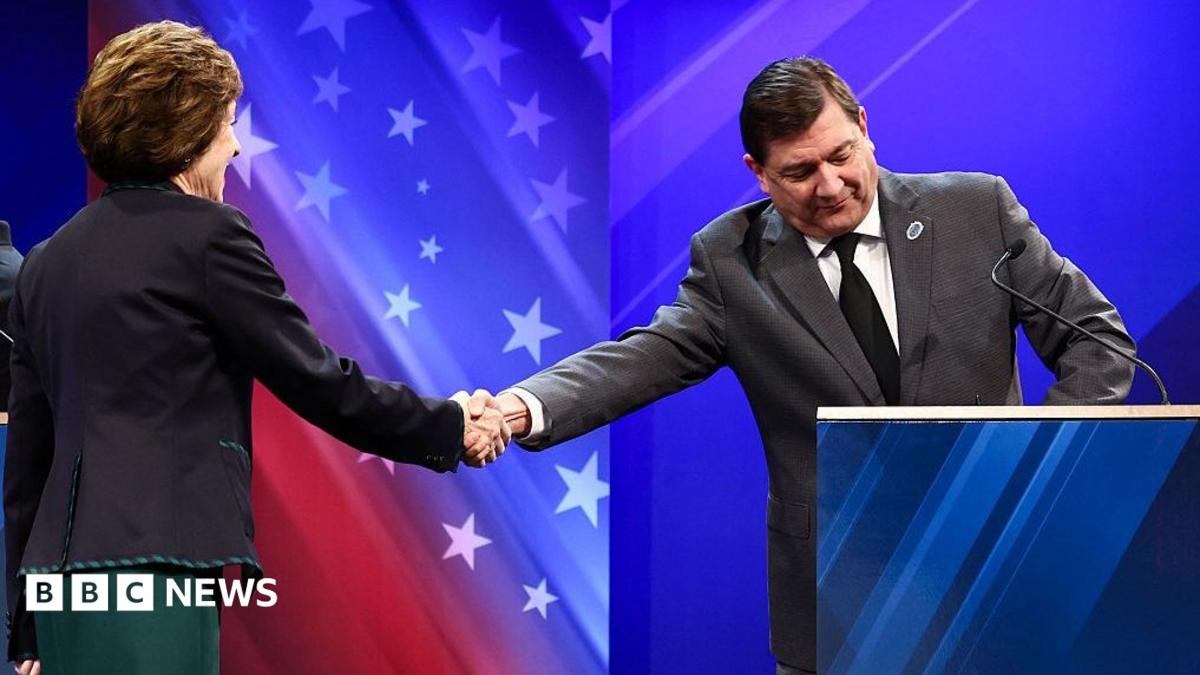
Candidates running for the US Senate in next month's midterm elections have taken to the debate stage over the past few weeks, with some heated exchanges and stinging personal attacks. This was reported by Qazaqyia.kz citing BBC News.
As the 3 November election approaches and parties fight for control of Congress, some clear themes have emerged, particularly within some of the hotly-contested Senate races.
Republicans running for office are facing the same question they have been asked in elections since 2016: how aligned are they with President Donald Trump?
Conservatives who have bucked the president in the past have generally not fared well with voters.
The president has seen low approval ratings in recent months, with polls suggesting voters are largely concerned with the cost of living and high fuel prices.
While some Republican candidates have remained in lockstep with Trump, a Reuters analysis indicated that two-thirds of candidates in competitive US House and Senate races have broken with the president in some way this election cycle.
Susan Collins, a Maine Republican running for her sixth term in the Senate who has repeatedly broken with Trump, is again putting clear distance between herself and the president.
"I voted with President Biden 91% of the time," Collins said during a debate last week.
"The fact is, this year alone, this Congress alone, I voted against President Trump 137 times," she said.
Collins is fighting a tighter Senate race than she expected against Democrat Troy Jackson, the former president of the Maine Senate. A New York Times/Siena University poll from mid-September suggests Collins could be ahead in that race by 3%, while others indicate Jackson is in the lead.
Elsewhere, some Republican candidates are choosing to separate themselves from the Trump administration's specific policy decisions, while expressing loyalty to Trump himself.
In Iowa, traditionally a Republican stronghold, Congresswoman Ashley Hinson is facing a tougher-than-expected challenge in her Senate race.
She is taking on Democrat Josh Turek, and some polls suggest he has a narrow lead.
Hinson has not gone as far as Maine's Collins in separating herself from Trump, but she has broken with the president on some policy points.
During a 13 October debate with Turek, Hinson was asked about the Trump administration striking a deal with Russia to import 300,000 tonnes to the US, followed by several other shipments.
The Republican candidate did not mince her words: "We need to lower gas prices in this country, we need to lower diesel prices, but I don't think we need to be making a deal with Russia to do it."
As they have debated in recent weeks, the candidates haven't held back on deploying pointed personal attacks against their opponents.
The race for the vacant Michigan Senate seat - between rivals Abdul El-Sayed, a Democrat, and Mike Rogers, a Republican - has seen its fair share.
Rogers, a Trump-backed former congressman, questioned during a debate whether anyone in his Muslim opponent's family might be on a "watchlist".
El-Sayed, who would be the first Muslim member of the US Senate, pushed back strongly.
He called the Republican "a sock puppet for the Trump administration" and said he was "weak, cowardly [and] won't stand up until his poll numbers drop".
On Thursday, as a protester interrupted a Maine debate between Jackson and Collins, who suggested that the person interrupting the debate was associated with her opponent.
Jackson then said to Collins: "Oh shut up, I don't even know that kid."
Further south in Georgia, more personal attacks were exchanged between incumbent Democratic Senator Jon Ossoff and Representative Mike Collins, a Trump-backed Republican.