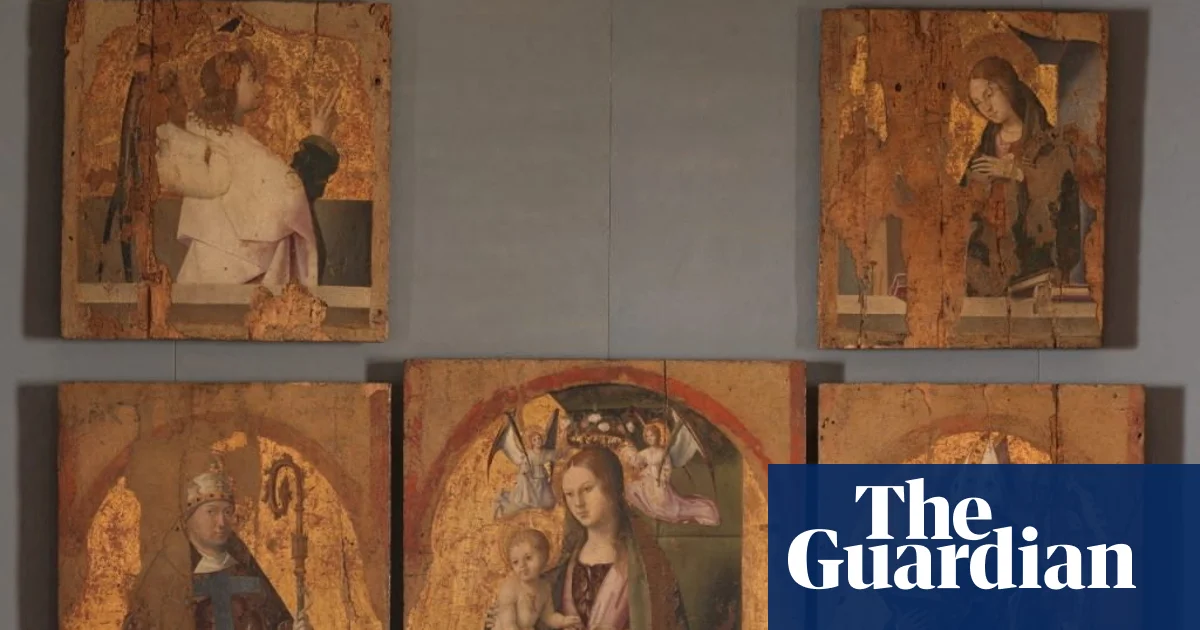
Four of the most important works of art by the 15th-century Renaissance master Antonello da Messina were stolen during a national holiday from a museum in the Sicilian port city of Messina. This was reported by Qazaqyia.kz citing The Guardian.
Thieves gained access to the regional museum of Messina, or MuMe, on Saturday evening, possibly capitalising on attention being focused on La Vara, a huge religious festival that takes place in the city on 15 August, when Italy marks the ferragosto national holiday.
Bypassing the alarm systems, the gang broke into a security display box and stole four wood panels painted by da Messina.
Thieves took three of the five surviving panels that made up an altarpiece known as the Polittico di San Gregorio, one of the Sicilian painter’s most important works. Originally composed of six panels created for the Monastero di San Gregorio, which was destroyed in the 1908 Messina earthquake, the altarpiece was the only work by the Sicilian painter never to have left his home city.
A fourth work was taken from a secure display case: a small double-sided painting depicting the Virgin and Child with a Franciscan monk on one side and Christ on the other.
The painting had belonged to the Wilhelm Soldan collection and was sold by Christie’s to the Sicilian regional government in 2003, the year it was attributed to da Messina.
Born around 1430, da Messina trained in Naples where he studied the works of Provençal and Flemish artists, whose influence is apparent in his works.
In February, the Italian government secured a rare da Messina masterpiece at auction in New York, spending $14.9m (£11m) on his Ecce Homo. The painting, sold at Sotheby’s, is an intensely human portrait of the suffering Christ, believed to have been completed about 1460.
The theft took place after Italian police on Friday had recovered three paintings by the French masters Paul Cézanne, Pierre-Auguste Renoir and Henri Matisse that were stolen earlier this year from a private museum near the northern city of Parma.