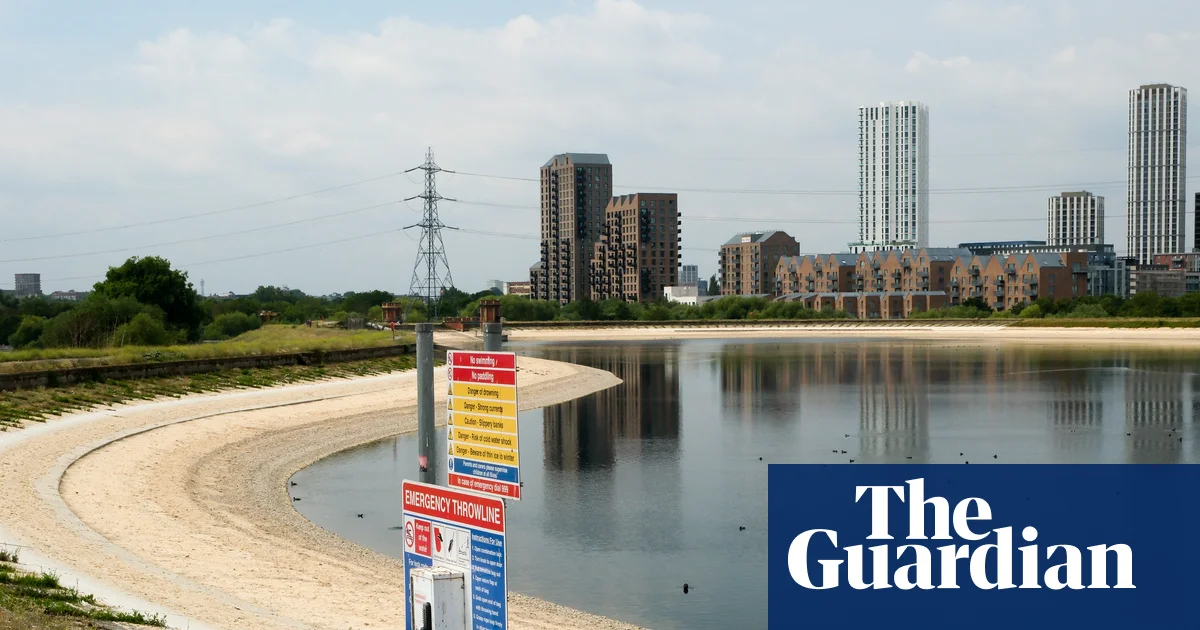
The government's housebuilding agenda is hitting the stark reality of a lack of water and crumbling infrastructure across the east and south-east of England. This was reported by Qazaqyia.kz citing The Guardian.
Half the country was declared to be in serious drought this week, for the second consecutive year, with the Environment Agency warning of dire consequences for the economy, environment and wildlife.
The parts of England in extreme water stress with residents under hosepipe bans are also where the government's "build, baby, build" agenda is being targeted. Labour has promised to build 1.5m homes by the end of this parliament.
Environmental pressures are already extreme in the south and east of England. In one area where increased housing numbers are being demanded, fenlands are close to collapse from over-extraction of water; in another, chalkstreams are having to be artificially maintained.
Some water companies are clear there is "insufficient" water for new homes, a situation exacerbated by crumbling infrastructure.
"We cannot magic up more water," said Paul Harvey, the Independent leader of Basingstoke and Deane council, which is being told to build more than 1,000 houses a year in Hampshire. "They say 'build, baby, build' but it is something we cannot just wave a wand and do."
He said the evidence of the water cycle study showed demands for water from new housing may outstrip the limits of sustainable supply.
Across Hampshire, Kent, Hertfordshire, Essex and Cambridgeshire, drought linked to the climate crisis and the failure of the water industry to build critical infrastructure means growth plans are hitting environmental barriers.
Ali Morse, the water policy manager at the Wildlife Trusts, said: "This week we've seen drought declared across half of England, but even under normal conditions, water scarcity is emerging as an urgent issue. If we don't secure new water supplies and become more efficient with our use, it's clear that, under a changing climate, we won't have enough water to meet the needs of both society and the environment in future ... but what most don't realise is that across large parts of the country, we're already reaching this limit."
Mapping by the Environment Agency shows that even under normal flow conditions, there isn't any additional river water available to serve new homes or industry across roughly a third of the country.
Around Basingstoke, the struggle to find water for the existing population is causing huge environmental damage to one of the largest remaining alkaline fens in southern England, pushing it toward irreversible ecological collapse, according to Natural England.
The situation is so critical that the Environment Agency has banned South East Water from taking more water from the Greywell chalk aquifer. The water company is appealing against the decision.
South East Water has also failed to build a pipeline to channel water from the Surrey Hills to Basingstoke that it promised would be completed by 2030. Water regulators initially disallowed funding and there is no sign of the vital piece of infrastructure being built in the near future.
The housing target for Basingstoke has been increased from 830 to 1,150 new homes a year. In neighbouring East Hampshire, the number of homes required a year has risen by 98% to 1,142.
Basingstoke and Deane council, Natural England and the Environment Agency have been unable to approve a local plan because there is not enough water to meet the government's growth demands.
Harvey said: "The Labour government's unrealistic imposed housing targets don't take account of the fact that the Environment Agency, Natural England and the water companies are all waving red flags about whether the water exists to supply them."
Damian Hinds, the Conservative MP for East Hampshire, said there were serious questions about the long-term resilience of water supplies for existing customers, especially in times of drought, and about whether the planned housebuilding was sustainable.
"The existing water infrastructure is not capable of supporting development on that scale without infrastructure investment, which has yet to materialise," he said.
In Cambridgeshire, chalk streams are already being artificially filled by the Environment Agency because of over-extraction of water. Yet ministers are suggesting Greater Cambridgeshire can host another 150,000 homes as part of the creation of a development corporation to spur growth and take decision-making away from elected councils.