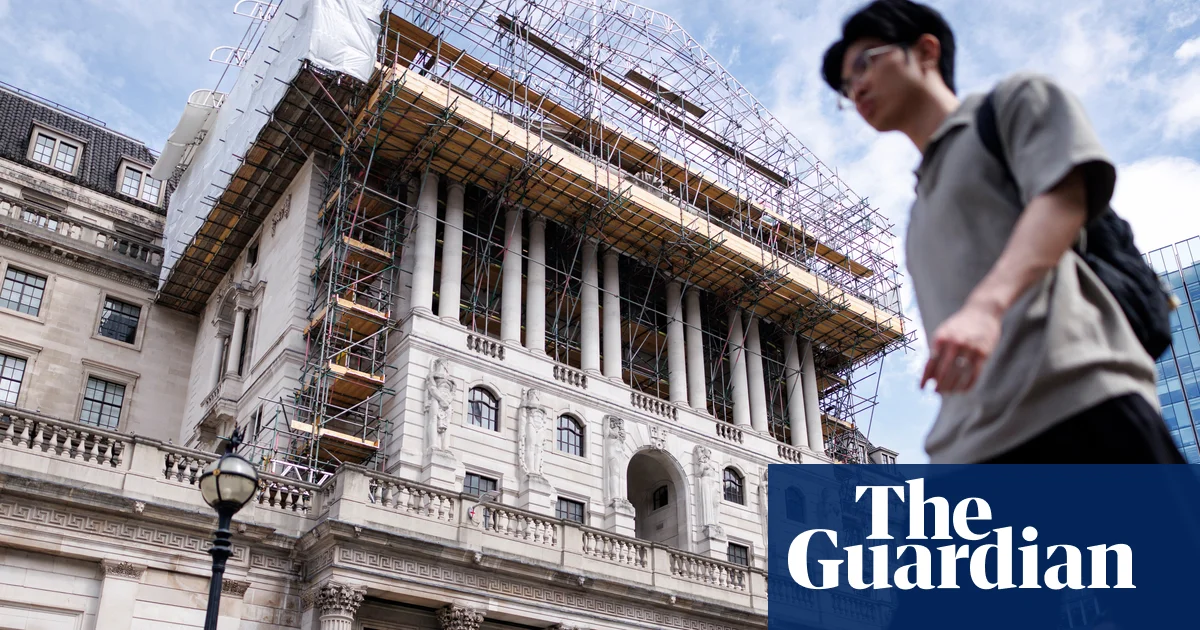
The governor of the Bank of England has warned consumers to expect higher costs this year as a result of the conflict in the Middle East, despite falling oil prices as the US and Iran signed an initial peace deal. This was reported by Qazaqyia.kz citing The Guardian.
Speaking after the Bank kept interest rates on hold at 3.75%, Andrew Bailey said there was "still some inflationary pressure in the pipeline" after the conflict pushed up energy prices.
Seven of the Bank's nine-person monetary policy committee voted to keep the base rate unchanged as the MPC weighed the threat of higher inflation against the prospect of an economic slowdown.
Two members voted for an immediate rise, indicating the risk that borrowing costs could soon increase.
Donald Trump's agreement with Tehran has brought oil prices down rapidly in recent days. Figures released on Wednesday showed UK inflation was more muted than feared, at 2.8% last month.
The Bank of England now expects the impact of the conflict on UK inflation to be less dramatic than first thought, with the consumer prices index (CPI) rising to about 3.25% in the final quarter of this year – lower than in any of three scenarios it laid out last month.
That is still well above the Bank's target of 2%. Bailey, explaining his vote to keep interest rates on hold, said a rapid reaction to rising inflation carried a risk of "undesirable volatility", but he suggested that the current weakness of the economy – including the jobs market – should help to contain the risk of inflation becoming entrenched.
"Given the context at present of softness in the real economy and uncertainty around the scale and duration of the shock to energy prices, tolerating temporarily above-target inflation as part of a return to target is an appropriate way to approach the trade-off, providing inflation expectations remain contained," Bailey said.
He added: "Oil prices have fallen in recent days, and that's encouraging. But they're still higher than before the war. Whatever happens in the future, the higher energy prices of the past four months mean there's already some inflationary pressure in the pipeline."
The governor said the Bank would attempt to ensure that inflation did not stay above its 2% target for a sustained period.
The pound fell to a 10-week low of $1.32 against the dollar after the interest rates announcement, and lost value against other leading currencies. Financial markets are still betting on one rate rise this year, despite the downgrade in inflation expectations.
The minutes of the MPC meeting reveal that the rate-setters remain concerned about the risk that higher energy prices feed through into wider inflation in the coming months.
"The committee will continue to monitor closely the situation in the Middle East and how its impact propagates through the economy. The committee stands ready to act as necessary to ensure that CPI inflation remains on track to meet the 2% target in the medium term," the minutes say.
Megan Greene, an independent member of the MPC, joined the Bank's chief economist, Huw Pill, in voting for a quarter-point rise, to 4%. The hawkish Pill had already backed a rise at the Bank's last meeting in May.
The Bank's wait-and-see stance contrasts with that of the European Central Bank, which raised rates last week in an attempt to dampen down inflation.
The MPC minutes highlight the fact that borrowing costs for consumers and businesses have already risen significantly since the Iran conflict began, as a result of shifts in bond markets – despite the Bank not having taken any action. The minutes highlight the fact that there has been "full and fast pass-through" of these market moves, to mortgages and business loans.
Figures released by the Office for National Statistics on Thursday showed the number of UK job vacancies fell to its lowest level for five years as businesses cut back on recruitment, despite signs that the labour market has been more resilient to the Iran war than feared.
UK markets will be closely watching the outcome of Thursday's byelection in Makerfield, with the prospect of a period of political uncertainty unlikely to be welcomed by investors in the UK bonds.
Asked in interviews about the byelection, Bailey said: "Stability is important, I think everybody recognises that. This is not one part of the political spectrum versus another. I think everybody recognises the importance of stability."
On Wednesday, the Federal Reserve kept US interest rates on hold at a range of 3.5% to 3.75%, where they have been since December, in the first meeting overseen by Kevin Warsh, who took over as Fed chair in May.