The jerry-built bordello at the foot of Vila Cururu, an illegal gold-mining settlement at the heart of Brazil's most desecrated Indigenous territory, was a hive of depravity until just a few weeks ago. Inebriated prospectors huddled around wooden tables, swigging beer and Scotch whisky, and ogling pole-dancing sex workers before going with them to shacks behind the brothel. This was reported by Qazaqyia.kz citing The Guardian.
The encircling encampment also teemed with intruders as hordes of miners used pickaxes and explosives to burrow deep into the hillsides and savanna in search of treasure. "They wiped out everything. They destroyed nature," said Jackson Katitãurlu, an Indigenous leader from the Nambiquara people, whose village is a few miles from the chaos in the south-western Amazon.
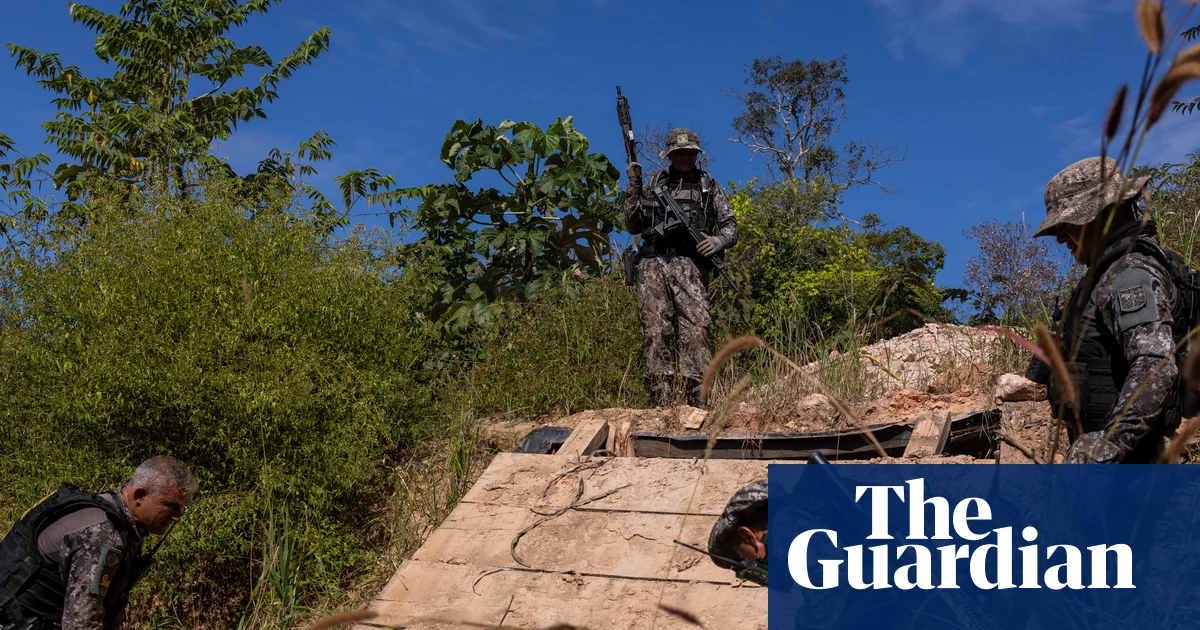
One recent morning, however, Vila Cururu was deserted: the once-bustling illicit community having been razed by Brazilian security forces as they fought to fulfil a pledge by President Luiz Inácio Lula da Silva to eradicate illegal mining in Indigenous territories after years of mayhem under his far-right predecessor, Jair Bolsonaro.
As Lula's eviction tsar, Nilton Tubino, hiked through the encampment's charred ruins, he recalled how miners fled into the surrounding forests after troops launched a land and air assault in late March to halt one of the most ferocious attacks on Indigenous lands in Brazil's recent history. Other much larger protected territories have suffered damage on a greater physical scale but nowhere was the vandalism as intense as in Sararé, a Singapore-sized chunk of savanna and woodland near the border with Bolivia that lost 4% of its forests between January 2024 and August 2025. A total of about 17.3 sq miles (44.8 km²) have been destroyed since the gold rush began about five years ago – an area almost half the size of Manhattan.
"It's total devastation," Tubino sighed as he marched through Garimpo Quatro, one of Sararé's largest mines, with an 18-inch machete strung across the front of his black fatigues and three radios strapped to his belt. Paradoxically, part of the explanation for Sararé's ordeal lies in the success of Lula's anti-mining crusade, which he launched after returning to power in January 2023. After Tubino's team kickstarted Lula's "disintrusion" drive in the better-known Yanomami Indigenous territory, some miners flocked south to Sararé, hoping to continue working far from the crackdown.
Another driving force has been surging gold prices, which have hit record levels amid the global instability unleashed by Donald Trump and his erratic foreign policy. "The price of gold, this crazy global context, Trump, these things … [have a direct impact] all across the Amazon," said Tubino, who saw a clear link between global turmoil and the annihilation of the forests around him, as investors sought a safe haven for their money.
"It's a complete desert. I was born and raised here and when I saw it I just couldn't believe it," said Katitãurlu, describing how his territory's rivers were poisoned and its wildlife scared off by the constant din of music and explosions. The crisis in Sararé, which began during Bolsonaro's environmentally catastrophic 2019-2023 presidency, is not the Nambiquara people's first taste of outside aggression. In David Price's 1989 book Before the Bulldozer, about the small Indigenous group, the anthropologist described how outsiders first came to the region in the 1730s when gold was found in.
The Guardian spent two days touring the destruction in Sararé with government forces, the only foreign media organisation given permission to visit the embattled territory, where about 200 members of the Nambiquara people live. Seen from a helicopter, the astonishing extent of the depredation became clear. Seemingly endless brown gashes had been ripped across the once verdant landscape, dotted with pools of stagnant bronze-coloured water contaminated with the mercury that miners use in their giant sluice boxes. Above Vila Cururu, which is named after a poisonous tropical toad with a propensity for digging, the pilot gasped as he absorbed the scale of the illegal operation. "It's like a favela. It's like Rio de Janeiro," he said of the sprawling mining camp as his six-seat aircraft swooped down towards dozens of demolished makeshift structures cobbled together from tarpaulins and planks.
Nearby, half a dozen tunnels had been bored into a rock face in the frenzied hunt for gold. On a nearby plain, an even larger mine had been gouged out of the forest by Hyundai excavators that the security forces had now torched. The trees had been levelled and replaced by colossal hillocks of grey and copper-coloured rubble over which red macaws soared. "It's a complete desert. I was born and raised here and when I saw it I just couldn't believe it," repeated Katitãurlu.