Almaty Electric Stations (AES), the company owning TPP-1, TPP-2, and TPP-3 in Almaty as well as the Kapshagay HPP, reported a net profit of 5.5 billion tenge in 2025. This was reported by Qazaqyia.kz citing Kursiv Media.
Compared to the previous year, profit fell by more than 70% – from 19 billion to 5.5 billion tenge, or nearly 3.5 times.
Meanwhile, revenue from contracts with consumers of the main electricity producer in Almaty and the Almaty region increased by 11% (14 billion tenge) to 139.8 billion tenge. However, the cost of energy production rose even more sharply – by 23% to 119 billion tenge.
The biggest impact on costs came from a rise in spending on the main fuel – coal – which jumped by 8.4 billion tenge to 47.8 billion tenge. Labor costs also increased by 4.6 billion tenge to 26.7 billion tenge.
Administrative expenses of Almaty Electric Stations surged 2.5 times – by 5 billion tenge to 8.2 billion tenge. This is mainly due to a 4.4 billion tenge fine imposed on the company in 2025 by the Almaty Department of the Agency for Protection and Development of Competition for imposing additional obligations under agreements. The company continues to challenge this decision in court.
Expenses on repayment of previously obtained loans, amounting to 19.8 billion tenge, also contributed to the profit decline, albeit less significantly. The report notes that at the end of 2025, the company's liabilities exceeded its current assets by 36 billion tenge, due to accruals under the modernization projects of TPP-2 and TPP-3 in Almaty.
The company attracted loans from the European Bank for Reconstruction and Development, the Asian Development Bank, the Development Bank of Kazakhstan, and Halyk Bank to finance these projects. As of end-2025, Almaty Electric Stations owed 85 billion tenge to the EBRD, 65 billion tenge to the ADB, 54.9 billion tenge to the Development Bank of Kazakhstan, and 49.4 billion tenge to Halyk Bank.
Most of the payments on these loans, as well as the costs of modernizing and converting TPP-2 and TPP-3 to gas, are being capitalized by the company. This means the costs are not immediately expensed and do not reduce current profit, but are recorded as the cost of a long-term asset. Their value will then be gradually transferred to expenses through depreciation.
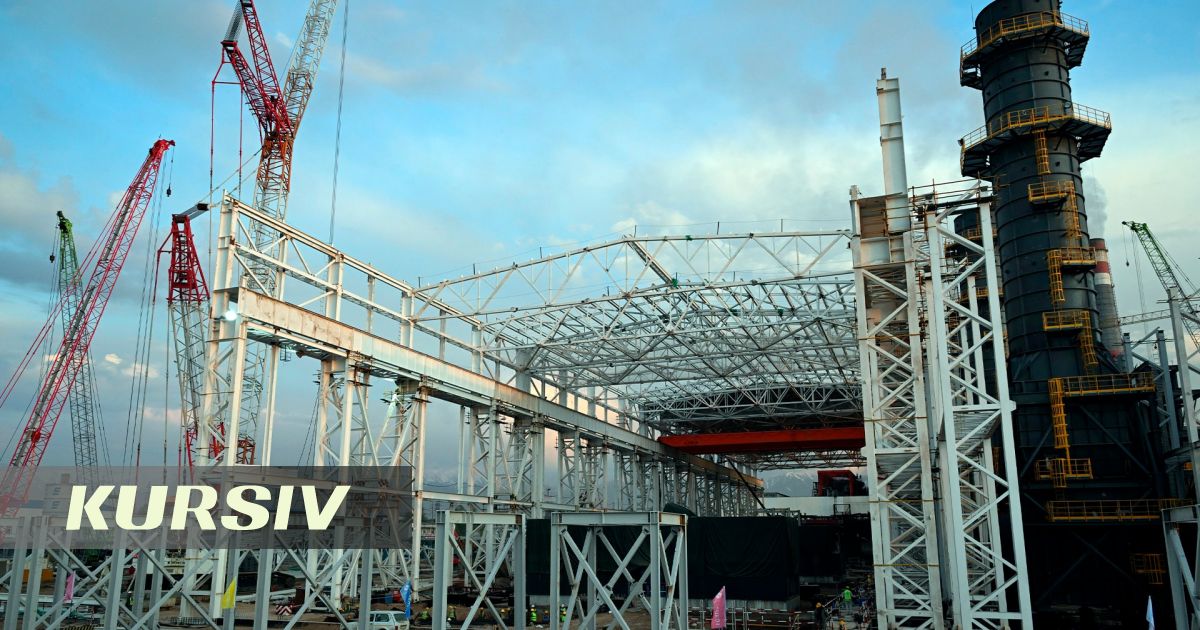
For example, under the project to convert TPP-2 to gas, the cost of work under an EPC contract with a group of Chinese companies was capitalized at 54 billion tenge in 2025. Additionally, the cost of equipment delivered for the power plant was capitalized at another 96.3 billion tenge.
Under the TPP-3 modernization project with the construction of a combined-cycle gas turbine unit, costs of 15 billion tenge were capitalized as construction in progress. Also in 2025, the cost of unfinished equipment for TPP-3 was capitalized at 39 billion tenge.
It is worth noting that Almaty Electric Stations is owned by Samruk-Energy.
Earlier, Almaty Electric Networks (AlES) reported that the cost of the EPC contract for the reconstruction of TPP-3 in Almaty with a consortium of KBI Energy Group, Energo Spets Stroy, StandartEnergo KZ, and STROYINDUSTRIA increased by nearly 9 billion tenge to 266.14 billion tenge.