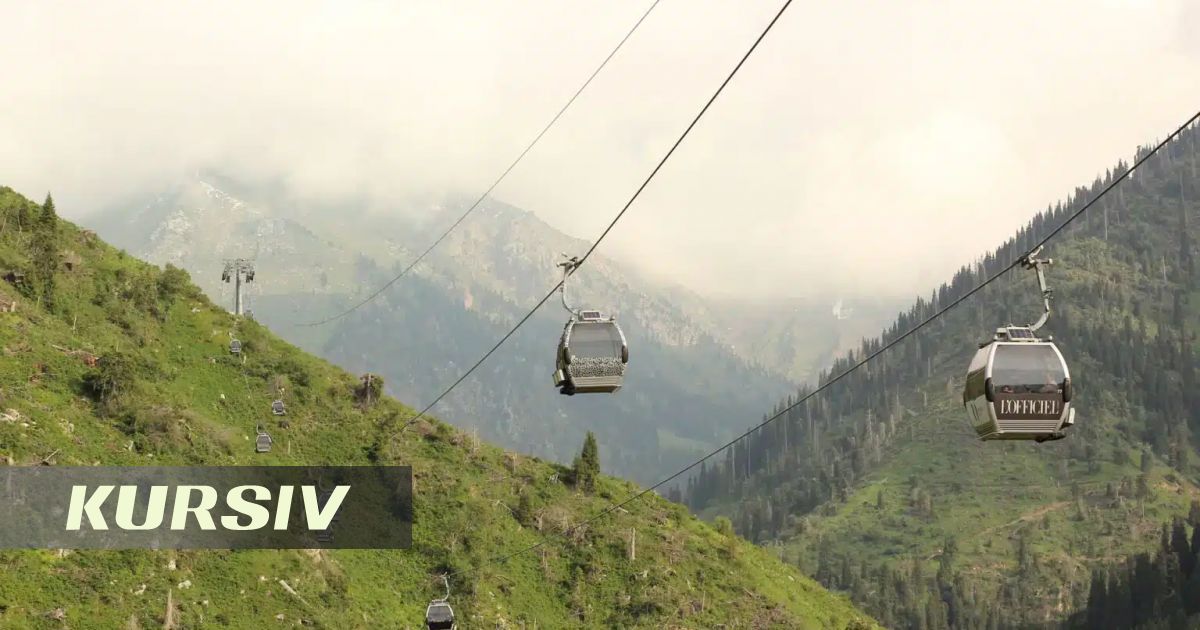
Kazakhstan's Constitutional Court has ruled that a clause in the Almaty akimat's resolution restricting vehicle entry to the Shymbulak tract and effectively allowing only electric vehicles is unconstitutional. This was reported by Qazaqyia.kz citing Kursiv Media.
The document in question was adopted in 2016. It banned conventional cars from entering the specially protected natural area.
The review was prompted by an appeal from a resident of the Tuyuksu tract. She lives in the Ile-Alatau National Park and can only reach her home via a road passing through Shymbulak.
Due to the restrictions, she said, passage became difficult and access to her home was effectively limited. The applicant also noted that the decision was made without considering the terrain's specifics and actual transport accessibility, as Tuyuksu lacks an asphalt road.
The Constitutional Court noted that the state can impose restrictions on vehicle movement, especially in specially protected natural areas. Such measures may aim to protect nature and reduce environmental pressure.
However, there is a key condition: any restrictions must be imposed strictly in accordance with the law and only by the body to which such powers are directly delegated.
"Restrictions on vehicle movement can only be established in strict accordance with the law and within the competence of authorized bodies," the statement said.
The Constitutional Court also found that the Almaty akimat exceeded its authority by introducing an effective ban on car entry.
Under the law, such decisions should be made by the maslikhat.
"Following the case review, the Constitutional Court declared clause 1 of the Almaty akimat's resolution No. 2/122 of April 8, 2016, inconsistent with the Constitution," the published press release said.
Earlier, Kursiv reported on how the Constitutional Court revised rules affecting the ability to challenge dismissals and seek reinstatement.