President Donald Trump has called the deal granting the US control of strategic Venezuelan oil fields "the biggest in history". This was reported by Qazaqyia.kz citing BBC News.
North American Blue Energy Partners (Nabep), a company little known outside the South American country, will oversee the production and sale of 17 oil fields containing about 65bn barrels of crude. The agreement has raised eyebrows to say the least.
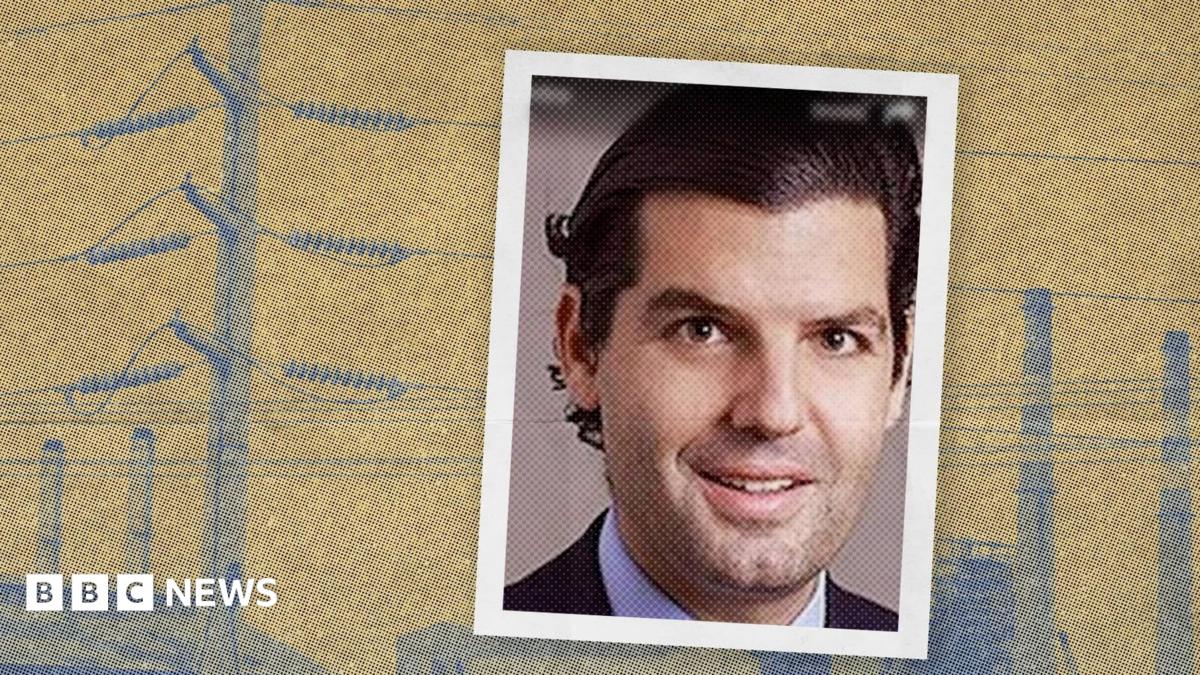
At the heart of it is Alejandro Betancourt López, the Venezuelan oil baron who heads the Barbados-registered firm. The 46-year-old has a history of doing business with the Venezuelan government since the time of the late President Hugo Chávez.
But he has also found himself under investigation in five different countries. He has previously denied wrongdoing and has never been convicted of a crime.
Leopoldo Alejandro Betancourt López was born in the Venezuelan capital of Caracas in February 1980 into a middle-class family. A graduate of Suffolk University in Boston, Massachusetts, he is estimated to be worth around $2.6bn (£1.9bn).
Although his CV attributes his success to his "entrepreneurial spirit", Venezuelan journalists who have followed his career maintain that it all began with the connections he made in the classrooms of the Instituto Cumbres de Caracas, a private religious school in the Venezuelan capital.
Venezuelan journalist Alek Boyd, who has been tracking Betancourt since 2011, said that the businessman became a close school friend of Javier Alvarado Pardi, the son of the man who would later become president of Electricidad de Caracas, vice-minister of energy, and an executive at Petróleos de Venezuela (PDVSA) – the state-run oil company.
"In 2009, at the height of the electricity crisis, Alvarado introduced Betancourt and his partners to his father and assured him they could solve the problem… despite having no experience in the electricity sector," said Boyd.
Around that time, Derwick Associates, the engineering firm that Betancourt founded with a cousin, received 12 government contracts, awarded without bidding, for a total of $5bn. Shortly afterwards, he and other young entrepreneurs doing business with the Venezuelan government were nicknamed "bolichicos", a slang term combining the words Bolivarian – referring to Chavez's socialist revolution - and chico, meaning boy.
"It's a term coined by the media, used to describe a group of young people whose only commonality is their success," Jon Sale, the businessman's lawyer in the US, told BBC News Mundo.
Derwick Associates claimed to have completed all of its electrification projects. But anti-corruption organisations such as Transparency Venezuela and the Organized Crime and Corruption Reporting Project allege that several projects were either not finished or were carried out incorrectly.
A 2018 report by Transparency Venezuela estimated that 11 of the projects awarded to Derwick should have cost $2.1bn. If accurate, this would mean the government would have overpaid by 138%. Betancourt's legal team has previously rejected the accusations of overbilling as politically motivated attempted smears.
Despite criticism, Venezuelan authorities soon allowed Derwick to venture into the oil industry. But Betancourt's business activities have not been limited exclusively to Venezuela. In the mid-2010s, he began his international expansion by acquiring a stake in the Spanish sunglasses company Hawkers, becoming its majority shareholder and president in 2016. He also acquired banking entities in Switzerland and Africa.
Today, Betancourt's business network encompasses some 50 companies distributed across 16 countries, according to investigations by Transparency Venezuela.
In 2013, the former US ambassador to Venezuela, Otto Reich, filed a lawsuit in an American court against Betancourt and two of his associates for "paying large sums to [Venezuelan] public officials in exchange for awarding them contracts". The diplomat's lawsuit was dismissed five years later, but the businessman's legal troubles did not disappear.