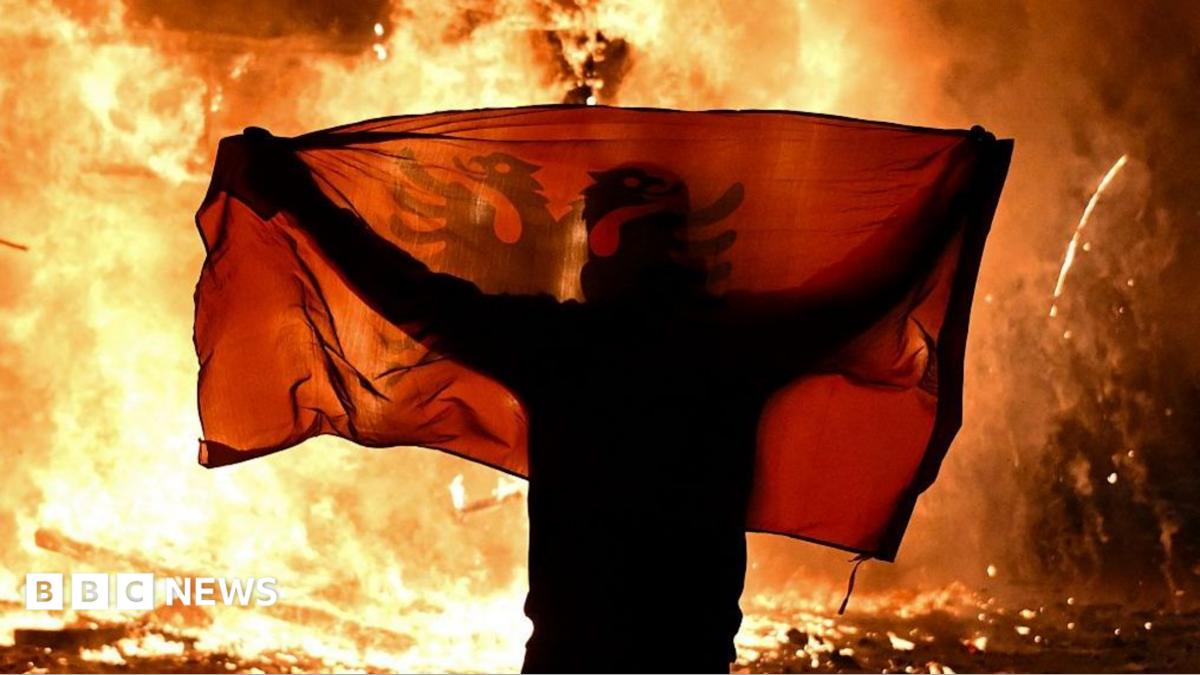
Protesters and anti-riot police have clashed in Albania's main cities. This was reported by Qazaqyia.kz citing BBC News.
Government buildings have been attacked and some private businesses, too. Albania's capital Tirana has seen months of protests from an anti-government "Flamingo" movement, but what started on Tuesday this week was on a different scale.
And the clashes have spread beyond Tirana — to include the main cities of Durrës, Shkodër, Korçë and Vlora.
The new demonstrations were announced as a student movement, ostensibly demanding action by the government to help with the high cost of education fees and books — and the higher cost of living. Secondary schools joined in, swelling the numbers.
Before too long, masked protesters threw stones at police, and they responded with water cannon, tear gas and batons.
Many were incensed by scenes of a young man being carried away, his broken leg dangling with him in agony. Apologies were expressed but failed to calm the situation.
A floor of the education ministry was set on fire, with other government institutions ablaze, too.
Every evening, throughout the summer for some 135 days in a row, Albanians in central Tirana would hold pictures of a pink flamingo, calling on Prime Minister Edi Rama — now in his fourth term — to resign.
The protests began over a mega-tourism project on the Adriatic coast linked to US President Donald Trump's son-in-law, Jared Kushner. Demonstrators said the bird would become extinct on an island near the coastal city of Vlora, if the plans for a luxury development went ahead.
The public anger comes as allegations of corruption among ministers and other senior officials grow louder. One deputy prime minister has fled the country, another has been ordered to step down as investigations continue.
So has the Flamingo movement radicalised? The flamingo protesters say they have no links to any political party — one of their slogans being "Rama in jail, Berisha in jail". While Rama is prime minister, Sali Berisha is Albania's main opposition leader — as well as a former prime minister and president.
They were attended by young and old, parents with children and sometimes their grandparents. Some of the participants took pride in cleaning up after every night.
But after months and an unusually hot summer, their numbers dwindled — with no sign that the government was meeting their demands.
The current movement appears far more violent. Dozens of police have been hurt, and the eyes of Europe are now watching what happens next in a country viewed as one of the top candidates for EU membership.
Several young protesters told the BBC that what was going on now was a new phase born of the previous movement.
Five months of peaceful protest had been "met with humiliation, ridicule, mockery," complained one young woman called Livia. "That was a clear message from the government that our voice will not be allowed to be heard."
Another called Brunela said she was worried about what might happen next: "I am very terrified because the media and the government is reacting, especially now. It was not just my voice, it is the voice of Albanian youth."
An overlap between the two sets of protests may well have occurred, even though flamingo leaders have not publicly stated so and no representative of the student movement has come forward.
After all, their main concerns relate to corruption, which the prime minister says must be investigated by the justice system.
Rama has been touring some of the damaged buildings and blaming Sali Berisha for instigating chaos.