Anthony Albanese has unveiled a new plan for artificial intelligence in Australia, but experts doubt its feasibility. This was reported by Qazaqyia.kz citing The Guardian.
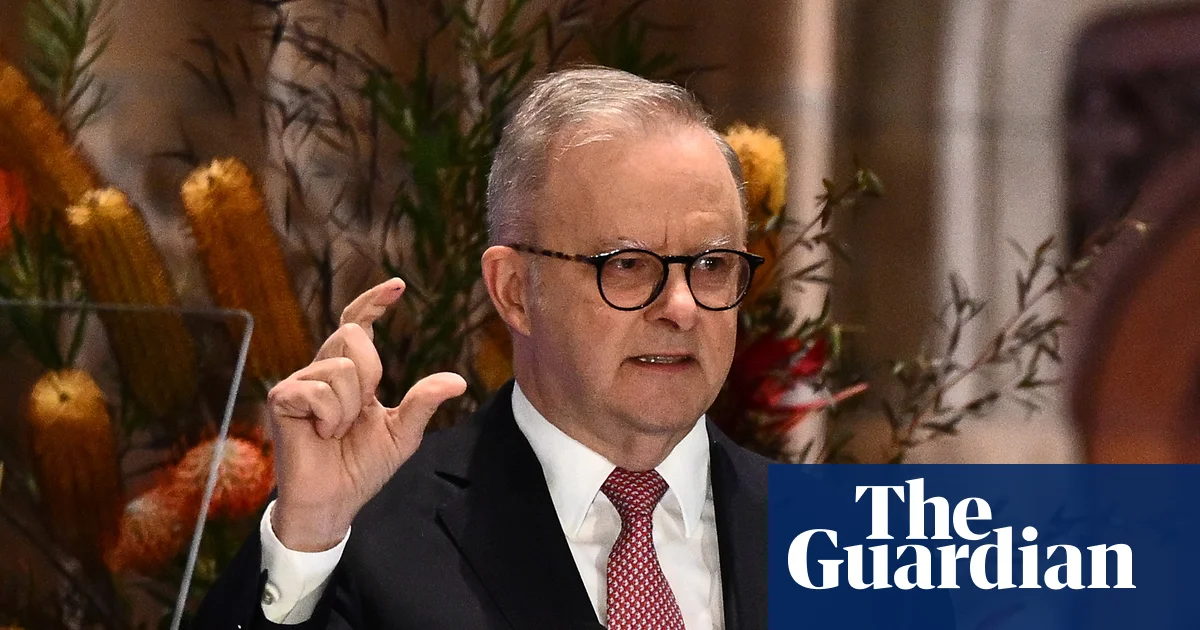
In a speech at the University of Sydney on Wednesday, the prime minister said his government would not only keep pace with AI but also try to get ahead of it. He compared the moment to his time as a Commonwealth Bank clerk, when he convinced customers to ditch paper passbooks for cards and ATMs.
Albanese said he would work with state premiers on new rules to manage data centres. These rules will ensure that centres do not take up land needed for housing and do not dominate local energy systems. Operators will be required to pay for new water infrastructure.
After a national cabinet meeting next month and the creation of a new office for AI within his department, Albanese will push parliament to consider new legislation in early 2027. He declared the country must be more than just a "data warehouse for AI products made overseas" and should benefit from Australian innovations.
Former Labor minister Ed Husic, who had argued for a broad new AI act before being dumped from cabinet, warned the legal approach to AI looked like Swiss cheese. He urged the government not to simply deliver a "fancier cheeseboard".
But the reality is Australia won't be able to direct much of the activity of global tech giants like Anthropic, Microsoft, Google or OpenAI. The challenges of regulating social media, stopping hate speech or curbing child sexual abuse images show these firms are more powerful than most national governments.
On the public's fear of widespread job losses, Labor might be similarly hamstrung. The potential of a general use technology like AI will be pervasive across modern life. Governments simply cannot legislate or mandate use to realistically address technological progress.
But one area in which Albanese has promised "the strongest possible protection" is Australia's copyright regime. Ruling out a text and data exemption for AI proprietors, he said the work of writers, film-makers, musicians and journalists was precious and must never be on the menu for hungry AI models. "Anything less is theft," he warned.
Australia has agency and sovereignty over some of the decisions needed to manage the coming wave of AI, but pretending the government can direct much more than that would be like barracking for bank tellers in an online world.