Reports that an Air India pilot tested positive for cannabis after a flight sound like the sort of finding that should make an aviation investigator sit up. But the reported result has not been officially confirmed, and even a confirmed positive would not necessarily be the smoking gun it might appear to be. This was reported by Qazaqyia.kz citing BBC News.
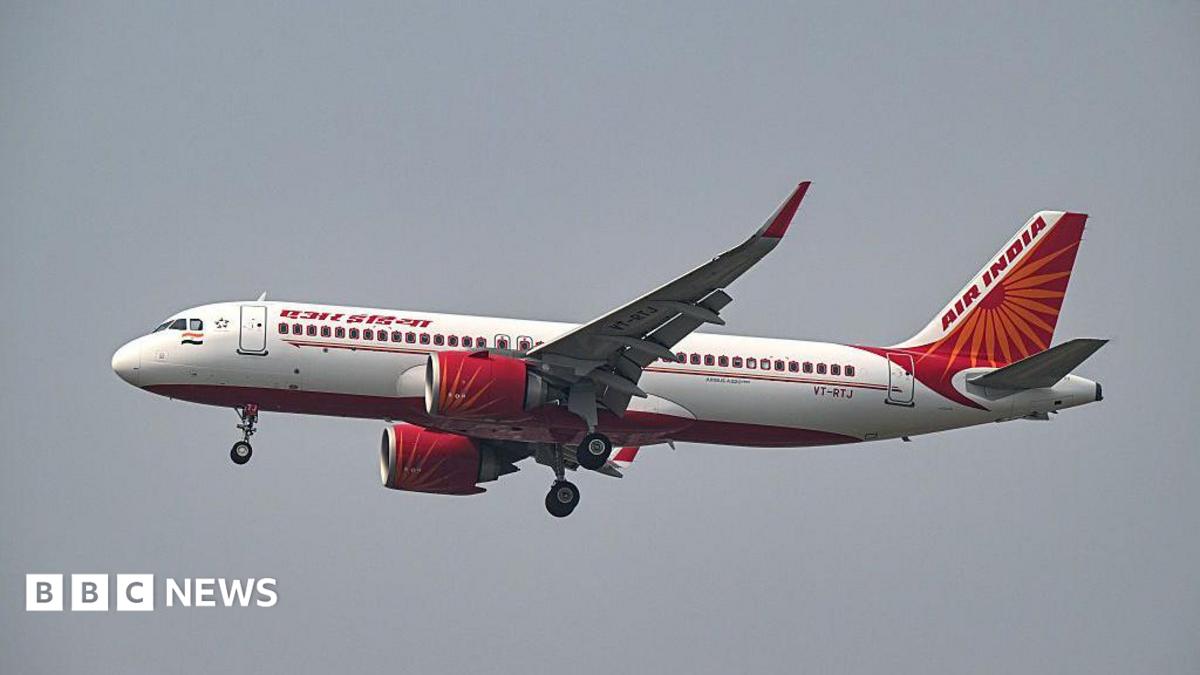
On 4 August, an Air India Airbus A320 flying from Phuket to Delhi suddenly lost about 91m (300ft) of altitude, injuring 13 passengers and four crew members. The aircraft, carrying 137 passengers and eight crew, landed safely in Delhi. The incident is under investigation.
Both pilots underwent routine post-flight screening for psychoactive substances, India's aviation ministry said. It said the captain's initial test produced a result requiring "confirmatory testing", and that both pilots had been removed from flying duties pending the inquiry.
Earlier this week, a number of media reports, citing sources, reported that the captain subsequently tested positive for marijuana in a confirmatory laboratory test. Air India has not confirmed the result. The reports have triggered a storm over pilot drug testing and aviation safety in India.
There is, so far, no official finding linking the captain's alleged drug-test result to the sudden loss of altitude. Investigators are examining the incident more broadly, including technical, operational, medical and human factors, and it remains unclear what caused the aircraft to plunge.
The obvious question is whether cannabis had anything to do with it. The less obvious one is harder: what does a positive cannabis test actually tell us about a pilot's state of mind several hours earlier?
Quite a lot is known about how cannabis affects performance of complex tasks. Much less is known about how to turn a positive test into a reliable timestamp for impairment.
Some of the most directly relevant evidence comes from a rather unusual source: pilots. In a 1976 experiment, 10 pilots smoked a modest dose of marijuana and then flew a simulator. Their performance deteriorated, with errors in altitude, heading and radio navigation. The effects were evident for at least two hours and generally disappeared within four to six hours, the study found.
A decade later, researchers returned to the question of what happens after the obvious "high" has worn off. Ten experienced private pilots were tested on a flight simulator 24 hours after smoking cannabis. They showed significant deterioration in several measures, including elevator and aileron control, landing accuracy and vertical and lateral deviation on approach. Most strikingly, the pilots did not realise that their performance had deteriorated, the study found.
A 1991 follow-up produced a similar warning. Nine active pilots flew a simulator after smoking a cigarette containing 20mg of THC, or tetrahydrocannabinol - the main psychoactive compound in cannabis and the chemical responsible for the "high" and many of the drug's effects on the brain and motor skills. Performance was impaired when checked 15 minutes, four hours, eight hours and 24 hours later. Seven of the nine pilots showed some impairment at 24 hours, but only one was aware of the drug's effects, the study found.
These studies are small, old and were conducted with aircraft simulators rather than modern airliners. They cannot tell us what happened in the Air India cockpit. But experts believe they likely establish something useful: cannabis can interfere with the sort of fine motor control, attention and complex human-machine interaction that flying demands.
A review by aviation-medicine specialist David Newman for Australia's Transport Safety Bureau reached a similar conclusion. Cannabis affects behaviour, cognition and psychomotor performance in a dose-dependent way, and complex tasks such as flying are particularly sensitive. The review also found evidence of residual effects lasting up to 24 hours.
The science has become more complicated, however, as cannabis use has become more widespread and the potency of cannabis products has increased in many parts of the world. A 2022 randomised clinical trial led by Thomas Marcotte at the University of California San Diego tested 191 regular cannabis users. Those who smoked THC performed worse on a simulated driving task, but the researchers found that impairment could not be inferred from the THC content of the cannabis, the users' previous experience or their blood THC concentration. The drug initially impaired performance, but after about four-and-a-half hours, those who had taken it were performing about as well as people who had not received the active drug.
That finding matters enormously for aviation testing. A positive test can show that THC is present, but not necessarily when cannabis was consumed or whether the person was impaired at the time. The relationship varies with the dose, how it was consumed, frequency of use and individual biology, experts say.
This is one reason cannabis presents regulators with a problem that alcohol does not. "Unlike with alcohol where there's a more robust relationship between alcohol concentrations in blood and impairment, the association is much more complex with THC. THC rapidly leaves the bloodstream after smoking, and there is limited to no correlation between blood THC concentrations and impairment," Marcotte told the BBC.