As artificial intelligence (AI) takes over the world in a metaphorical sense — for now, at least — it's the perfect time to turn to movies and TV shows that have shown AI actually taking over the world, and more. From "Avengers: Age of Ultron" to "Westworld" to various iterations of "Star Trek," AI has shown a robust presence in popular culture over the past two generations. This was reported by Qazaqyia.kz citing Associated Press.
Here's a selection of films that have depicted AI over the years — and what they've said about the world in the process.
"The Terminator" (1984, 1991)
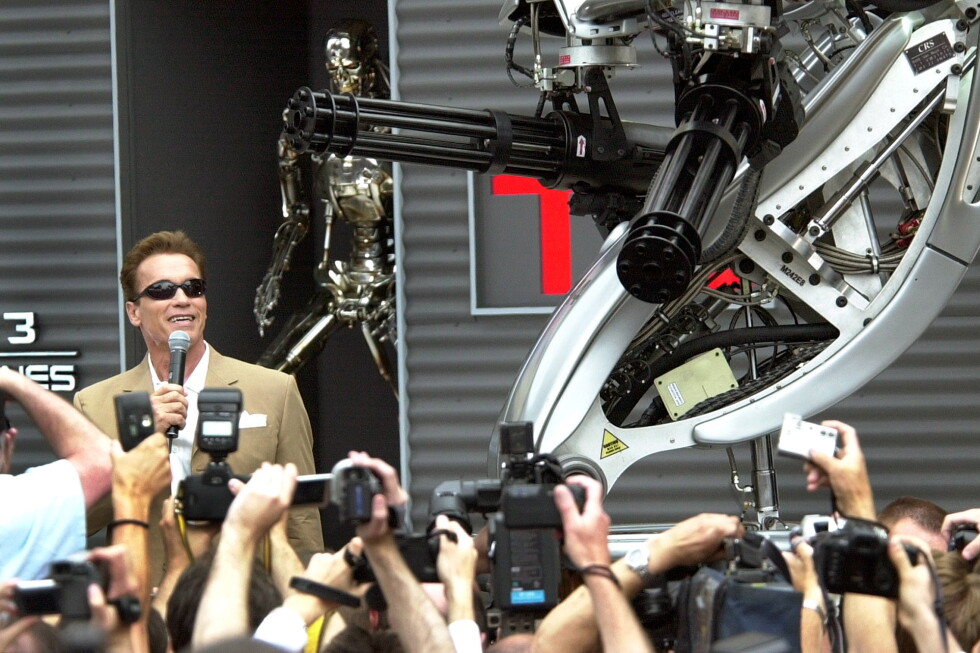
As James Cameron said recently, "I warned you guys in 1984 and you didn't listen." Cameron's dystopic science fiction – particularly his 1984 original and its 1991 sequel, both with Arnold Schwarzenegger -- imagined a future world where a military computer system named Skynet grows sentient and, after humans try to "pull the plug," starts a nuclear holocaust. "They say it got smart," John Connor's father says in the original film. Ever since, "The Terminator" has loomed as perhaps the preeminent cinematic vision of a world leading inevitably to AI rule.
"2001: A Space Odyssey" (1968)
If AI has a voice, it's HAL 9000's. Stanley Kubrick's colossal 1968 masterwork envisioned a human history in which the creation of tools, from ape bludgeon to gleaming space station, has evolutionary consequences. HAL, the red-eyed antagonist voiced with disquieting calm by Douglas Rain, was technically a child. (It tells the astronaut Dave that it's 9-years-old.) HAL can easily win at chess and read lips. But much of what HAL is up to remains hidden behind its opaque machine exterior; in deep space, it begins maliciously eliminating the astronauts. Maybe HAL would have gotten along better with Siri or Alexa.
"WALL-E" (2008)
For a kids movie, the future offered up by "WALL-E" (2008) is remarkably haunting. An Earth destroyed by pollution. A lazy human race locked to their screens and stuck in their La-Z-Boys. All thinking passed on to computers. On the cruise ship onto which all humanity has fled, a very HAL-like AI named AUTO has been handed all power to steer their course. Thankfully, life – and love – blooms again on Earth.
"WarGames" (1983)
Not all movie AIs are all bad. The 1983 Cold War-era thriller "WarGames" starred Matthew Broderick as a teenage tech whiz who nearly sets off World War III after inadvertently hacking into computer of the North American Aerospace Defense Command (NORAD). The computer chillingly doesn't recognize the difference between a game and real life – a particularly worrisome matter when it comes to thermonuclear war. The movie culminates with its revelation of mutually assured destruction. "A strange game," the computer says. "The only winning move is not to play." President Ronald Reagan watched "WarGames" the week it came out and questioned military leaders on how realistic it was. They determined it wasn't far-fetched at all, leading to the establishment of early security guardrails in government computer systems.
"The Mitchells vs. the Machines" (2021)
In Mike Rianda's brilliantly antic 2021 animated feature, produced by Phil Lord and Christopher Miller, a family road trip runs into a robot apocalypse. Family battles over phones at the dinner table take on a more extreme form when an Alexa-like, phone-based AI named Pal (voiced by Olivia Colman) begins taking over the world. "It's almost like stealing people's data and giving it to a hyper-intelligent AI as part of an unregulated tech monopoly was a bad thing," says the company's CEO. But not everything computes for the AI. The war is won by a flawed, funny family and their dog Monchi who short-circuits the robots. "Dog? Pig? Loaf of Bread?" Life finds a way.
"Blade Runner" (1982)
Ridley Scott and his "Blade Runner" team in 1982 imagined a 2019 with smart homes and video calling (as well as flying cars and analog polaroid photographs), but it's the AI replicants "virtually identical to a human," that still get under people's skin. There was something provocative about Daryl Hannah's and Rutger Hauer's punk, rogue androids – especially his oft-referenced "tears in rain" speech. But that vision for AI remains relevant.