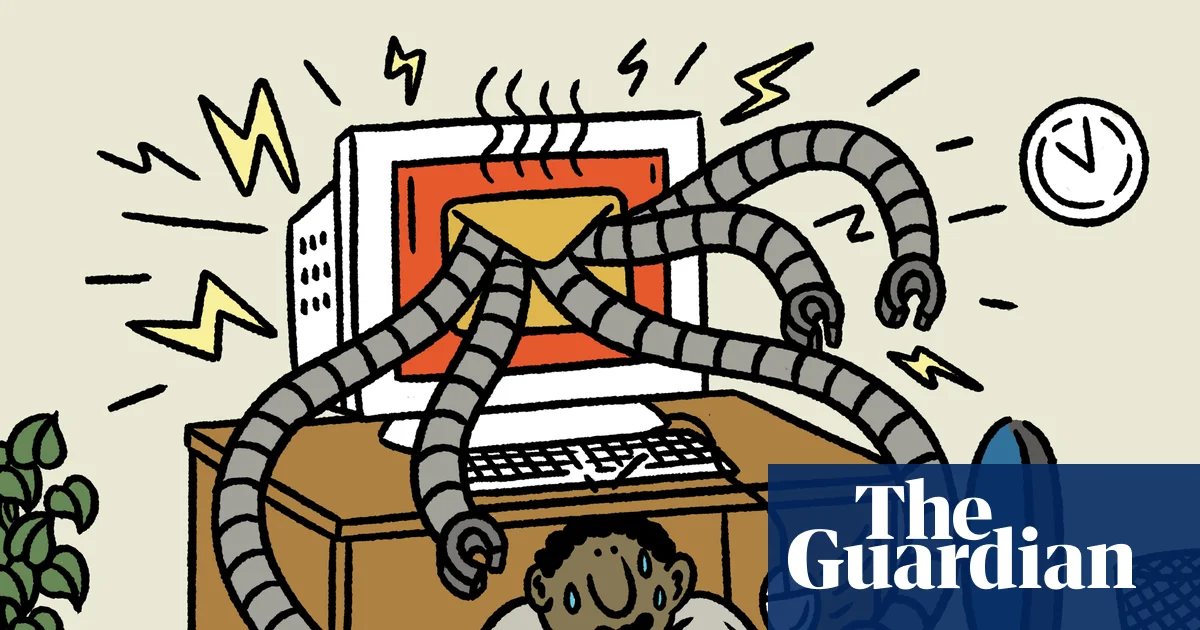
UK public bodies are grappling with a surge in correspondence generated by artificial intelligence (AI). This was reported by Qazaqyia.kz citing The Guardian.
“It started as a trickle in 2024 and now it’s an onslaught,” says Hollie Wickens, a senior caseworker in a Labour MP’s office, describing the daily reality of dealing with surging volumes of AI-generated correspondence. “Half the emails we receive are some form of AI,” she says, adding that this has made requests and complaints much more complex and time-consuming to read and deal with, despite her decade of experience in the role. “It is definitely more taxing.”
At the start of this decade, applying for a job, writing a complaint or objecting to a local planning application typically required considerable effort: time to research a topic, fill in a form or write a formal-sounding email, with specialist knowledge often also required.
That was until the rapid growth of ChatGPT – which turns four later this month – Claude, Copilot, Gemini and other generative AI tools over the past couple of years. These chatbots are helping turn laypeople into experts by giving access to a free – albeit sometimes unreliable – legal adviser, administrator or personal assistant.
The developers of AI tools promised huge productivity gains for employers and their staff: dull, routine tasks could be automated and carried out far more quickly, giving the human workforce more time for creative endeavours. There are signs of those gains in parts of the economy, with AI credited for some of this year’s better than expected UK GDP growth.
However, UK businesses, local authorities, courts, schools and other public bodies are reporting being swamped by a flood of AI-generated complaints, letters and legal challenges that are massively increasing their workload, at a time of already stretched resources.
This phenomenon has been called “AI clog” by commenters.
With the concept of low-quality “AI slop” now mainstream, organisations are sounding the alarm that their operations are being gummed up by ever greater volumes of correspondence.
These only take moments for users to create, but huge amounts of time for human employees to sift through and respond to. Bombarding public bodies with AI-generated requests has been labelled “agentic flooding” by researchers at the centre for digital governance at the Hertie School in Berlin, the Cooperative AI Foundation and GovAI.
“Every sector is experiencing very similar issues,” says Deborah Evans, the chief executive of Lawyers in Local Government (LLG), an organisation that represents 5,600 lawyers working in local authorities. “Obviously AI is a wonderful tool that enables people to do things very, very quickly and it can make a complaint sound incredibly professional, very formal.”
Local authorities are experiencing surging numbers of complaints, which can relate to issues from adult social care services to missed bin collections or objections to planning applications. “Local authorities have one pot of money and don’t get extra money because of more complaints,” Evans says.
Local authorities believe the length of correspondence is an indication that it has been artificially generated, as does the inclusion of certain phrases or use of bullet points.
“It’s a real problem,” says councillor Alessandro Georgiou, the leader of Enfield council. “More and more residents are using it to appeal decisions of the council, such as a significant uptick in parking appeals.”
The information rights watchdog, the Information Commissioner’s Office (ICO), found that many public authorities received more requests in 2025. It noted that AI-generated requests can be “very long, repetitive and contain unrelated comments or misdirected demands”, have a greater scope, and be written in a way that makes it harder to identify what information is being requested.
Before the widespread use of chatbots, the average length of complaints received by local authorities was about two pages. The majority are now 10 times longer, says Evans. “You get some huge ones. The worst one I’m aware of at the moment is about 200 pages long,” she says.
Despite this, the ICO cautions that requests that appear to be drafted using AI and contain inaccuracies still need to be answered by humans.
AI tools can often treat complaints as a legal claim, Evans says. “It will start referring to statute and pull out case law, but not necessarily tied to the jurisdictional boundaries in which you operate. It might find some great case law from Canada or somewhere. [AI] is also slightly prone to hallucinations so it does occasionally make things up.”
Some business owners worry that AI’s tendency to be overly supportive and validating can give people misplaced confidence to pursue a legal case.
“Everyone’s got a free lawyer now,” complains the founder of one technology company.