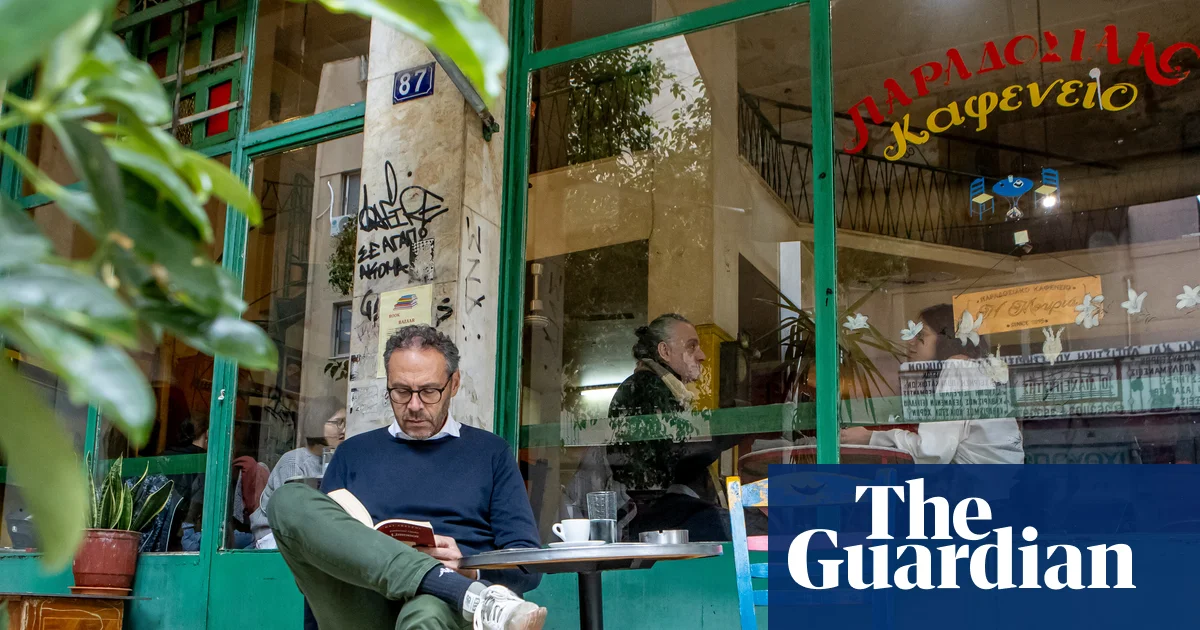
One of the oldest cafes in Athens, Mouria in the Exarchia neighbourhood, is closing after 44 years. This was reported by Qazaqyia.kz citing The Guardian.
It has been the hangout of writers, artists, poets and politicians, doctors and lawyers, radicals and revolutionaries for as long as anyone can remember. And for 44 years, Christos Vanas, the proprietor of Mouria, has let them all in.
Every day at 7am, the taciturn former waiter has been the first man to step inside the historic cafe in Exarchia, the heart of leftwing Athens. It is a ritual he has kept punctiliously, opening up the famous gathering place before he himself has had his first coffee. "Only Saturdays are different," says his daughter Areti, drawing on a Karelia, the aromatic Greek cigarette that, like Mouria, has been around for more than a century. "By 5am, he is here serving tsipouro and other [alcoholic] spirits to warm up the stallholders of the street market outside."
But this weekend will be Vanas's last. After a send-off expected to last into the small hours, the cafe's large, iron-framed doors will shut forever on Sunday when patrons walk out of the mosaic-floored institution. It will be the closing act in a drama that began with the expiry of the premises' lease last summer.
"It will be as if a friend died," sighs Nontas Papayannis, a retired barrister who has frequented the cafe for the past 20 years. "Another change to Exarchia, but also another loss in a Greece that is dying before our eyes."
Born and bred in the neighbourhood long viewed as the nerve centre of Athens' counterculture scene, the blue-eyed septuagenarian has also kept to a regime, rocking up at his favourite watering hole "at least four times a week" within an hour of the clock striking noon.
Stelios Goutis, 83, is an actor who trod the boards for more than six decades before his fame broadened playing Papa Triantafyllos, a priest with a penchant for a tipple or two in the TV series Hara's Cafe. He waxes lyrical about "the calming effect" of traditional eateries that have had such an outsized role in the lives of Greeks.
"A visit here is the route to relaxation," Goutis says with thespian flair at one of Mouria's marble-topped tables. "You stop by after work. You down a tsipouro or two, you meet friends you may or may not have arranged to meet, and all the pressures of daily life slip away. It's a form of psychotherapy. When it goes, we'll look back at it as a memory of good times even if it is a loss, too."
Both men were among the 7,500 signatories of an online campaign that urged the Greek culture ministry to have the cafe declared a protected heritage site when the building's owners announced they would not be renewing its tenancy in an area fast undergoing gentrification. The culture ministry failed to intervene.
Few districts in downtown Athens are more redolent of resistance, leftwing solidarity, radicalism and anarchist foment than Exarchia. Its spirit of anti-authoritarianism dates back to the uprising at the nearby Athens Polytechnic, an event that led to the death of dozens of students but is credited with the collapse of rightwing military rule in 1974, barely 35 years after the nation's bitter civil war.
But with tourist numbers in the Greek capital more than doubling over the last decade, the neighbourhood of narrow, graffiti-daubed streets has also been discovered by investors, catering to the tastes and needs of foreign visitors.
"We were like the last fortress here," says Areti, dressed in a black leather jacket and Dr Martens boots, the garb favoured by the area's more youthful residents. "We didn't change our menu, we didn't raise our prices or serve Aperol spritzes and cafe lattes. It's about nostalgia and we'll leave with our heads held high."
For Greeks raised in Exarchia, it was an unnerving experience to walk streets that were no longer recognisable, she lamented. "So much has changed. Everywhere you look there are new shops with signs in English and buildings turned into suites and short-term rentals. You could be anywhere."
For many, the last straw had come when travel platforms began advertising tours of the hangouts in Exarchia patronised by hardened leftists. "There have been groups outside the cafe," says Areti, her eyes firmly focused on her footwear. "What to say?"
Mouria is not alone. Its closure is emblematic of the decline of traditional coffee houses across Greece, even if the proliferation of third-wave and Italian-style cafes in more recent years has earned the country the reputation of having "a cafe economy".
In villages far and wide, kafeneia once considered the life and soul of communities are vanishing, turbocharging depopulation.