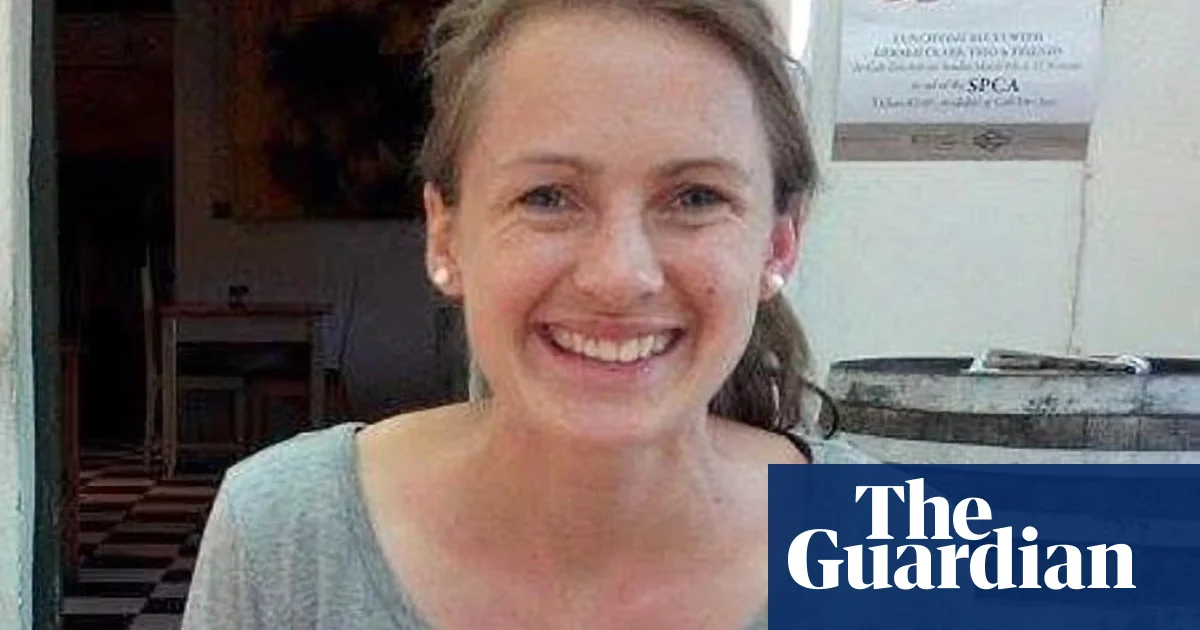
In the Kypseli neighborhood of central Athens, the body of a woman was found inside a suitcase in the middle of last month. This was reported by Qazaqyia.kz citing The Guardian.
The deceased was identified as 38-year-old Elisabeth-Jane Ross, a British citizen. She had long-standing connections to Greece, having worked with homeless people and been involved in charitable work. Ross had arrived in Athens on holiday almost three weeks before the tragedy.
A friend in her native Edinburgh told The Guardian: "She was an angel. Wherever she went, she did good. Who could possibly have done this?"
The body was discovered by a homeless man on 18 July in an abandoned lot between an apartment block and a design school on Evelpidon Street. He alerted authorities, which shook up police forces in Greece and Scotland. Police spokesperson Konstantina Dimoglidou said: "We've had the entire homicide division of the Greek FBI working night and day on the case. We're in contact with other police forces. We're going to solve this."
However, four days after Ross was publicly identified, with Greek authorities announcing the body was that of a Briton based on fingerprints, mystery continues to shroud the case. Initial examination of her remains proved inconclusive, although pathologists deemed she had probably been dead for several days before the discovery. There were no evident injuries or signs of struggle on her body, raising further questions.
On Friday, as local people left flowers at the site, police said investigators were intensifying their search of CCTV footage after it emerged that DNA analysis of the suitcase had not produced any evidence linked to a suspect.
Manos Andreou, a fashion designer who walks his dog each day along Evelpidon, said: "Whenever I pass by I think of that poor woman. Until the area was closed off, I used to go in there and let her run around it, so it's all been a bit of a shock. They say they're looking at camera footage, they say they're making progress, but can you see any cameras anywhere on this street?"
Ross, the daughter of a lawyer, had lived and worked in the US. She flew into Athens from Edinburgh on 26 June. Until 15 July she had stayed with the son of a Greek friend in Keratsini, a working-class suburb close to the port of Piraeus. Before moving on, she had told him she would be spending a few days with friends from the US in Kypseli.
Detectives, now desperately trying to reconstruct her movements, have expressed frustration at their inability to trace the Americans. Other members of the Briton's social network in Athens have been interviewed at length, giving testimony described as "incredibly helpful". None are considered suspects.
The police spokesperson said: "July 15 was the last day she had contact with any of her friends. Our investigations are focused on the intervening days and whom she may have met and where she stayed. The Americans have not been identified or found."
Police remain confident the suitcase was not at the crime scene more than 48 hours before its discovery on 18 July. They are also convinced that Ross died nearby in Kypseli, although have stopped short of describing her death as a murder.
Dimoglidou added: "There is always the possibility that she died and then for some reason was hidden. Our priority is to get to the bottom of who left the suitcase. Whoever they were was careful not to leave any fingerprints or DNA."
Adding to the mystery, it emerged that the Briton's mobile phone was in operation and being used days after her death. Ross's distraught father is reported to have told police he received text messages from his daughter, believing she was alive and well, until her body was identified publicly on Wednesday. Messages spoke of her "need to be alone". Authorities, who have yet to retrieve the device, believe they were deliberately sent so that she would not be declared missing and "to buy time". Investigators have located the phone's digital footprint to Athens.
One source said: "We have to presume that the person who had her phone and then sent these messages, days after pathologists believe she probably died, is connected to the crime and we cannot rule out that they knew Ms Ross."
More than 60 people in the Greek police department's homicide division have been assigned to the case. Urgency is such that investigators have also requested that laboratory tests be fast-tracked to determine the cause of death.
Grigoris Leon, who heads the Hellenic Society of Forensic Medicine, said: "At such times, when there is advanced decay because of heat or the conditions in which a body is kept, only toxicological tests and in-depth examination of [vital organ] tissues can determine, exactly, how a person died."
There would be answers, he said, that would unearth the truth: "I have no doubt they will come but it won't be easy and it will take time."