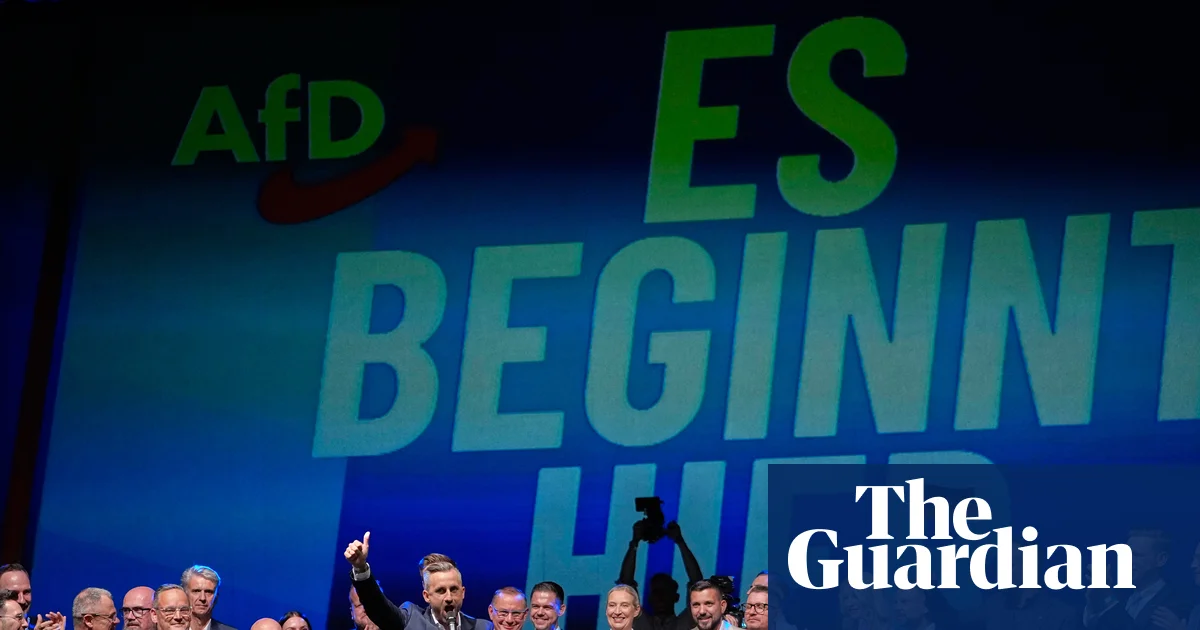
After the far-right populist AfD party won the state election in Saxony-Anhalt with 44% of the vote, residents of the state capital Magdeburg share how they view the result and what they expect next. This was reported by Qazaqyia.kz citing The Guardian.
During a survey in Magdeburg, many expressed concern over the election outcome. Judith, 88, who was forced to leave Poland in 1946 and eventually settled in Magdeburg, called the news "heartbreaking." She said her life experiences shaped her views.
Huy, a newsagent in the city center originally from Vietnam, laughed and shook his head, saying: "44%! I don't want to think what it might mean... but maybe it will all be OK?"
The AfD's manifesto for its first 100 days includes challenging Germany's post-war memory culture and starting deportations of "irregular migrants." These plans are alarming, especially since the party is classified as "right-wing extremist" by domestic intelligence.
Franz-Josef, a 71-year-old retired mechanic from western Germany, called the election a "catastrophe," particularly in light of the country's Nazi past. Luisa, a 34-year-old bank teller, said she hopes "those who voted for the AfD thought about what they were doing." She said it might be a "kick in the shins" to Berlin, but "the price could be high."
AfD leader Ulrich Siegmund fell just short of an absolute majority. The party may try to lure members of Chancellor Friedrich Merz's Christian Democrats to make up the numbers, but the CDU denies any defections are expected.
Some AfD members have brazenly appropriated Ronald Reagan's "tear down this wall" appeal from his 1987 speech, calling on mainstream parties to "tear down the firewall" (Brandmauer), the refusal to coalesce with the AfD. Turnout was 78%, a record for the state.
Expect weeks or months of wrangling, with federal government stasis until elections on 20 September in Mecklenburg-Vorpommern and Berlin, where the AfD is also expected to do well. Merz has accused the AfD of seeking "ethnic cleansing."
Maryam, 16, a Syrian teenager whose father arrived in Germany in 2015, said she couldn't stop thinking about what the vote might mean for her family. She wished for a return to the days of Angela Merkel. In contrast, cleaner Doreen, who reluctantly admitted voting for the AfD, said: "What on Earth is there to thank Merkel for? It's owing to her that we are in the state we're in."
The situation in Magdeburg could have significant implications for Germany's political future. An AfD government could drastically change the country's domestic and foreign policies. Residents' opinions suggest these changes could come at a high price.