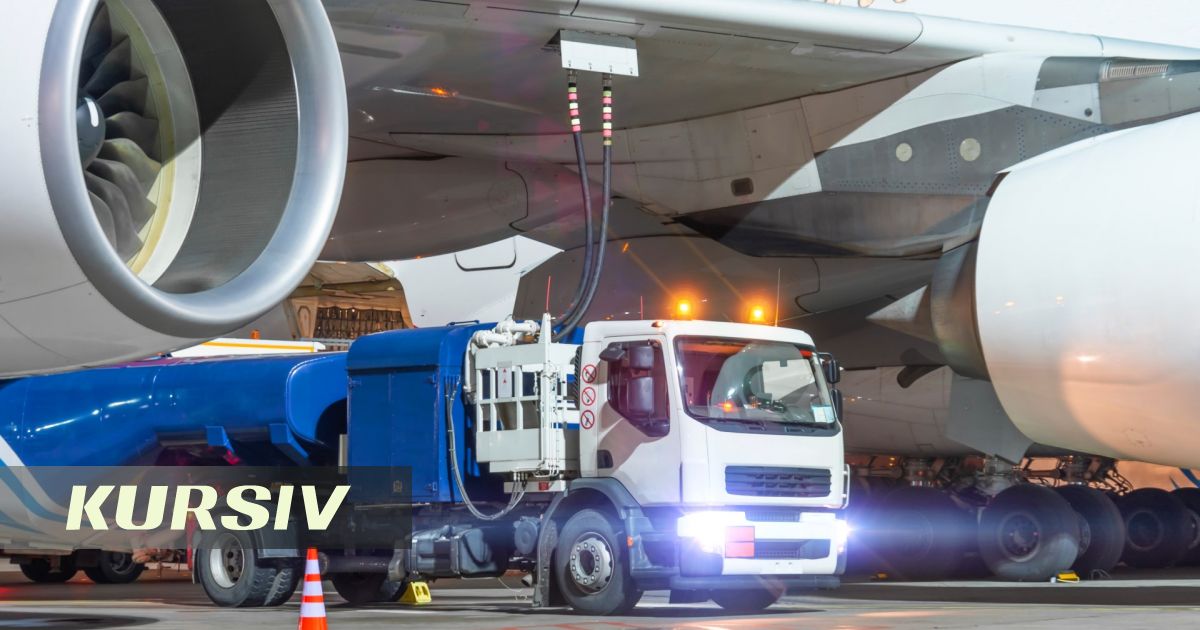
Yerlan Ospanov, founder of fuel company Jet Fuel Services and co-owner of Karaganda Airport Sary-Arka, believes that powerful storage bases for scarce aviation fuel, each with a capacity of 100,000 tonnes, should be established in various regions of Kazakhstan. This was reported by Qazaqyia.kz citing Kursiv Media.
"Commodity exchange. Pour aviation fuel like a river into the organized market. 2. VAT 0% on the exchange. Outside the exchange — 16%. Aviation kerosene is an exchange commodity. VAT will be collected at the end of the consumer chain; it won't disappear. And foreigners buy without VAT. 3. Build reserve storage bases in the South, Center, West, each of 100,000 tonnes. For two types of fuel (TS and Jet A1). 4. Allow all professional participants to the exchange and to the wing," he wrote on Facebook (Meta).
In addition, Ospanov believes that airports need to have two types of refueling complexes — for the traditional Kazakh aviation fuel grade TS and for the global aviation fuel Jet A1. In addition to these measures, he proposed diversifying aviation fuel imports into Kazakhstan from different countries.
"The fuel turmoil will last a long time. We cannot do without critical infrastructure and systemic solutions," he believes.
According to him, the Kazakh aviation fuel market is currently approaching a moment of truth that has been discussed many times. Domestic production of aviation fuel, which is allocated only to domestic airlines at a reduced price, covers only about two-thirds of demand. The remaining need has traditionally been met by imports from Russia, but Russia, due to attacks by Ukrainian drones, has itself faced a shortage of various types of fuel.
In this regard, opinions have emerged that Kazakhstan may not receive the volumes of aviation fuel and other fuels agreed upon in the indicative plan. Moreover, according to media reports, Russia asked Kazakhstan to provide 50,000 tonnes of Ai-92 gasoline, but Energy Minister Yerlan Akkenzhenov has twice stated that no such request has been received through official channels. In response to gasoline supplies, Russia could supply aviation fuel, media reported.
"We will lack local fuel at least until 2030/32, and maybe forever. Consumption will also grow in parallel with production increases. And most of our colleagues will fill their tanks with imported fuel," Ospanov noted.
According to him, after the relative settlement of the conflict between Israel/US and Iran, aviation fuel prices on the European market are returning to pre-war levels, and there is no shortage of physical supplies.
"But our price depends on physical supplies from Russia. And there... we all know how to read news. There is not enough imported fuel — we cannot refuel foreign aircraft. Or they change routes due to the high cost of aviation kerosene," he said.
Kazakh aviation fuel is sufficient for refueling military aircraft, the Ministry of Emergency Situations, and domestic airlines (Air Astana/SCAT), he reminded.
"What should Lufthansa, Turkish Airlines, and others do? Not bring passengers to us? What should Atlas Air, ASL, or China Airlines do? Should cargo shippers change their transport routes? Break logistics chains? We will depend on imported aviation fuel supplies for a very long time. And this fuel determines our country's role as a participant in the 'One Belt, One Road' program and the 'Middle Corridor' route," Ospanov noted.
In his opinion, solving the issue of aviation fuel availability at Kazakh airports depends on the country's participation in a large-scale logistics game on the Eurasian continent.
"So what to do if the infrastructure for working with imported fuel in our country does not meet the needs of the global industry? If we want to play the Big Game, we need to maintain the level. If it's imports, then high sensitivity to supply disruptions and seasonal price fluctuations," he wrote.
In this regard, he believes the republic will need new large aviation fuel storage bases, as well as diversification of supplies from different countries to avoid dependence on a single seller — Russia. The availability of storage bases will allow purchasing aviation fuel abroad during periods of lower prices. Traditionally, the number of flights in Kazakhstan increases in the summer, when the holiday season begins and Kazakhs fly to other countries.
Several years ago, Karaganda Airport decided to develop a regional cargo aviation hub with the ability to refuel transit and other aircraft with Jet A1. Earlier, Kursiv reported that the changed-ownership Karaganda Airport Sary-Arka plans to triple passenger traffic to 1 million people per year.
In May 2024, the airport changed owners. Freedom Holding Corp. founder Timur Turlov, through Turlov Private Holding, acquired 60% of Sky Service, the company that owns the airport. The remaining 35% and 5% belong to Yerlan Ospanov and Aidan Akanov, respectively. Before Turlov's arrival, Ospanov owned 95% of the company.
Recently, Bekken Seidakhmetov, Chairman of the Board of Nursultan Nazarbayev International Airport, admitted the possibility of importing aviation fuel from China and Turkmenistan. At the same time, according to him, the airport has aviation fuel reserves for about 15 days of operation.
According to the Ministry of Energy of Kazakhstan, the import of aviation fuel from China, Turkmenistan, and other countries is being negotiated by KazMunayGas's subsidiary KazMunayGas-Aero. The domestic demand for aviation fuel is estimated by the ministry this year at 680,000 tonnes per year, with a production plan of 750-825,000 tonnes. Aviation fuel prices at local airports are $868-967 per tonne, and for foreign airlines — $1,100-1,500.