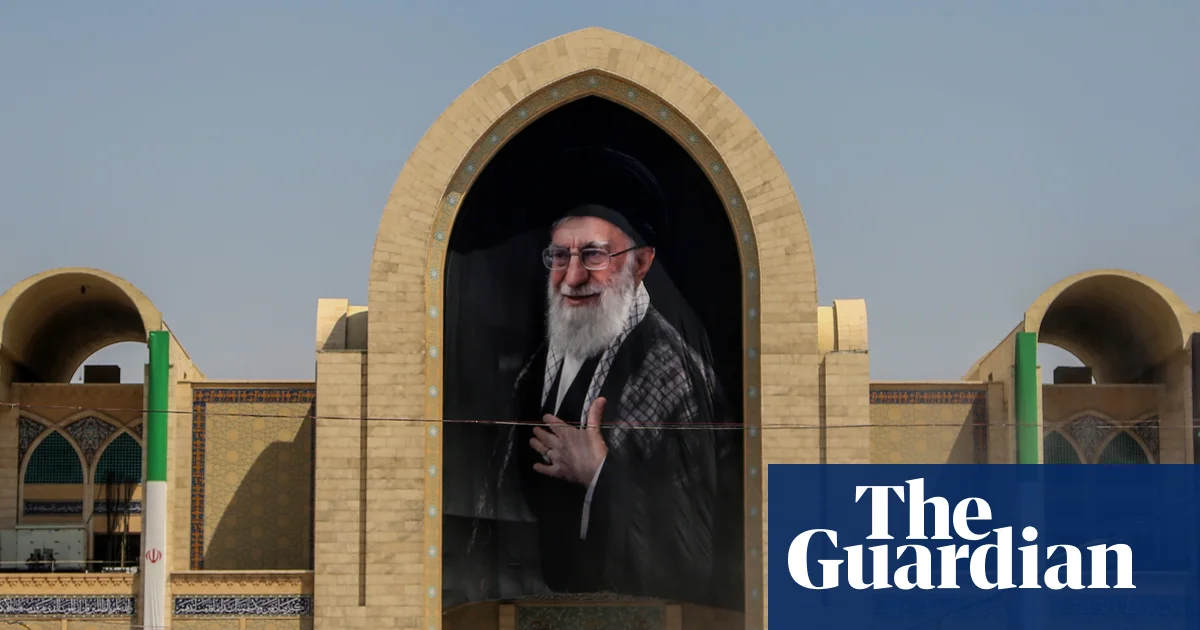
Cooling systems are being installed in the courtyard of the Grand Mosalla mosque in Tehran to help mourners cope with the expected 40°C heat. This was reported by Qazaqyia.kz citing The Guardian.
In the small hours of Friday, police roadblocks, stalls, posters and army vans began appearing across Tehran as millions of Iranians prepared to attend the six-day funeral ceremony for Ali Khamenei, Iran's supreme leader for 36 turbulent years. Khamenei was killed in the opening salvo of the US-Israeli attack on the country in February. The funeral is intended to be an epic display of personal mourning, national power, resilience and social cohesion.
Small groups of mourners carrying flags gathered along roads festooned with the red fist, the symbol of the funeral, alongside the slogan "We must rise". At a ceremony dedicated to the families of martyrs, Khamenei's coffin was displayed.
Iran's first vice-president, Mohammad Reza Aref, the lead funeral organiser, described the ceremony as "the most important event of this century" and the most attended since the 1979 revolution. The funeral begins on Saturday in Tehran and ends with Khamenei's burial on Thursday in Mashhad.
The scale of the funeral has been conceived to relay political and religious messages of resistance to the rest of the world. At the request of Iraqi politicians, Khamenei's body will also be carried through the Iraqi Shia cities of Karbala and Najaf.
Despite many posters of Khamenei's son and successor, Mojtaba Khamenei, walking with his father in a garden, Mojtaba is not expected to appear at the funeral. He was severely injured in the same US-Israeli strike on a government residence in Tehran on 28 February that killed many of his family. It killed Ali Khamenei, his daughter and her husband, Mojtaba's wife and his 14-month-old daughter.
The extent of Mojtaba's injuries is unknown; he has issued only written statements, including one distancing himself from ceasefire negotiations but sanctioning their continuance. Israel's defence minister Israel Katz threatened to kill him this week, prompting hardliners to call for a re-examination of Iran's fatwa against nuclear weapons.
Mohammad Bagher Ghalibaf, Iran's chief negotiator, said in an eve-of-funeral message: "We must rise up and convey the nation's call for bloodshed to the world so that the world knows that the honourable and noble nation of Iran will not remain silent in the face of oppression and arrogance."
The public funeral begins on Saturday at Tehran's Grand Mosalla mosque, where Khamenei's body will lie in state alongside his relatives. All week, workers have been redecorating the vast building, with a heavy police presence. The funeral had been planned for early March but the war precluded such a large gathering.
A separate ceremony is scheduled on Friday for foreign leaders. Ali Akbar Pourjamshidian, secretary of the national funeral committee, estimated representatives from about 30 countries would attend, but no leaders from Europe or the US had been invited.
A six-mile (10km) procession through central Tehran is planned for Monday from Imam Hossein Square to Azadi Square. Tehran's mayor, Alireza Zakani, described it as "the largest gathering in the city's history" and forecast about 20 million attendees. Approximately 60% of Iran's population of 90 million had known no other supreme leader.
On Tuesday, Khamenei's body will be taken to the holy city of Qom, with temperatures expected to reach about 40°C. It will then go to the Iraqi Shia strongholds of Karbala and Najaf on Wednesday. The burial on Thursday will be at the Imam Reza shrine in Mashhad, the supreme leader's birthplace.
The funeral takes place during a 60-day ceasefire with the US intended to reopen the Strait of Hormuz and allow for talks.