Leading global brands including Amazon, Ericsson and Sony are "likely" to have sourced minerals linked to a militia accused of widespread sexual violence, summary executions and torture, a new investigation claims. This was reported by Qazaqyia.kz citing The Guardian.
The companies allegedly but unknowingly acquired coltan smuggled from mines in the Democratic Republic of the Congo (DRC) that are occupied by the M23 militia, which has committed myriad atrocities in eastern DRC.
The coltan, vital for the production of mobile phones and computers, is smuggled across the border to Rwanda and moved on by coltan exporters used by large firms, according to a year-long investigation by Global Witness. It alleged that the crucial mineral will probably have also found its way into the products of international brands such as Microsoft, Toyota, Nvidia and Vodafone.
Alex Kopp, senior policy and advocacy adviser at Global Witness, said: "Behind our everyday tech lies a supply chain tainted by violence, exploitation and human suffering."
He urged government intervention to hold companies accountable and for sanctions to be imposed on those whose financial activities enable M23's brutal occupation of a significant swathe of eastern DRC.
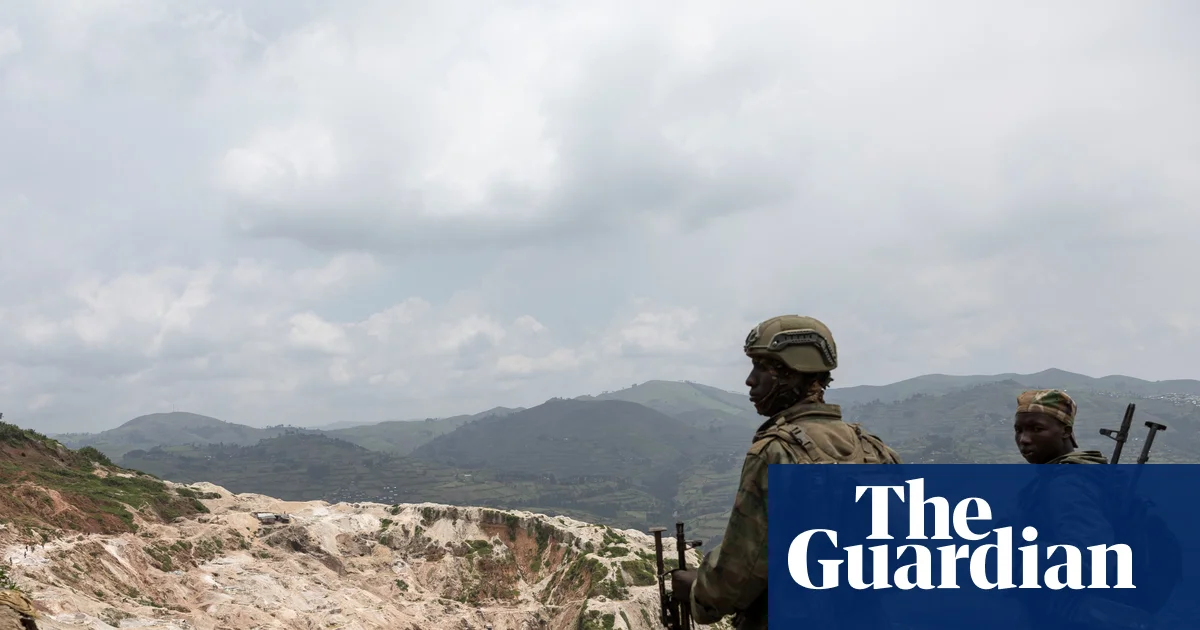
The looted minerals come from a vast site known as Rubaya, situated in DRC's North Kivu province, and which holds about 15% of the world's coltan.
The M23 militia, backed by up to 7,000 Rwandan troops deployed within the DRC, captured the mines two years ago and charges a levy on each kilogram of coltan.
The UN's group of experts have estimated that M23 gathers almost £600,000 a month from coltan taxation in Rubaya, an income used to fund the militia's operations.
Seizing vast tracts of territory, M23 has killed thousands and displaced hundreds of thousands of civilians, raping and abducting with impunity. Rwanda denies backing the militia.
Coltan, however, has become an important revenue stream for the east African state, with the mineral becoming one of its largest export earners.
Until now, little was known about who bought the smuggled coltan. After interviewing coltan smugglers, Global Witness says that five of the seven largest Rwandan exporters of the mineral buy conflict coltan from the DRC.
Those exporters then sell the mineral through middlemen to smelters in China and Kazakhstan. In the smelters, the coltan is processed into tantalum. From there, it is used to manufacture the capacitors that are essential components in electronic devices.
The investigation raises questions over the complicity of Rwandan officials. One coltan smuggler alleged that the Rwandan authorities were fully aware of the practice.
Previously, much of the coltan was smuggled into Rwanda through lightly monitored border areas. However, sources told Global Witness that large quantities of the mineral now entered Rwanda through the DRC border city of Goma, which was taken over by M23 last year.
The investigation, which reviewed trade data and analysed and cross-checked customs records, indicates how due diligence systems appear to have failed to break the link between conflict and natural resources.
Theoretically, a traceability system relied on by many international companies to keep their supply chains conflict-free – known as the International Tin Supply Chain Initiative (Itsci) – should mean that what goes into a phone handset and other electronics is sourced responsibly and avoids conflict financing and human rights abuses.
However, Global Witness say the initiative has largely failed to detect the conflict coltan. It also accuses other schemes such as the Responsible Minerals Initiative (RMI) of probably being unable to discover conflict coltan being introduced into supply chains.
Kopp said: "The companies behind our phones, computers and cars haven't been able or willing to clean up their supply chains. This fuels instability and prolongs the suffering of communities."
Global Witness urged international companies to stop buying coltan from Rwanda until M23 has withdrawn troops from the Rubaya mines, unless they had thoroughly scrutinised the coltan before export by directly checking its origin and grading.
All companies and traceability schemes named in the article were invited to comment.
An Amazon spokesperson, Margaret Callahan, said: "We're committed to providing products and services that are produced or supplied in a way that respects human rights and the environment – in accordance with our supply-chain standards and all applicable laws. While we generally don't source from mine sites or smelters, we remain committed to responsible mineral sourcing and will continue engaging with suppliers and upstream partners on auditing mechanisms and smelters."