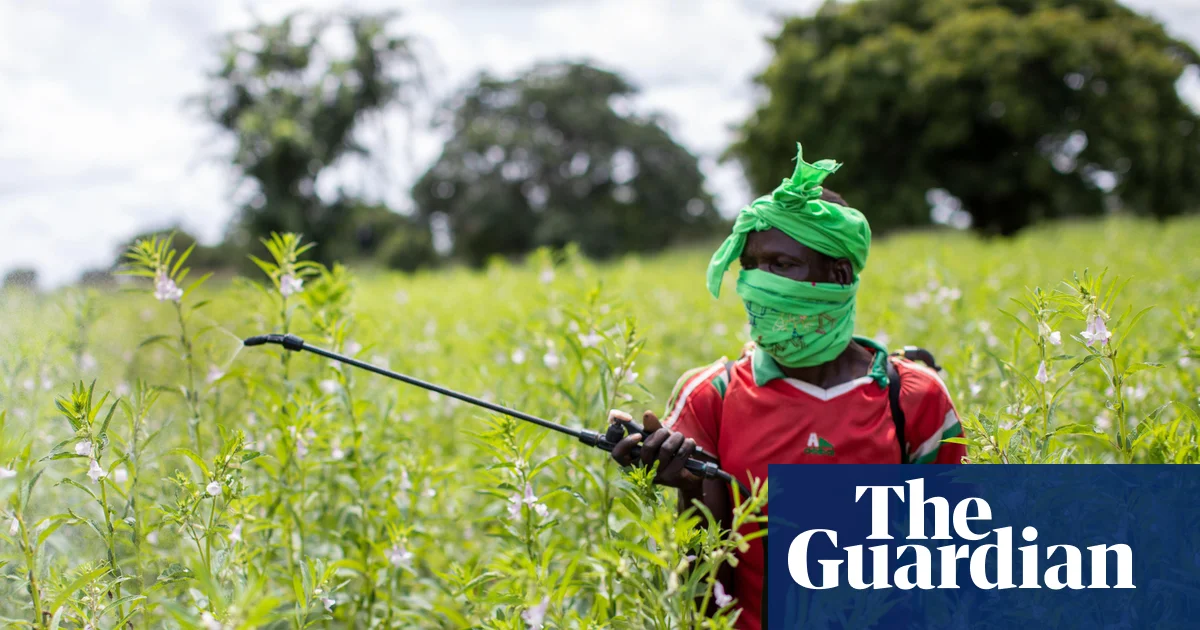
Nearly half of the world's farmers are poisoned by pesticides every single year, a study has found. This was reported by Qazaqyia.kz citing The Guardian.
Using publicly available data from 2006-2023, the study, commissioned by Pesticide Action Network, estimated 402-433 million cases of unintentional acute pesticide poisoning of farmers and farm workers every year.
Based on a worldwide farming population of 934 million, this means approximately 46% of farmers are being poisoned annually. The greatest estimated number of poisonings was in southern Asia, followed by south-east Asia and east Africa.
The highest national incidence of poisoning was in Burkina Faso in west Africa, where nearly 84% of farmers and farm workers reported experiencing poisoning.
The study, published in the journal Frontiers in Public Health on Wednesday, also found that an estimated 11,000 deaths occur every year due to pesticide poisoning, with nearly 60% of these in India.
Jayakumar Chelaton, executive director of Pesticide Action Network India, said the research exposed a "crisis that can no longer be ignored."
The authors are calling for "immediate action," including implementing a UN recommendation to phase out highly hazardous pesticides.
The study states that despite global efforts to highlight dangers, pesticide use has continued to grow steadily, with 3.8 million tonnes used in 2023, doubling since 1990.
Dr. Sheila Willis, head of international programmes at Pesticide Action Network UK, said: "Now that the scale of suffering has been revealed, farmers must be supported to access safer alternatives to protect their health and that of their families."
The study did not consider the impact of pesticide exposure on the estimated 84 million children working in agriculture and did not look at long-term health impacts. Acute pesticide poisoning was defined as any illness or health effect experienced shortly after exposure.
Génon Jensen, executive director of the Health and Environment Alliance, said: "We are extremely concerned about the devastating health impacts from pesticide poisonings – both the acute impacts mentioned in this study but also chronic exposures that farm workers and communities suffer."
Hélène Nicora, director general of Parkinson’s Europe, said there was also "overwhelming evidence" suggesting Parkinson’s is an environmentally driven disease, with growing evidence linking pesticide exposure to its development.
Parkinson’s disease is a progressive disorder in which parts of the brain become damaged over time, affecting movement and balance. The global burden is rising, with France, Germany, and Italy recognizing it as an occupational disease for farmers.
Farmers and farm workers are mainly exposed to pesticides during preparation and application, as well as when touching treated crops and contaminated equipment or clothing.
Speaking at a webinar organized by Friends of the Earth Europe earlier this year, Rendert Algra said he believed his Parkinson’s disease was linked to pesticides he used while working at his family farm in the Netherlands.
"Being the eldest son, I did all the spraying of pesticides in our fields for several years in a row," he said.
Despite being the most robust study to date, the report highlights that available information on pesticide poisoning is inadequate, with authors calling for standardized surveillance and reporting protocols so that pesticide-related poisonings become reliable and comparable.