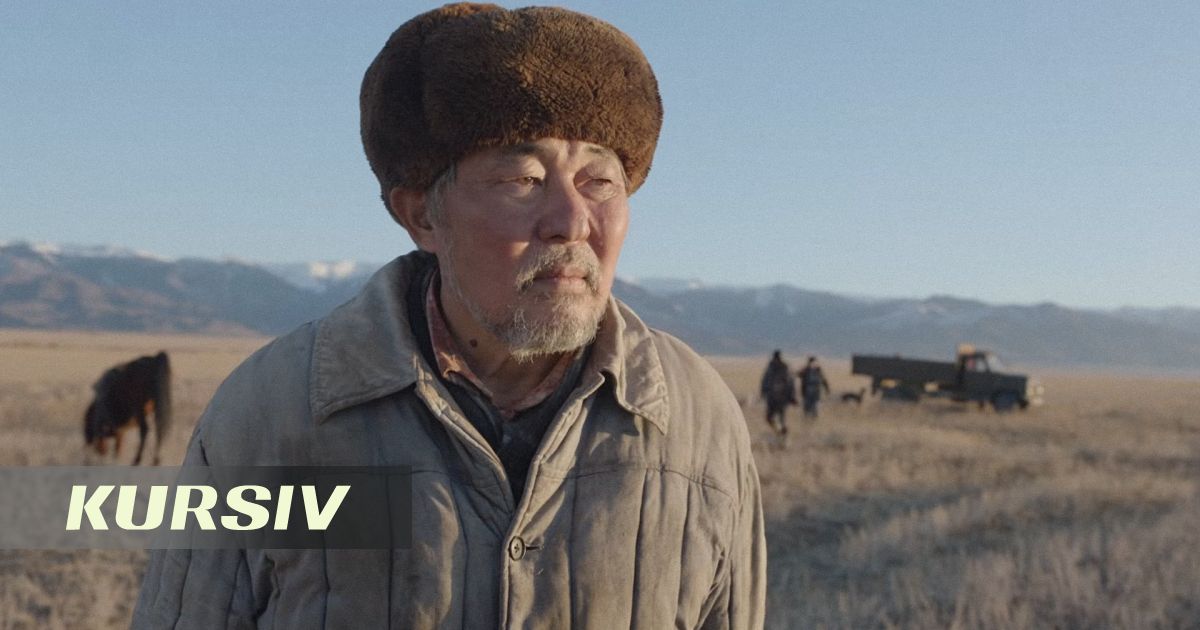
After nearly two years of traveling to film festivals and winning several awards there, the film 'Äbil' by director and screenwriter Yelzat Eskendir has finally been shown in Kazakhstan. And not just shown, but immediately released in theaters. Whether the film will find its audience is not an easy question. After all, 'Äbil' is a complex film, with a story set in the early 1990s. Yet this story remains relevant to this day. This was reported by Qazaqyia.kz citing Kursiv Media.
The world premiere of 'Äbil' ('Abel') took place in the fall of 2024 at the prestigious international festival in Busan, South Korea, considered one of the top film forums based in Asia. A good start served it well: 'Äbil' traveled to many festivals (its last awards were last winter in Nantes, France), but all this time it remained only a name for the domestic audience – there was not a single official screening in Kazakhstan. However, the need for theatrical release (the film was made with state money – with the support of the State Center for Support of National Cinema) finally brought the film to the network of local cinemas.
Characteristics of Festival Cinema
'Äbil' is classic festival cinema, including in the understanding of the general public. Quite unhurried, with long takes, slowly drawing into a plot that develops just as leisurely. But this is a film about important things that have not disappeared from our lives to this day – despite the 33 years that have passed. It is all the more interesting that such a holistic, balanced, masterfully executed film was made by a debut director. However – in no way trying to diminish the merits of Yelzat Eskendir – I note the experience of the film team. In particular, producers Serik Abishev (a regular participant in Adilkhan Yerzhanov's films), Sergey Azimov (one of the former directors of 'Kazakhfilm' and a director himself), and Yerlan Bekkhozhin, better known as a media manager, who had already released one well-known project in the fall – the Spanish-Kazakh historical drama 'Truce'. And Polish cinematographer Jolanta Dylewska, well acquainted with Central Asian cinema – she worked on Sergei Dvortsevoy's films 'Ayka' and 'Tulpan'. By the way, 'Äbil' has much in common visually with 'Tulpan'.
1993: The Era of Privatization
...1993, a time of destatization, privatization, the emergence of private property, and the instant enrichment of some along with the instant impoverishment of others. Abel, a shepherd who worked for several decades on a collective farm, finds himself drawn into the division of the former collective farm. The former management, together with the most enterprising neighbors, plunder livestock and equipment on the principle of 'Who grabs more.' And the one who grabs more must have power and lack conscience. But Abel still hopes for justice, which, as we know, does not exist.
Acting and Characters
'Äbil' is a snapshot of time in which, like amber, the figure of a man is frozen. The figure is not even dramatic – it is tragic, because in addition to social and everyday problems, Abel is also burdened by personal, family issues. In particular, his eldest son gets into trouble in the city and asks for a ram as a loan (which he obviously will not return), but the father – unable to abandon his principles – refuses.
Yerlan Toleutay, known primarily as a singer, composer, and documentary filmmaker, gives a surprisingly subtle performance in the lead role, and it is hard to believe that this is his debut in big cinema. I don't know how the creative team came to choose him for the role of Abel, but it is an incredibly accurate casting. However, it is also necessary to note his screen partner Nurzhan Beksultanova, who played the wife of the protagonist, Shynar.
Eternal Themes
At first, 'Äbil' seems like a morally outdated film – like, why go back to the 1990s again and rehash them (here it is worth noting the excellent work of the film's art department). But as the characters of different levels are revealed, the overall concept also unfolds. Key in this regard is the scene of a feast at the neighbors' house in honor of their son's return from prison. They discuss everything – Kunaev, Stalin, Brezhnev, Khrushchev, Gorbachev, perestroika, democracy, December 1986, but most importantly, they hope for the best under Nazarbayev's leadership. In parallel, Abel remembers his ancestors – a wealthy family that lost everything in the 1920s. Seventy years passed – history repeated itself. Another thirty years passed – and nothing changed. Everything shown in the film can easily be imagined today. Including the hope for the best. In this spiral of hopelessness, in this eternal victory of rudeness over honor, in Abel's very gaze lies the inevitable drama of a person unable to cope with circumstances. Abel is one, but there will always be plenty of Cains.