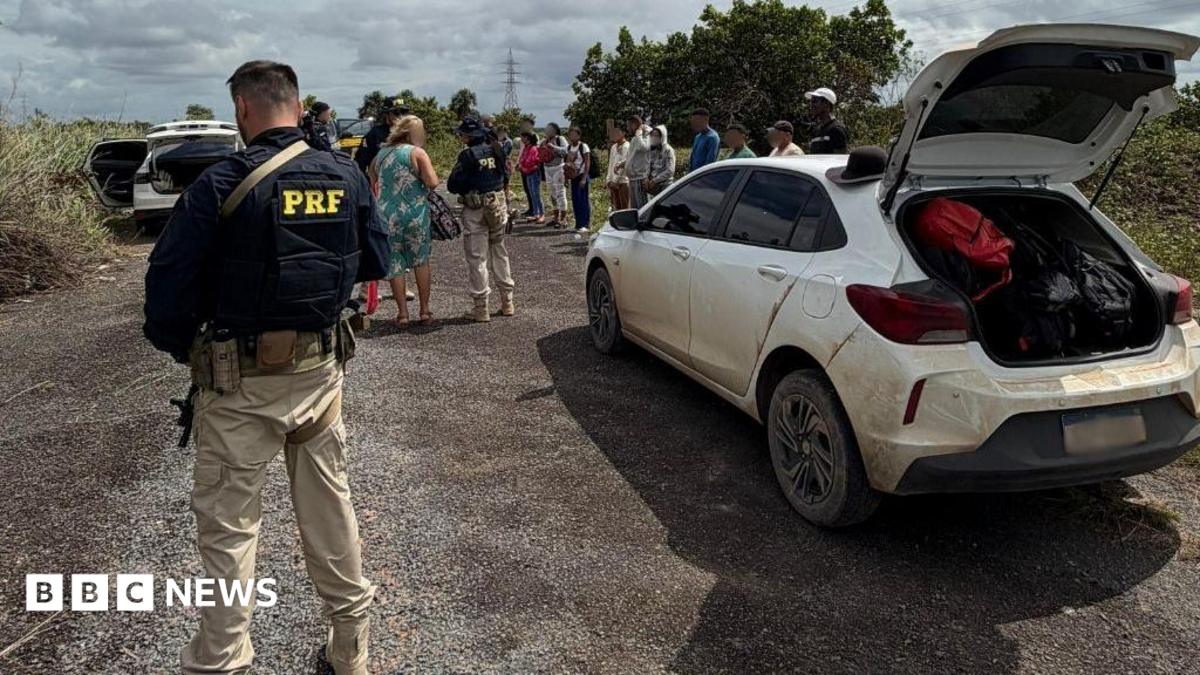
More than 1,000 people have been arrested as part of a global crackdown on human trafficking spanning 59 countries. This was reported by Qazaqyia.kz citing BBC News.
Coordinated by Interpol, Operation Global Chain saw officers target trafficking for sexual exploitation, forced labour and criminality, and coerced begging. A network that was trafficking victims into online scamming in Cambodia, and a network forcing underage girls recruited via social media into sex work in Europe were dismantled as part of the operation.
In total, 2,070 victims or potential victims were identified, the vast majority of whom were women. Of the arrests, 334 were for human trafficking and 690 for associated crimes. Interpol coordinated the effort alongside Europol and Frontex.
The operation's findings exposed evolving trafficking routes and methods. An emerging trend of Latin American victims being trafficked for forced labour in Europe was found, with about 10% of identified victims being minors from the Americas subjected to sexual exploitation.
Authorities in Colombia launched an airport prevention campaign to raise awareness about the risks of fraudulent job offers abroad. Brazil's Federal Police identified 406 victims - 83 Brazilians and 323 foreign nationals - of a transnational network trafficking victims to Cambodia for forced online scamming.
Two Bolivian child victims forced to work in a grocery store were rescued by Argentinian police. Belgian authorities arrested 17 suspects after dismantling a trafficking network that held victims recruited via social media captive and forced them into prostitution across Belgium and France.
The operation took place between 8 and 12 June, conducted by 40,000 officers. Most victims were trafficked for sexual exploitation, while 20% were forced into criminality, 11% into forced labour and 2% into forced begging. 465 investigations were launched, and 201 additional suspects were identified. Countries including the UK, the US, France, Germany, Spain, Nigeria, Thailand and Vietnam took part.
Interpol Secretary Valdecy Urquiza said human trafficking remains "one of the most profitable and pervasive forms" of organised crimes, generating billions in illicit revenue each year. He added that the crime causes "severe and lasting harm to victims", saying the operation's results "demonstrate what can be achieved when countries work together to disrupt criminal networks and strengthen cooperation across regions".