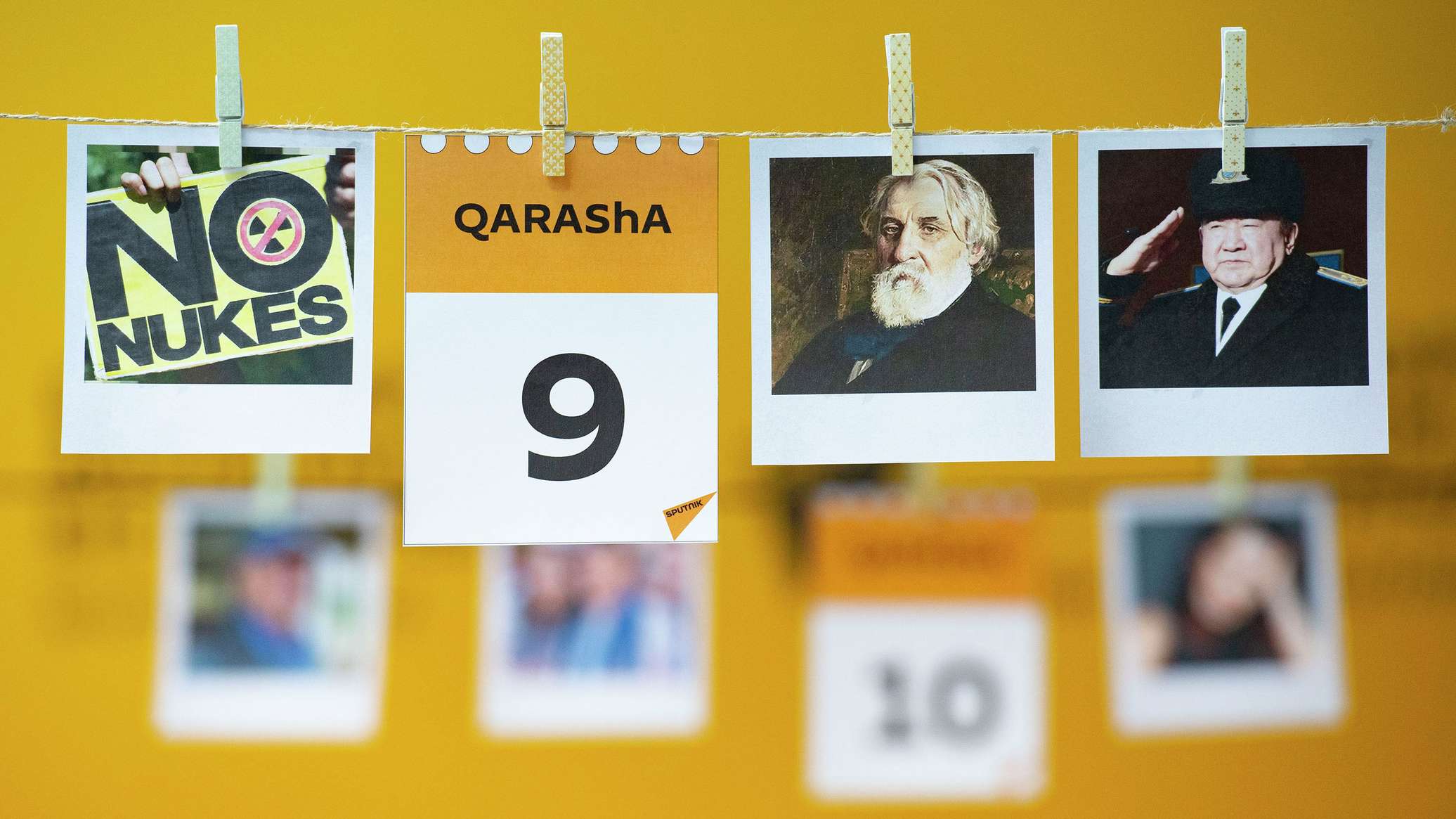
On November 9, the world marks the International Day Against Fascism, Racism and Antisemitism. This was reported by Qazaqyia.kz citing Sputnik Kazakhstan.
On this day, people commemorate the violence known as "Kristallnacht" – the mass killing of Jews in Germany in 1938. On that terrible night, the Holocaust – the mass extermination of Jews – began. During the Holocaust years, about 6 million Jews suffered. The policy of national supremacy proved its failure, but today a major global problem is Islamophobia. Other people may not be like us, but we must always remember what restricting the rights of a nation leads to. The slogan of the day is "Never again!".
Today also marks the International Day of Actions Against Nuclear Weapons. Under the slogan "We choose a future without radiation!", the International Day of Actions Against Nuclear Weapons is held worldwide on November 9. Environmentalists and other concerned citizens organize pickets, marches and actions in various cities on this day, opposing the development of nuclear energy and advocating for improved safety.
On this autumn day, residents of the Spanish city of Baena, together with tourists from all over Europe, celebrate the olive festival timed to the end of the harvest campaign. This small town in Andalusia is considered one of the world leaders in olive oil production, without which Mediterranean cuisine is unimaginable. In honor of the rich harvest, songs are sung, dances are performed, and folk walks take place – such festivities are an integral part of the festival. And every tourist must visit the Olive Museum located in the very center of the town. Here you can learn the secrets of growing and harvesting olives and see the olive oil production process with your own eyes.
Historical events that occurred on November 9 worldwide: in 1799, Napoleon Bonaparte carried out a state coup in France and overthrew the power of the Directory. As a result, a consular system of government was established in the country; in 1918, German Emperor Wilhelm II abdicated the throne. After this event, the monarchy in Germany was abolished and a republic was proclaimed; in 1911, neon advertising was patented in France; in 1923, the "Beer Hall Putsch" led by Adolf Hitler in Munich was suppressed; in 1927, a giant panda was discovered in China; in 1938, mass persecution of Jews, known as "Kristallnacht", began in Germany. Synagogues and shops were destroyed, and thousands of people were arrested; in 1989, the Berlin Wall fell. This event became an important historical milestone that paved the way for the reunification of East and West Germany and the end of the Cold War in Europe; in 1994, the first chemical element – darmstadtium – was synthesized in Germany.
Historical events that occurred on November 9 in Kazakhstan: in 1940, a new Kazakh alphabet based on Cyrillic graphics was created. The new alphabet consisted of 42 letters; in 1945, the Pavlodar Regional Drama Theater named after A.P. Chekhov was founded; in 1989, the museum of the Department of Internal Affairs of the North Kazakhstan Region received its first visitors, its fund contains more than four thousand exhibits: documents, awards, personal items, photographs, uniforms; in 1991, at the seventh session of the Supreme Council of the Kazakh SSR, a decision was made to rename the Kazakh SSR the Republic of Kazakhstan; in 1991, at the Republic Palace in Almaty, the President of the Republic of Kazakhstan Nursultan Nazarbayev took the oath before the people; in 1996, Kairat Ryskulbekov, who participated in the December uprising and died for freedom, was awarded the title "Halyk Kaharmany"; in 2004, the republican competition "Best Product of Kazakhstan" was held in Astana. More than 100 domestic enterprises participated; in 2005, the Soyuz-FG launch vehicle with the European space apparatus Venus Express was launched from the Baikonur cosmodrome.
Famous people born on November 9: in 1818, Russian writer, poet, publicist, playwright, translator Ivan Turgenev was born. One of the classics who made a significant contribution to the development of Russian literature in the second half of the 19th century; in 1885, Russian poet and prose writer, one of the great figures of the Russian avant-garde Vladimir Khlebnikov was born. He is one of the founders of Russian futurism, a reformer of poetic language; in 1936, the eighth world chess champion Mikhail Tal was born; in 1939, Kyrgyz film actor, artist, People's Artist of the Kirghiz SSR and the USSR, People's Artist of the Kirghiz SSR Suymenkul Chokmorov was born; in 1951, basketball champion of the 1972 Olympics Alexander Belov was born. Honored Master of Sports of the USSR (1972). In the final of the Munich Olympics against the USA, he scored a goal in the last second and brought victory to the USSR team.
Who was born on November 9 in Kazakhstan: in 1948, former Majilis deputy Onalsyn Zhumabekov was born; in 1956, former head of the State Security Service of the Republic of Kazakhstan Amantai Kurenbekov was born; in 1957, the founder of the first in vitro fertilization (IVF) clinic in Kazakhstan, medical specialist Batyr Bekmusayev was born; in 1959, former first deputy minister of defense of the Republic of Kazakhstan Murat Maikeyev was born.