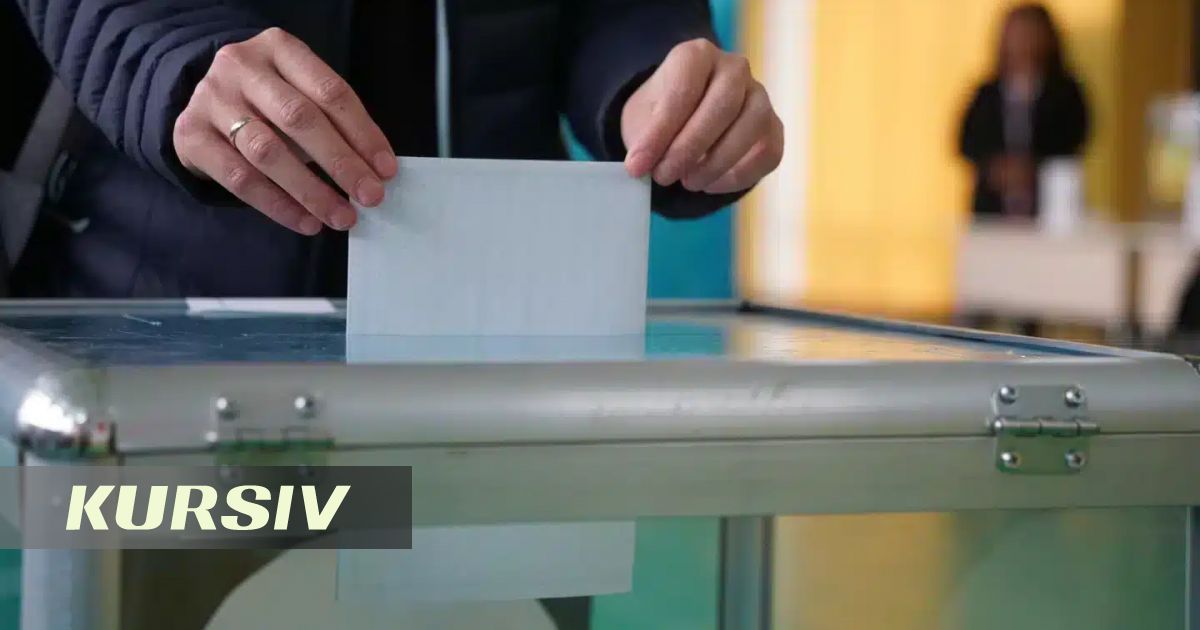
Seven citizens of Kazakhstan were fined for posting a photo of a ballot online. This was reported by Qazaqyia.kz citing Kursiv Media.
According to Yerlan Zhangpeisov, head of the Media Monitoring and Public Relations Department of the Prosecutor General's Office, speaking at a briefing at the Central Communications Service, the voting process in the country was calm. Election commissions did not record any violations.
"Before the end of voting, prosecutors in Astana, Almaty, Shymkent, Uralsk and Kostanay brought 7 citizens to administrative fines in a summary procedure. All cases were related to the distribution of photographs of completed ballots," he said.
Zhangpeisov warned that photo and video recording, as well as distribution of a completed ballot, also constitute agitation.
Earlier, Kursiv reported that a resident of Almaty was fined for posting a ballot. She was brought to responsibility under Article 102 of the Administrative Code (Conducting pre-election agitation during the period of its prohibition). The Almaty resident admitted guilt and removed the publication. The fine for such a violation could have been 65 thousand tenge.
Requirements of electoral legislation
According to the electoral legislation of Kazakhstan, it is prohibited to photograph and distribute completed ballots. This is one of the measures aimed at ensuring the secrecy of voting and preventing possible pressure on voters.
During the election period, the prosecutor's office conducts constant monitoring of social networks and Internet resources to identify violations.
Amount of fine
Under Article 102 of the Administrative Code (Conducting pre-election agitation during the period of its prohibition), citizens may be fined up to 65 thousand tenge. In each specific case, the amount of the fine is determined by the court or an authorized body.
Public reaction
Bringing to responsibility for violating electoral legislation causes different opinions in society. Some experts believe that such measures are necessary to ensure the legality of elections, while others express concern about possible restrictions on freedom of information dissemination.
However, according to the requirements of the law, every citizen is obliged to comply with the established rules when participating in the electoral process.
Preventive measures
Election commissions and law enforcement agencies are working to inform citizens about the requirements of electoral legislation. Explanatory materials are published on social networks and in the media.
Warnings about the prohibition of photographing ballots are placed at polling stations.
Conclusion
Thus, in Kazakhstan, administrative responsibility for violation of electoral legislation is strictly applied. Distribution of photographs of ballots is recognized as illegal and entails a fine. These measures are aimed at ensuring transparency and legality of the electoral process.