A first-of-its-kind law in New York could force 3D printers sold for homes and business to come equipped with technology blocking them from making guns. This was reported by Qazaqyia.kz citing Associated Press.
The new requirement, also under consideration in California, attempts to thwart the latest technique for producing untraceable "ghost guns" that have turned up in crimes. But there are questions about whether the technology can work and concerns about its affect on personal privacy and constitutional rights.
About one-third of U.S. states already have taken steps to ban or regulate build-it-yourself firearms that lack serial numbers and evade the background checks required to purchase guns from federally licensed dealers. What makes the new effort unique is that it targets the equipment used to produce the firearms, not the people who make them.
The blocking technology being pushed in two of the nation's most populous states has the potential to set industry standards for 3D printers. It also could serve as a model for other Democratic-led states wanting to add to their gun regulations.
Three-dimensional printers have become increasingly common over the past couple of decades. Since 2012, the number of 3D printers worldwide has grown from an estimated 30,000 to over 3 million while the industry's value has multiplied from around $2 billion to $26 billion annually, said Bill Decker, executive chairman of the Association of 3D Printing. Though high-end printers cost thousands of dollars, some 3D printers now can be bought for as little as several hundred dollars.
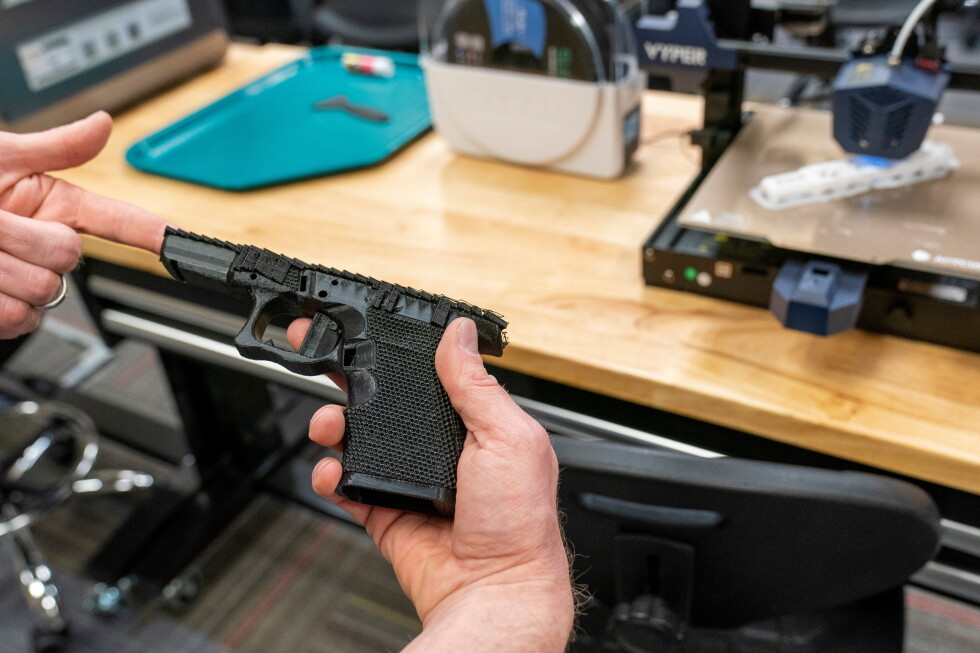
The devices can make toys, prosthetic limbs and even airplane parts. They also can make firearms — or the pieces necessary to assemble them — using digital designs available online. Homemade guns that lack serial numbers often are called "ghost guns," because they are hard for law enforcement officers to trace.
Firearms made with 3D printers are increasingly being used in crimes, according to a U.S. Department of Justice report released last year. The number of privately made guns recovered in crimes and submitted to federal authorities rose from about 1,600 in 2017 to nearly 27,500 in 2023, though the report didn't specify how many came from 3D printers.
In a high-profile New York case, police say a 3D-printed gun likely was used to kill UnitedHealthcare's CEO.