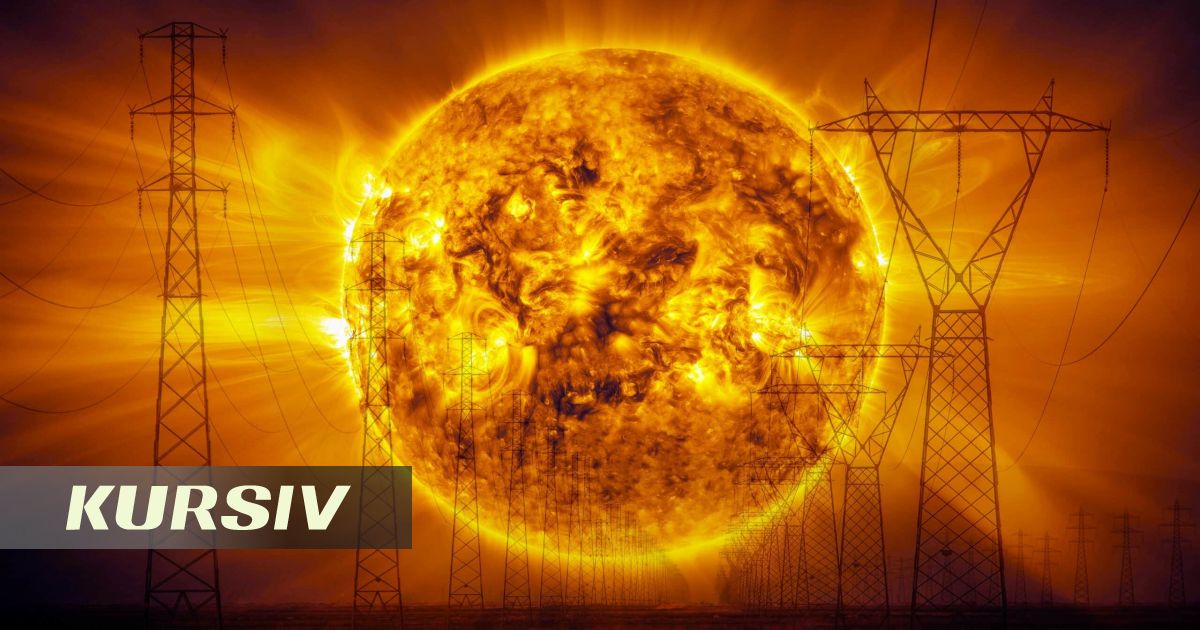
Scientists at the Laboratory of Solar Astronomy have predicted a magnetic storm of level G1 and almost G2 from morning until noon on Saturday, August 29. This was reported by Qazaqyia.kz citing Kursiv Media.
By Saturday evening and on Sunday, August 30, space weather will stabilize, and the magnetic field will become calm again, dropping from a Kp-index of 5.7 to 2.7.
According to experts, the cause is flare activity that occurred on August 25. Scientists explained that when everything ends for the Sun, everything is just beginning for Earth:
"Plasma ejections, even with their enormous speeds of 600–1000 km/s, take from 2 to 4 days to cover the 150 million kilometers separating Earth from the Sun. Therefore, a common situation is when flare activity has already ceased, and Earth is only preparing to encounter it."
Initially, it was expected that the storms would reach level G3. But the weak ejection speed led to more modest values in the G1-G2 range.
Earlier, Kursiv wrote about the deep partial lunar eclipse on August 28.
Impact of the magnetic storm
Magnetic storms are caused by disturbances in Earth's magnetic field and can affect communication systems, energy infrastructure, and human health. Level G1 is considered a weak storm, while G2 is moderate. During such events, auroras may be visible, and some people may experience headaches and weakness.
Further forecasts
Scientists note that space weather will stabilize in the coming days. From August 30, a calm magnetic field is expected. However, given the cyclical nature of solar activity, the likelihood of new flares and storms remains.
Conclusion
Thus, the magnetic storm on August 29 will be a significant event in space weather. According to scientists' forecasts, it will last from morning until noon, after which the situation will normalize. This phenomenon is a consequence of the solar flare on August 25, and its strength is expected to be in the G1-G2 range.